Monday, 21 November 2011

The Cave of the Yellow Dog


Every now and again cinema presents a gift that encourages you to stop, reflect and wonder. This film is such a gift. Described as part documentary, part drama, this film offers a precious insight into nomadic life for a family on the Mongolian steppes. We spend some time with the Batchuluun family living in their two Yurts with only their livestock, wolves and vultures for company.

The lifestyle looks harsh by comparison with Western standards but there is no sense of regret or of missing out on anything. Running water is courtesy of the stream outside. The single light bulb works - if there is enough wind to turn the blades of the generator. Yet the family, mum, dad and three young children, live their communal life very happily. The children seem happy to do chores around the encampment and even enjoy playing with dried dung!

The oldest child - Nansal, has just returned from a term at school in the big town. She shares with her sister that there the Yurts are stacked up into the sky (apartments blocks) and people even piss inside their Yurts! The younger girl can only marvel at what the town must look like.

The story presents a very gentle style of Buddhism and the narrative arc is set within a Buddhist view of the reincarnation cycle. One day Nansal finds a dog hiding in cave which she befriends and takes back to the family home. Her father fears that the dog may have been running with wolves and will inadvertently attract them to attack their herd. He tells Nansal that the dog must go. I won't spoil the outcome for you!

This gentle film offers a privileged window into another world - a world which is under threat. The viewer cannot help but reflect on the challenges this family face, their rhythm of daily work and the effect the seasons must have on their way of life. Throughout the film the lure of the big town and a different life is never far away. This was just right for a Sunday evening watch - I'll give it 7.5/10.

Monday, 14 November 2011

Paris


Pierre (Roman Duris) is a professional dancer who develops a heart condition that ends his career. His only certainty of beating the disease is a transplant - but the doctors don't know if a donor can be found before it's too late. Upon hearing the news, his sister Élise (Juliette Binoche) immediately moves into Pierre's flat with her three children to look after him. As Pierre awaits an uncertain future, he spends his days surveying the Parisian skyline from his sixth-floor balcony whilst focussing his detailed attention on a beautiful girl living in a an apartment opposite and a girl in the local bakery. Pierre's reflections serve as a springboard for the film to reflect on the diversity, vibrancy, fulfilment and disappointment of some of the individuals that make up the Parisian populace. It is as though we are offered views of these people as being representatives of the wider population.

The story opens with a threat to the vitality of Pierre as he is faced with a stark and unwelcome reality. As he reflects on this through the life of the bustling metropolis, a picture filled with nuanced and intricate detail is painted for us as the lives of the characters interact and play out. The characters represent a sweep of Parisian society: a Professor, a promiscuous student, an architect, a social worker, a dancer, market traders and Benoît who, throughout the story, journeys from the poverty of rural Cameroon to the promised land and prosperity of Paris as an illegal.

As Pierre awaits the seemingly inevitable he begins to put his affairs in order by trying to make sense of his life. All around him the other characters live out similar processes with varying degrees of awareness. The death of the Professor's father triggers a mid-life crisis as he chases after one of his students. His brother, the architect, struggles with his own demons and new life comes as his wife gives birth to their first-born. The market traders who work hard and play hard are shown to be shallow yet at the same time honourable and respectful. Together they face the pain of separation, the longing of desire, guilt, grief and the enticement of a brief intimate encounter with a group of girls. Élise is shown to work in the female dominated world of social work where the case workers are women and the manager a man. Their collective meetings having the feel of socialist egalitarianism reminiscent of the Revolution era. Meanwhile the backdrop to all this is the Professor who is lured away from the Academy by the lucrative offer to narrate a TV documentary about the history of Paris and thereby the history of France. Meanwhile Benoît continues on his northerly pilgrimage.

This film delivers an engaging exposé of life at different levels of French society. It also underlines the need for inter-dependence as the characters lives become increasingly, but unknowingly intertwined. The characterisations are warm and compelling. The sub-titling is helpful and non-intrusive. Paris always presents a magnificent canvas on which to paint - even under fittingly watery autumnal skies. This is a film about life, about contemplating death, about loss, guilt, grief, love, intimacy, story, fulfilment, rebirth, families and about our innate need of community.

Well worth the investment of a couple of hours - particularly with Juliette Binoche and Mélanie Laurent in the cast! I'll give it 7.5/10.


Monday, 7 November 2011

The Help


This is a wonderful film - a gracious gift. Go and see it - now!

Set in Jackson Mississippi in the early 1960's this film explores slavery 60's style and the question it provokes is what would you have done if you'd been born into Mississippi's white elite? Would you have colluded with Hilly Holbrook (Bryce Dallas Howard) or confronted with Skeeter Phelan (Emma Stone)? Would you see Aibiline (Viola Davis) and Minny (Octavia Spencer) as commodities to be owned or as human beings to be celebrated?

The unashamed racism that the film portrays feels like something from another era and not my childhood! Skeeter returns from university - perhaps a northern liberal university - to discover the family 'Help' has gone to live with her family in Chicago. She also finds the attitudes of her old friends who are now ladies of leisure to be stifling and unacceptable. As an aspiring writer, Skeeter pens an anonymous book based on the anecdotes and reflections of the maids employed by the wealthy white women of Jackson. The book reveals the pain and abuse suffered by the 'Help' as they are paid below the minimum wage and are excluded from the benefits of welfare and health care.

This film could major on the evil of one set of people owning another. In a way it does. (How is this different from buying non Fair-trade goods from the majority world?) But this film doesn't wallow in the violence and abuse suffered by Jackson's black community, it rises above that to demonstrate that grace is a universal currency that can be cashed in for the betterment of everyone.

This film reduced me to tears at three points. It is a moving story - a courageous story, where people who are trying to do the best for their family's, what you and I would wish to do, face an uphill battle but never lose sight of what it is to be human. The acting is brilliant and forces you to reflect on what would you have done in either situation? I also reflected on what it must have felt like for the actors in this film - both black and white. It can't have been comfortable on either side.

As I said this is above a movie about grace. Go and see it. I'll give it 8.5/10.


Sunday, 30 October 2011

We need to talk about Kevin


This is a powerful film. Very uncomfortable viewing. Brilliantly acted. The brutality of the story is underlined by the editing which delivers body blow after body blow as it chops and cuts from the here-and-now to flashback as the back story is told. It left me feeling very uncomfortable. As I said, a powerful film.

As it's difficult to talk about this film without giving the plot away, this will be a brief reflection! I can't discuss the plot or story as the way they are told are integral to the film. This film explores the effects of a mother's depression and the problems of a baby whose behaviour is difficult - to say the least. It charts Kevin's growth and development and the family dynamics that surround him.

This film delivers a study in pathological behaviour, in sacrificial parental love and it delivers a display of grace that is breath-taking. Despite all that Kevin does to his mother she never gives up on him - right up to the end of the film. The end of the film is hinted at in out of focus flash-backs throughout but you are never quite sure where it's taking you. You know it's not going to be pretty but it's actually worse than that when you get there!

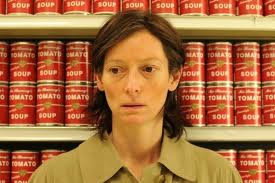
The casting is excellent and Tilda Swinton and John C Reilly play Kevin's parents brilliantly. The film continually evokes feelings of sympathy alternating with horror. It is a journey of terrifying twists and turns and one which provokes the big question - why.

It is not comfortable viewing, but who said cinema-going should be comfortable? It is engaging - superbly well told. It will leave you with questions and it left me feeling like I'd gone 10 rounds with a boxer! But I want to encourage you to go and see it. I'll give it 8/10.

I hope that your story doesn't resonate with Kevin's or his parents. This story will resonate with your humanity as it explores guilt, forgiveness and grace.


UPDATE - THE MORNING AFTER WATCHING IT

I slept well after seeing this but my dreams were defintiely influenced by it and I awoke still thinking about the film - which is unusual as I don't often remember my dreams. Powerful stuff.

Wednesday, 26 October 2011

Departures


This film offers a privileged invitation into the world, values and practices of the Japanese people surrounding the preparation of a body for cremation. You should take your shoes off when you watch this film because you will feel like you are standing on sacred ground. The way the story is told and enacted conveys a real depth of meaning that honours the life of the deceased and treasures the opportunity to help them make the transition to the world that lies beyond. It's also a charming love story and at times has surprising bits of comedy (which I could have done without).

Daigo (Masahiro Motoki) has worked hard all his life to become a concert cellist. When his orchestra is disbanded because few buy tickets to hear them, he resolves to return to his family home and the house his mother left him when she died two year earlier. His wife Mika (Ryoko Hirosue) dutifully accompanies him and makes the house into their home. Daigo responds to a job ad in the paper thinking it to be for work at a travel agency - departures. It turns out to be a job as an assistant to Mr Sasaki (Tsutomu Yamazaki) working as a Nokanshi or coffineer. He gets the job and is hired immediately - the pay is good. He decides not to tell Mika exactly what he does.

The film explores many themes related to death and the taboos that surround dealing with the dead. As Daigo gets more and more into the role he appears to develop a sense of vocation for assisting the grieving families and honouring the deceased. He is very good at it and his face always displays an appropriately empathetic expression.

When Mika discovers what he does, she returns to Tokyo. Some of the locals including an old school friend also begin to give him the cold shoulder. A theme that runs throughout the story is Daigo's estrangement from his Father, who walked out on the family when he was 6 and how that affects him more than 25 years later.

The narrative arc feels very western and I wonder if the film loses something because it tries to appeal to western sensibilities rather than purely allowing us an insight into contemporary Shinto practice relating to preparing the dead for cremation. Daigo facilitates for each family a process that helps them in their grief and mourning. As a priest I have conducted many funerals and for me the film evokes very similar feelings to those I experience on the journey which the priest accompanies families on as they bury their dead.

This is a warm and generous film which as well as being instructional and engaging will leave you with warm fuzzies. I commend it and give it 8/10.


Saturday, 15 October 2011

Midnight in Paris


I now have new favourite Woody Allen film! This is brilliant - from start to finish. The casting, setting, the way it's shot and the conceptualisation are all top drawer - well done Mr Allen.


WARNING: PLOT SPOILERS


Gil is a successful Hollywood writer visiting Paris with his fiancee Inez and her overbearingly conservative parents. Gil is struggling with his first novel - a story about a man who runs a nostalgia shop. He finds great inspiration in the streets of Paris and wants to move there to write after his wedding. Inez is not keen. Gil and Inez bump into Paul and his wife Carol, as Paul - who annoyingly knows all there is to know about everything - is on a lecture tour to the Sorbonne. Inez confesses to an earlier crush on Paul which puts even greater distance between the style and aspirations of Gil and Paul. After a night of wine-tasting, Paul and Carol invite Gil and Inez to go dancing. A tipsy Gil declines and wants to walk back to the hotel to sober up. 


As Gil sits disconsolately on some steps, the bells strike midnight and a veteran limousine stops and its party-going occupants all dressed in 1920's garb and quaffing Champagne invite Gil to join them. As they arrive at a club Gil is introduced first to F Scott Fitzgerald and his wife Zelda and then to an array of literary and artistic heroes from Gil's golden era of the 1920's - including Gertrude Stein who offers to critique Gil's manuscript. As Gil leaves the club it returns to its contemporary guise as a launderette. Did he imagine it? Was it a fantasy? what is going on?


In the morning he tries to explain it to Inez who joking accuses him of some drunken fling. That night Gil goes back to the same steps and a midnight the car appears and whisks him off to another night of partying with the bohemian revellers. He delivers the manuscript to Stein and also he meets Picasso's lover Adriana with whom he gradually falls in love.  Returning for a third night he is grateful for Stein's incisive critique and her encouragement to continue. Woody Allen is never short on irony and the Stien character delivers the wonderful line "what is a nostalgia shop?".


Night by night Gil returns to the 1920's and meets more literary heroes and gets deeper into his relationship with Adriana. Meanwhile Inez and her parents continue to the American in Paris thing and whilst Gil has nightly liaisons with Adriana, Inez spends each night with Paul and Carol. Gil buys a book in an antique market which turns out to Adriana's published diary which makes direct reference to Gil - the first indication that Gil's experience is real and not an illusion. Gil confides in Dali, Bunuel and Man Ray and confesses his confusion and guilt. As surrealists they see no contradiction in his position and readily accept that he is from the future - more great Allenesque irony!


One night as Gil and Adriana are walking they kiss and immediately a horse and carriage pulls up and whisks them away to Maxim's where they meet Degas, Toulouse-Lautrec and Gauguin - they are back in the Belle Epoque of the 1890's - Adriana's golden age.


Tempted to stay with Adriana, Gil eventually concludes in a surge of existential realism that the here and now is the best place to be. The way the story ends could have been schmaltzy but Allen takes the arc of the story in a pleasing trajectory and, to my mind and heart, resolves the narrative satisfactorily - I won't spoil the ending for you.


So what is this film saying to us? Lots of things I think:

  • Creativity has to draw on what has gone before.
  • However rose-tinted our view of a golden age might be, we are called to be here and now.
  • History paints generously.
  • Stories are intertwined and we need to be able to move from one to another if we are to be true to ourselves.
  • True love has a cost.
  • Nostalgia may be a modern invention.
  • The pursuit of reality can be achieved via fantasy.


Perhaps most of all the film presents an ironic essay on nostalgia and our longing for things to be different. In his book Into The Dark Craig Detweiler has a fascinating chapter on nostalgia where he takes the central theme of the film Finding Neverland as the jumping off point for an exploration of nostalgia in film. Detweiler writes “What pain are we avoiding via memory? Is the West in exile? Are we pining for a former era, fixated on the good ‘ol days? Or is nostalgia a genuine, God-given consolation in a troubled world?” But for some, nostalgia is anything but appealing. People who are oppressed tend to look forward to a better day – apocalyptic and sci-fi serve this function well.


What are we trying to achieve when we indulge in nostalgia? Is it a distraction, a dissatisfaction with the present, a critique of today? Why are our high streets populated with shops offering a over-priced and tacky collection of memorabilia - and then from eras and events where we were the victors. Nostalgia never seeks out the Crimea or the Suez crisis for example and emerging films set in Iraq or Afghanistan are too close for nostalgia as they attempt to ameliorate the pain felt all too acutely by too many. How far  in the past does something have to be for it to engender a sense of nostalgia?

I found this film thoroughly engaging and a delight. Do go and see it. I'll give it 8.5/10.


Sunday, 2 October 2011

Kermode: The Good, the bad and the multiplex


Dr K was on good form last night at Harbour Lights promoting his new book (The Good, the Bad and the Multiplex) and entertaining a full house with two hours of banter, rants and inspiring insights into the world of film and cinema. I will get hold of the book soon and review it once I've read it - by the time I got out of the auditorium last night the queue for signing was just too long.

For those familiar with his weekly film review session on BBC Five Live, there were the predictable rants against:

  • 3D
  • Sex in the City 2
  • Pirates of the Caribbean
  • The threat of extinction for projectionists
and of course much waving of the famous flappy hands.

There was also a lot of positive encouragement for his favourite actors and directors - and course the usual accolades for The Exorcist. The great thing that Mark Kermode does is to enthuse you about watching films and you want go and see one straight away.

Good value for money - do go and see him on this tour if he comes in your direction. I'll give the evening 9/10!


Monday, 26 September 2011

Hanna


Here we have another in the line of child assassins - the angelic looking Hanna played by Saoirse Ronan. The teenager has been brought up in the frozen wastes of Finland just below the Arctic Circle by her father Erik (Eric Bana) who is an ex CIA agent. Erik home schools Hanna by reading about Blue Whales and Music from a children's encyclopedia. In addition to this knowledge, Hanna is schooled in the arts of the hunter - and the assassin under the guiding philosophy of 'adapt or die'.

In essence this is an action road movie. Once Hanna activates a homing signal, she knows the CIA will come and 'extract' her. Her goal - the one thing she has been trained for all her life is to kill CIA operative Marissa Wiegler (Cate Blanchett). It's not until the end of the film that we are given the back-story to explain why this might be justified. The journey is from Finland to Berlin and takes in some interesting places en-route.

The film moves with an uneven pace - but the soundtrack gave my new sub-woofer a significant workout! There is plenty of action and - yes, more blood. Hanna's efficiency is matched only by her lack of social skills and her degree of confusion over what to do on a date!  The film is extremely well shot with plenty of variation using tight-cropped close-ups and sweeping wide-angles to deliver stunning vistas - especially in the opening 30 minutes. Cate Blanchett is a compelling villain obsessed with oral hygiene and it is good to see the wonderful Tom Hollander playing a camp ex CIA operative (Isaacs) who manages an anything-goes strip joint in Tangier.

I guess the central driving issue plainly shows that two wrongs don't make a right - however well-intentioned Erik and Hanna feel they are. The film operates within a world of moral relativity where individuals and agencies are free to override social norms and protocols in order to complete their self-appointed tasks to defend national security. The back-story that is introduced also adds an ethical dimension to the plot but it fails to justify the ironic deployment of Hanna to kill Wiegler. It is also interesting to note in these days of creeping political correctness that both the main adversaries are female.

There is the usual quota of holes in the plot:
  •  Why does Hanna kill only the first wave of special forces who come to 'extract' her and not any more?
  • Why do Isaacs and his henchmen trail Hanna all across Spain and France before making their move?
  • How does Wiegler get in front of Hanna to emerge from the tunnel at the end?

Perhaps I wasn't paying proper attention, but these and other things irk me when I'm engaging with a story. Overall this is a film that does not invite - or merit any deep engagement. It is an action film that delivers tons of action, much of which is unbelievable either in terms of 'how did he/she do that', or 'why did he/she need to do that'. This is an eye candy film that trades on the novelty of a blond teenage killing machine. It tells us nothing more about the CIA which we know will do whatever it wants whenever it wants (just like MI6) with minimal accountability (hopefully unlike MI6). Perhaps I've seen too many of this type of film recently and I'm suffering from blood fatigue? I'll give it 6.5/10.


Sunday, 18 September 2011

Made in Dagenham


When ordinary people do extra-ordinary things the possibilities for transformation multiply. This film left me feeling exhilarated. It is warm, engaging, believable, well told and very well acted. The setting of the film occupies a corner of my childhood memories. A group of machinists at Ford's leading UK car plant hold the company to ransom by going on strike.

What began as a strike over a regrading dispute leaving the ladies as lower paid unskilled workers, became a fight for equality of pay for women, This is fundamentally a story about justice - social justice. It is also an exposé of the class structure that still pervades British life and the arrogance of the multi-national whose only duty is supposedly to return a dividend to their share holders.

This is so much more than a docudrama. This film invites us into the life of ordinary people struggling against the odds to make ends meet and to make meaning in their life. The central couple are Rita and Eddie O'Grady (Sally Hawkins and Daniel Mays) who do their best to bring up their two children and have a family life. In a memorable speech, Eddie confesses he's not anything special, but at least he tries to provide for his family and he doesn't abuse Rita. Rita responds by pointing out to him that this should be the norm and is not a the behaviour of a saint and this in turn provides the pivot for Eddie's personal epiphany.

We are also reminded that in the 1960's many were still living with the effects of World War II. The leading male character Albert (Bob Hoskins) refers back to his days of fighting Rommel but it is in the difficult relationship between Connie (Geraldine James) and George (Roger Lloyd-Pack again!) that the horrors of the legacy of a war that ended 23 years previously are most keenly and cruelly felt.

An unlikely ally for Rita emerges in the wife of the Dagenham Factory Boss Lisa (Rosamund Pike). They first join forces to take on a bullying school master and later Lisa, frustrated by the way her husband belittles her, lends her full support to Rita - and a designer dress for her meeting with Government Minister Barbara Castle (Miranda Richardson).

The film provides a timely reminder of the cosy and collusive relationship that the Unions enjoyed with the major corporate employers in that era. Power and control were the dominant features - a stark reminder of how a social movement can lose its way. This is reinforced when the Union bosses try to put pressure on the striking women but is challenged at the National Conference when others want to hear directly from the strikers leader Rita herself. She always proves to be up to the task and her speeches are both epic and inspirational as they place matters of social justice at the centre of the debate. This is not a dry political commentary but a film filled with warm and enriching relationships. It demonstrates what can be achieved when people display solidarity to achieve justice. It is possible the outcome might have been different had not the Government Minister responsible been a woman, or had the Prime Minister not been unavailable for consultation at the critical moment. On such things the course of history turns.

The ladies won their day - and rightly so. Why did it take so long? The film asserts in the end-credits that the Ford Motor Company is now held up an an exemplary employer world-wide. When will we see FairTrade cars appearing?

This is as entertaining as it is compelling. The characters and performances are both accessible and endearing. If you've not seen this yet, do get hold of the disc and give yourself a treat. Great stuff. I'm giving it 8/10.

Friday, 16 September 2011

Tinker, Tailor, Soldier Spy


The hype and media interest surrounding the release of this movie is .... fully justified. It is an understated tour-de-force in a drab and monochrome world. A world populated by people who are largely anonymous and who do the dirty work on behalf of their masters - people who kill, lie, steal and cheat to keep us safe. It's an odd world out there.

The central character, George Smiley (Gary Oldman) is a study in the perfection of the reflective observer. Never phased, never flustered, flurried or out-thought. The steadiest hand at the tiller you could wish for. He is ably supported by John Hurt, Colin Firth, Benedict Cumberbatch and, showing his versatility once again, Roger Lloyd-Pack.

For those unfamiliar with John LeCarre's style of writing, this is a stylish spy-thriller full of double-crosses and unsavoury characters. Just when you think you have nailed down the baddies, something happens to cause you to question your judgement. The whole story is illustrated in flash-backs to a Christmas office party and the different relationships, straight, gay and extra-martial that go on. It seems that Smiley is beset by infidelity in both the office and at home.

There are no car chases, no helicopter shoot-outs, no high-tech gadgetry. Just solid character studies of the kind of people who do our dirty work for us and then brush it all neatly away under the carpet. I don't want to say any more for fear of spoiling things for you.

Do please go and see it - a 2 hour 7 minute masterpiece of understatement. I'll give it 8/10.

Wednesday, 14 September 2011

Apollo 18


In space, no-one can hear you yawn! Which is just as well as this is really the only response this film deserves. This claustrophobic moon-shot yarn is one for the conspiracy theorists - and not really for anyone else. Avoid it is my advice.

The whole thing is predicated on supposed orignal footage that has been uploaded to the lunartruth.com website in a wiki-like leak. Apollo 18 was a supposedly secret moon-shot to follow up reports (possibly from the Russians) of life on the Moon. The entire film, we are told, comprises edited highlights of the 80 hours of mission video that was uploaded to this website. The trouble is that people actually buy into this! I googled it and the web if full of people asking why they can't access the website and concluding that it's because of national security or government censorship issues. They seem unable to imagine that it could just be a marketing ploy. Here's what someone actually asked Yahoo! Answers.

"Why can't I access Lunar Truth.com?

I just saw Apollo 18. I am wondering if the government took it down, NASA took it down, the website is just down, or if the whole thing was just a scam to make it look like it was taken off. Thanks!"


All in all, the film has a very authentic retro moonshot feel as we are treated to the annoying blips and beeps of Mission Control in Houston and scratchy juddering video. Conveniently the video image is affected by interference and so breaks up just when you might see something meaningful. We are however treated to a decomposing Russian Cosmonaut, rocks that turn into scuttling spider/crab mutation combos and the idea that the good old US of A would not only sanction such a mission but abandon it's bravest when things get a little difficult.

The final five minutes are undoubtedly the best - but having to watch the rest of it simply to get there is one giant leap too far. Save yourself - don't go and see it. Its Alien-like homage is crude, Sc-Fi dimensions shabby, acting a tad wooden and horror delivery woeful. For the soundtrack alone which featured 'Yes', I'm going to give it 2/10!

Great looking new releases scheduled for the UK this autumn

I've just received the autumn edition of "Picture House Recommends" which outlines forthcoming releases. It seems we are being offered a rich and varied menu this autumn beginning with this Friday's release of
I'm also looking forward to:
and especially Mark Kermode on tour in full 3-D (Southampton 1 Oct)!

Wow! I'm going to be busy this autumn - plenty of trips to Harbour Lights in Southampton. If you haven't connected with your nearest Picture House cinema check out their website 


where. you can choose to subscribe to a weekly email to see what's coming up and also their 'Recommends' magazine - a 48 page full colour glossy detailing forthcoming releases and other events - including live streamed opera and productions from the National Theatre. Membership gives free tickets, 10% off on food and drink, cheaper tickets, no booking fees and occasional members' special events and free screenings. It also gives a range of discounts in local eating houses and shops - a bargain that pays for itself in weeks.

Public Enemies


Caught up with this on DVD - and I thoroughly enjoyed it. I don't know how much blood or how many bullets I've seen on screen this week - but the total is mounting!

Jonny Depp stars in the title role of Public Enemy Number One - John Dillinger. Another performance to underline his competent versatility which is in stark contrast to Batman who turns up as a Federal Bureau Special Agent - the not so versatile Christian Bale (although to be fair there was a hint of a regional US accent).

Set in the early 1930's four years into the Great Depression and in the wake of prohibition, John Dillinger feels robbing banks gives a better return than queueing for work. Dillinger is presented as a gentleman bank thief with a high moral code and leader of an effective and loyal gang. Set against him is Special Agent Purvis (Bale) in the fledgling days of the formation of the FBI. Dillinger acquired folk-hero status and as he is taken into custody crowds of cheering supporters throng the streets.

Time and time again, Dillinger brazenly robs banks, kills a few cops and treats his getaway hostages with courtesy and respect. Meanwhile, Purvis uses emerging technologies and scientific methods to try and track down Dillinger and his accomplices. The film maintains a well-paced balance of suspense, threat and escape as Dillinger wreaks havoc across the USA.

Early in the film, a key conversation telegraphs the narrative arc that will book-end this story. In discussion with a fellow gang member, Dillinger is reminded not to get to get involved in women as they will be his downfall. Sure enough, it is through this channel that he is ultimately apprehended.

This film shows not only the extraordinary lengths Dillinger and his accomplices went to, to set up and carry out their raids, it also shows a darker side to FBI interrogation techniques - and this on a woman!

This film does nothing to critique the social and economic context in which it is set - although on both sides of the conflict it seems that the immigrant melting-pot nature of emerging America's population is given specific emphasis.

A thoroughly watchable film with some very good performances. I'll give it 7.5/10.

Monday, 12 September 2011

Rise of the Planet of the Apes


Those of us of a certain age were brought up on the nasal twitches of Roddy McDowall and the original TV and movie franchise of the 1960s/70s. The current generation are used to CG enhanced characters and the ubiquitous Andy Serkis squeezing into the latest latex body form to perform his particular brand of magic. I was fearing that this would be a lame and dismal prequel - I was wrong - very wrong.

It seems that the super able Apes (not monkeys - please) are brought into being through some well-intentioned but morally compromised medical research seeking the holy grail of a cure for Alzheimers Disease. The central character Will (James Franco), isn't motivated by altruism but by his sick father who has advanced Alzheimer's.

The plot of how the research impacts the Apes and then humans is believable but ably demonstrates how easy it is to cross boundaries and do good things for the wrong reasons. In essence this could be an old-fashioned morality tale. What we get is a stark warning about the potential for things going wrong when we meddle with the genome and are driven by profit rather than cautious laboratory protocols.

The story includes a love interest in the guise of Caroline played by Freida Pinto who played the older Latika in Slumdog Millionaire. Despite Will's dodgy ethical practice, she sticks with him and will no doubt feature in the prequel sequel which must already be in pre-production.

I won't spoil the story except to say that it is as believable as any scenario that sees Apes become endowed with human-like abilities. I anticipated that the film would end further along the evolutionary road but am happy that the Apes are now emancipated and free to do Ape-like things in an increasingly human way in the Red Wood on the North shore of Frisco Bay. They will need more than a couple of hundred if they are to eventually conquer the Earth!

A major point of reflection for me was that the driver in the narrative is Will's inability to accept the onset of Alzheimer's and the living loss of his once vital and creative father. I am not for one minute suggesting I might have behaved any differently faced with the same set of circumstances, but there does seem to be in society as a whole, a determination to resist Alzheimer's, which is a horrible disease, rather than try to come to terms with it. A form of living denial on the part of the non-diseased. Another painful symptom of a world which is screwed!

I'd recommend going to see this - you don't need to have any previous experience of the franchise - this can be enjoyed as a stand-alone. There will be more - possibly several more if the intervening centuries are to be covered in a similarly detailed way. I would like to give a vote of sympathy to Will's sorry and abused neighbour!

I'm going to give this 7.5/10.

Colombiana


I saw this last night at my local Reel Cinema in Andover on their small (10 foot) Screen 5 - for the amazing price of £3.80. Friendly staff, a small audience and the low ceiling all combined for an intimate viewing experience - excellent value for money.

Beginning in Colombia in 1992 we witness the assassination of the drug-cartel parents of nine year-old Cataleya - named after a rare Colombian orchid. The murder of her parents fills her with an all-consuming desire to seek revenge on the drug lord (Don Luis) that ordered the killing. The narrative arc begins with the motive being given and ends ..... predictably with the motive being satisfied.

This film is visually gripping and fast moving with a story written by Luc Besson and Robert Mark Kamen it has a notable heritage underpinning it. It is however not without serious flaws. The film is presented as a collage of homage scenes drawing on Lara Croft, Kill Bill, The Matrix and Mission Impossible - to name but four! It is also one of a growing number of films that casts a child in the adult role of assassin - Kick Ass and Hanna come to mind. Although we never see Cataleya kill anyone as a child, her vocation is set and her childhood and teen years are, we are left to imagine, training her to become the assassin she is driven to be under the tutelage of her uncle in Chicago. I am extremely uncomfortable about this growing trend of child assassins - a genre that is popular in much Japanese and Oriental narrative and film-making. For me it does not translate easily or convincingly to Western culture and comes across as a clumsy and crude plot device.

The film is full of chase sequences with miraculous escapes. Cataleya has clearly mastered the art of devising the perfect 'hit' as she carries out contract after contract for her uncle. She draws her trademark orchid on the corpse of each victim in a bid to draw out the killer of her parents but this information is only put into the public arena after her 23rd victim! Slowly but surely her adversaries foot soldiers are despatched to eliminate her and the film builds to climax in a villa in New Orleans.

Cataleya has a relationship of sorts with Danny - an artist. He knows nothing about her - she even uses the name Jennifer when she is with him. She is usually waiting for him when he returns from being out and within five seconds she has initiated and act of energetic intimacy. She then usually slips away before he wakes. This is an extremely abusive relationship on her part as Danny is clearly in love and appears to be a decent guy who wants a relationship with her. Although it is clear Cataleya cares deeply for him, she subordinates her feelings for him as her life is totally focussed on fulfilling the prime directive - killing Don Luis.

There are several continuity and plot difficulties. The dialogue is clunky as it unpacks back story after back story and explains what's going on in a really unsophisticated way. Such as when she travels on her own (aged 9 and in the USA for the first time) from Miami to Chicago she reads a Xena Warrior Princess comic book. The adult Cataleya's avoidance of being caught on surveillance cameras in public places is telegraphed with such repetitive regularity that you know it will in some way contribute to her downfall. How the film ends leaves this unresolved as her visage is now on the CIA and FBI databases - untidy, or leaving the door open for a sequel?

The action sequences are breath-taking and the ingenuity of the assassin's art is something to be marvelled at in this fantasy blood-fest. On one level the film was hugely enjoyable - but then I catch myself reflecting on the underlying morality and feeling really uneasy about enjoying such stuff. The meteoric transition of a wide-eyed squeaky clean school girl in her pinafore uniform into a vocational assassin with attitude, style, grace and beauty is a transition that can only occur in a world that is screwed. To make such things attractive and portray Cataleya as the helpless victim is to present a character who fails to take responsibility for things she should seek to change instead of taking responsibility for killing scores of people herself. But that would mean no success at the box office. In her dialogue with an FBI Agent she says that she wanted to be on the side of good but was forced to be on the other side - does vengeance absolve people from responsibility? Perhaps that's easy for me to say as my father wasn't (as far as I know) a drug lord, and certainly wasn't gunned down in front of me.

Where the film oozes a sophisticated engagement with its narrative is the soundtrack to the end credits! As the names roll we are treated to Jonny Cash singing his version of Nine Inch Nails Hurt with these words which I imagine are intended to be applied to Cataleya:

I hurt myself today
To see if I still feel
I focus on the pain
The only thing that's real
The needle tears a hole
The old familiar sting
Try to kill it all away
But I remember everything

Perhaps this says more about the sins of fathers being visited on their children than the rest of the entire film? As worrying as the plot glitches and morality of this story are, perhaps the most worrying thing is that I enjoyed the movie! I'll give it 7/10 for the visual presentation, soundtrack and acting.

Monday, 29 August 2011

Dougal and the Blue Cat


Wow what an experience! In one instance an direct reconnection with childhood and at the very same time deep immersion in an experience that is timeless because of its quality. Eric Thompson's voiceover is pure genius and excels in its pure Englishness and in doing so is at the same time completely anti-French! Wonderful.

If you are of a certain generation - my generation - you will remember the anticipation that accompanied the five minute programme that preceeded the early evening news that signalled the transition from children's to adult TV. For me this was the highlight of daily viewing and allowed instant transcendence into another world - a world that seemed totally reasonable and wholly believable. You were instantly able to map the characters onto friends and family - they became archetypes for whole crowds of people. And then there was always the smoldering sexuality of Florence!

Dougal and the Blue Cat, or in the original Pollux et le chat bleu, is a wonderful 79 minute feature-length film that tells one story that is at one and the same time equally accessible for adults and children - pure genius. A story that plumbs the depths of the attraction of megalomania and the feeling of the need to dominate - with the added seduction of Fanella Fielding as the 'blue voice'.

There are the resonances with the Christian story and the self-sacrifice of Dougal - and also possibly Brian. There is also the reinforcement of the notion of community and the recognition that we need to be saved - sometimes from ourselves! Little has changed.

This is excellent - buy the DVD and watch it - even if it is 41 years old! I must confess that I still own the 12" vinyl version of this movie's soundtrack - I wonder what it's worth?

I'll give the film 8/10.

Saturday, 27 August 2011

I'm a Cyborg


Korean cinema takes a bit of getting into! The cultural signals and metaphors - I am presuming - were largely lost on me. The sub-titles were creatively translated into the vernacular but I wonder how much of that was interpretation rather than straight translation? Nevertheless it is good to watch something that makes you work at it - a good corrective for so much of the unthinking stuff that Hollywood seems to produce!

This film has strong performances from all the characters - particularly the two leads Su-Jeong Lim and Rain, and the visualisation of Director Park Chan-Wook's concepts is stunning. I thought I bought a movie that explored personal identity through the persona of a cyborg - a sci-fi film. What I got was a Korean romantic comedy set in a psychiatric hospital!

Su-Jeong plays Young-goon whose psychosis gradually builds from one day when she comes home from school with a tremendous headache to discover her grandmother thinking that she is a mouse. Grandmother - who appears to be Young-goon's primary carer - is promptly whisked off to the sanitarium where she lives on nothing but radishes which causes unpleasant air pollution! Young-goon blames herself for her Grandmother's predicament. As the Grandmother was being taken away in the ambulance she was mouthing to Young-goon "The purpose of life is ...." but we never hear the completed sentence and it as though Young-goon spends the rest of the film trying to find the answer. Perhaps it is an invitation for us to also consider the question?

We then fast-forward to see Young-goon on an assembly line making transistor radios. She finally flips and fantasises about the instructions coming over the factory PA. She slits her wrist and inserts the power cables from the radio and then turns it on. The resultant shock propels her backwards to the floor where the current charges her internal battery and as the charge builds so the toes in her right foot light up until the charge is complete. We then cut to her mother being interviewed by the psychiatrist as she attempts to understand how Young-goon got into this state. The interview suggests that the mother herself is schizophrenic and so the the idea of of a family of unstable women is given credence.

Young-poon refuses to eat, instead licking batteries and hugging a radio for sustenance in an attempt to recharge herself. She talks to no-one except the machines and lights, wearing her Grandmother's dentures, in the belief that she is a Cyborg. No-one can penetrate her exterior world. That is until fellow patient Park Il-sun attempts to help her. He 'fits' her with a rice megatron which he says can convert food into electricity and therefore not harm her Cyborg workings. She begins to eat.

I won't say any more about the story in case you want to wrestle with this yourself.

I'm not sure what lessons we can glean from this film. Community as place of shared lostness and healing might be one. The need to enter into someone's world to try and understand them might be another - but not recommended for uninitiated where mental illness is involved.

In Young-poon's memories are the 'seven deadly sins' that her Grandmother told her about in her attempts to explain the meaning of life:

1. Sympathy
2. Being Sad
3. Restlessness
4. Hesitating about anything
5. Useless daydreaming
6. Feeling guilty
7. Thankfulness

It seems that this quest to discover the meaning of life is a universal human quest and perhaps the greatest lesson of the story is that we can act as guides for one another if we choose to recognise that we are all interdependent. Echoes of the Trinity!

An interesting film for a rainy evening when there's not much else on. Don't rush to see it. I'll give it 6/10.

Monday, 22 August 2011

Man on Wire


I saw this yesterday with Senna in a members' free double-bill - well done Harbour Lights. The second film about an a man who dices with death for the sake of his art.

This is a docudrama - more documelodrama as Philippe Petit flamboyantly narrates the story of his successful wire-walking act between the Twin Towers in New York in 1994. The film charts Petit's childhood obsession with circus style performing arts and the excesses of the circus ring are employed by Petit as he lays on the drama through his exuberant retelling of the story.

The drama builds by showing Petit's walks between the towers of the Notre Dame in Paris and then between the towers of the Sydney Harbour Bridge in Australia. It goes into great detail as Petit and his team research and plan the greatest and most audacious high wire act of all time. The tension builds as the narration is mixed with archive footage and a re-enactment of the preparation for the rigging of the wire. To get a team onto the roof of both towers along with half a ton of equipment took a lot of planning, guts and good luck.

The film explores the relationships between Petit and his friends. Petit was able to enthuse and envision people and inspire unflinching loyalty as his drivenness propels everyone on towards the goal. When he finally achieves it, he goes off for romp with a girl in the crowd and dumps his girlfriend from childhood days - Annie Allix. The successful walk transforms Petit and elevates him to a higher plain where these indiscretions are overlooked by his entourage and Allix can only marvel at his accomplishment.

This is a well made docudrama that embodies Petit's flamboyant and showman-like style. It is also an erie spectacle as we fast approach the 10th anniversary of 9/11!

I'll give it 7/10.

Sunday, 21 August 2011

Senna


A documentary about a Brazilian Formula 1 World Champion - surely just for aficionados? NO. Although there is almost no frame that fails to contain a racing track or racing car, this film offers an intimate engagement with a charismatic and obsessed genius. This is a film about a man who on one level is an ordinary guy and on another just happens to be the fastest man on the planet.

The film uses archive footage and overlays it with commentary, news reports and interviews to produce a compelling documentary of Senna's F1 career. The way this film is edited presents a masterclass in the art. It reveals someone who was uniquely gifted as a racing driver and a man who established a spiritual connection between his craft and his faith. For Senna, racing cars was the vocational fulfilment of the reason he'd been put on the planet.

The film appears to be objective in the way it portrays Senna's life. It exposes the political maneuvering of the sports governing body the FIA and in particular the seemingly collusive relationship between driver Alain Prost and FIA President Jean-Marie Balestre. This appeared to generate one interpretation of the regulations for everyone else and a tougher interpretation for Senna. Even so, Senna continues to win. When Senna changes teams from McLaren to William's, new rules are introduced that force the removal of the technology that gave the William's the edge. The changes make the car unstable and Senna struggles to make it perform. At the San Marino Grand Prix at Imola in 1994 Senna crashes and dies from his injuries at the age of 34.

Senna is portrayed as a warm, shy, intelligent and generous man. Fiercely patriotic and always keen to play the Brazilian card, Senna is always aware that he enjoys privileges beyond the reach of many Brazilians. Senna set up a Foundation to help children in Brazil - a Foundation that lives on today as Senna's legacy continues to benefit many, long after his passing. He not only gave immense pride to a struggling nation but he served and continues to serve as an inspiration to many.

The film makes it clear that Senna's faith played an integral part in his success. Senna was a man of prayer who felt connected to and directly enabled by God. Again it offers this information in a neutral way and reports it as fact rather than in any other way.

I found the film deeply engaging and something that offers a privileged window allowing a view into the life of a global icon and someone who was at the pinnacle of their game. A compelling watch.

In the coverage of Senna's funeral Prost is shown as one of the coffin bearers and in the closing credits the point is made that Prost is one of the trustees of the Senna Foundation. I don't want to be unkind, but I wonder if these things are not simply a way for one man to try and deal with his feelings of guilt?

Go and see the film or get the disc. I'll give it 8/10.

A Winter's Tale


This is the second of Eric Rohmer's quadrilogy presenting a story from each of the four seasons. I have already commented on A Summer's Tale and A Tale of Springtime. This one also explores love, commitment, indecision and fulfilment.


In a story that seems so incredible as to be implausible, Rohmer marries together plot devices from Shakespeare's The Winter's Tale with Pascal's Wager - a metaphysical equation designed to prove the benefit of hoping in the Christian afterlife. (A rational person should wager as though God exists, because living life accordingly has everything to gain, and nothing to lose.) In case the viewer doesn't make the connection both Shakespeare and Pascal's ideas are inserted crudely into the narrative to make the point.


The central character Felice (Charlotte Very) is a loathsome idealist who uses and abuses the two men in her life, Maxence and Loic as she lives in hope of rediscovering Charles - a holiday romance from five years ago and father of her daughter Elise. Whilst she does have love for Maxence and Loic, she can't live with either as she doesn't love them sufficiently. However, she is prepared to accept their roof over her head while her mother provides care for Elise. Much commentary on society centres on the systematic abuse of women by men as items of consumption - this film is an antidote to that critique.


Paris is portrayed as cold and wet - not the usual views we get in cinema. The city of Nevers is similarly cold and grey. Only the bright and bustling Brittany seaside and the romance with Charles has any visual warmth. Maxence is shown as caring and patient, wishing to include Felice in his expanding and successful business and wishing to set up home with her. Loic is portrayed as gentle, kind, generous and willing to wait until Felice comes around. 


Maxence is committed to propriety and, as far as modern relationships allow, doing the right thing. Loic is seen as someone wrestling with making sense of their Christian faith in the face of the world around them. Felice rejects both ways of being and pursues her own brand of mystical utopianism in which premonition, not chance, plays an important part. Dragged into Nevers Cathedral by Elise as she wants to see the Crib, Felice sits on her own in the large and empty church, perhaps for the first time, and experiences an epiphany in which for the first time she sees everything clearly. A religious non-religious type experience.


This leads her to return to Paris and days later she is reunited with Charles after a chance meeting on a bus and she, Elise and Charles live happily ever after. Maxence and Loic are left scratching their head's and licking their wounds.


Relationships can be sources of great elation and life-affirming. They can also be painful and abusive. I wonder what Rohmer was really trying to say? Perhaps nothing more than that.


I'll give it 6/10.

Sunday, 14 August 2011

Toy Story 3


In a week that has seen a very negative portrayal of community and interdependence on the streets of the UK it was good to watch this film which offers a very positive model of what it means to live together. This film is thoroughly watchable and probably the best of the franchise. Taking in excess of $1 billion at the box office, it's animation is so good that at times you forget your watching a cartoon. The characterisations are top notch too - being accesible to both your average pre-schooler and also to adults - if they have eyes to see and ears to hear.

In a world where positive stories about loyalty, sacrifice and common calling are hard to find, this film delivers buckets full of challenging drama. I managed to resist shedding a tear - but it was close. Even though I rationalised that I was watching a cartoon with a script that was trying to exact maximum leverage on me, I found it hard not to be sucked in by the compelling way the narrative is delivered.

This is also a film about risk taking and about doing the right thing - even when the consequences are dire. You cannot fail to watch this film and link the characters to your circle of friends, colleagues and family. Unless you have turned your brain off, you will also recognise yourself in many of the characters. That is why this film is so compelling - because it has the power to touch many of our deepest needs and set up a dialogue of empathy through which Woody, Buzz and co become vicarious avatars through which our past wrongs are righted.

The film also deals very effectively with transition, grief, loss and the challenge of growing into a new life opening up in fornt of you. The Ken and Barbie relationship is great fun which rips into many stereotypical portrayals of type. Mr and Mrs Potato Head give a strong account of what a loving and committed relationship has to go through in order to survive. Buzz's flirting with Jessie is good fun too.

Whichever toy feels down, the others are always on hand to lift their spirits. No-one is unloved or unlovable and even the evil Lotso is given a second chance by Woody - it's up to him what he does with it and there is a touch of ironic justice in the fate that eventually befalls him. The power of lies to control and coerce are explored and when exposed offer the hope and opportunity of repentance and reconciliation. These are all strong themes that draw on our Judeo-Christian heritage and deliver the happy ending demanded by Western audiences. Not a sentimental and mushy ending like Super 8 but a happy ending that involves loss, real cost and the need to adjust to a new and previously unforeseen outcome.

This really is top draw drama and a great advertisement for state-of-the-art animation. If you've not seen it - go and see it. If you've already seen it - watch it again. Make sure the disc or bytes are sitting (legally) in your collection.

I'll give this 8.5/10.

Saturday, 13 August 2011

The Good, the Bad and the Multiplex

Kermode on tour with another new book!


I've got my tickets for 1st October. See you there?

Friday, 12 August 2011

Super 8


Saw this yesterday at the BFI IMAX in London. Watching in IMAX is a totally immersive experience with very impressive surround-sound - but alas tons of hairs, gunk and fluff - and at one point an insect - on the projector lens! When you pay £16 for a ticket, you expect better!

This film has some very strong points and also some serious short comings. Nevertheless I did enjoy it and would encourage you to see it. Set in Lillian, Ohio (generic small-town USA) in 1979, the plot is at the same time unlikely and yet strangely familiar as it pays homage to the many genres this fim is a derivative of. The ending is particularly weak as it gushes Spielberg sentimentality in the extreme.

If you look at the posters of the film they are all about the Director, Producer - even the Wardrobe Designer, but none of the actors are mentioned. The lead five roles are all children and whilst they may not be household names, with the possible exception of Elle Fanning, they surely deserve some recognition. The performances are strong and the characterisations reinforce the cliched types needed to make an ensemble piece work.

I'm currently reading a great book on Film and Theology which I will blog about when I've finished it: Into the Dark by Craig Detweiler. He has a section on nostalgia (p192) and its place in movies. He makes the observation "Nostalgia arises from loss. Having tasted triumph, we long to reclaim the glory of an earlier time." In many ways that description defines Spielberg's whole catalogue and this film is no exception.

The rose-tinted innocence of the summer vacation spent hanging out with friends is the back drop for the story. Charles (Riley Griffiths) is the film making obsessive that lends the film its Spielberg-like biopic theme. The group of friends are out shooting by the railroad in the middle of the night when a US-Air Force train is derailed. They happen to catch the event on film and it becomes for them a feature of the film they make - it "adds production value" is Charles' mantra. Why the train was there, or why it's cargo was in transit are never explained.

The acting - particularly from the youngsters - is strong. The fact that the 'monster' is rarely seen in the first three-quarters of the film cleverly heightens the tension as your imagination is invited to fill in the blanks to great effect. The fact that this film carries a 12A certification in the UK surprised me. The cinema was full of youngsters off school and they repeatedly were shrieking in response to the regular building of tension. The special effects, courtesy of ILM, are good - but why a train takes five minutes to crash is a little puzzling. The story line is borrowed from a thousand comic books and 'B movies' but is worthy of the work it's asked to perform.

For me, the ending lets the whole film down. The narrative hinges on a one-liner from the central character Joe who says "Bad things happen, but you can still live". Thereby earthing his own bitter personal experience with the whole of the cosmos. The speaking of this line triggers so many reconciliations  in the last five minutes of the film that I lost count. Particularly cheesy was the way in which Joe signals his coming to terms with his own mother's recent death. Barf factor 10!

This is primarily a story about relationships, about family, about our inadequacies and the need for interdependence and community. On these points it scores well and as I said is worth the investment of time and energy in going to watch. A word of advice - if you do go and see it, watch the credits at the end as they deliver possibly the best bit of the film!

I'll give it 6.5/10 - I've deducted a point for the ending!

Sunday, 31 July 2011

Sarah's Key


Saw this today at Harbour Lights at a members free preview - well done Picture Houses!


This is as sure an Oscar winner as I've ever seen - it is brilliant and my hanky is still soggy from mopping up the tears. The only question that could spoil it is 'does the story spill too much into melodrama' to milk the tears or is it that the subject matter is so sensitive and the way it is acted so compelling that the film is rightfully due every accolade it will receive? I'm going with the latter.


This is by all accounts a fairly accurate adaptation of the novel  Elle s'appelait Sarah by Tatiana de Rosnay which centres on the infamous Vel' d'Hiv roundup of Parisian Jews in August 1942. The infamy stems from the fact that the roundup was at the hands of the French authorities who were forced into demonstrating their allegiance to the Nazis to keep control of their own police force. In the film the dilemma the Gendarmes confront is etched on the faces of most of them. They are (largely) unwilling pawns.


It is all well and good from the safety of today's freedoms and with 20/20 hindsight to pontificate about the moralities that get traded when the exigencies of war force the unwitting to place pragmatism ahead of ethics. I hope no-one is forced into having to make the same decisions that contribute to the horror story that unfolds in this film. I do however hope that many experience the potential for new life and rebuilding of identity that the story offers.


This is not an easy film to watch. I made my lip bleed biting it to stop myself from dissolving into a blubbering heap at one point! It's a story that needs to be told but one should be wary as it comes from the Weinstein stable. However, the story is seemingly told with a degree of evenness but also with unrelenting emotional big hits as the stories of two families who share an unwitting common past are intertwined and then unpicked before they collide again 70 years on.


The script is lively and believable and uses different languages in appropriate ways. One piece of dialogue brilliantly unpacks what drives investigative journalism - or is that simply what drives human curiosity - by asking what price do you put on truth. Another memorable line underlines the fact that we cannot escape our past - we are, however unwittingly, a product of it. The choice of whether or not we choose to acknowledge it is ours.


This film has plenty of style and barn-storming performances from Kristin Scott-Thomas and the young and very able Mélusine Mayance in the title role. I have purposefully avoided disclosing the plot as you will want to see this tear-jerker for yourself. It is excellent viewing, first-class and engaging cinema and a story that deserves to be told. Book your ticket now - it's on general release 5th August. Take plenty of Kleenex - you have been warned!


I'll give it 9/10 - see you at the Oscars.