Monday, 14 January 2013
Bucket List
This is a gentle and heart-warming film that forces viewers to consider their own mortality. If you knew the date you would die, would you live your remaining days any differently? Sadly, each day for many people and families, the news they receive is bad news about a loved ones' prognosis. This film explores two unlikely characters thrown together in the shared experience of being diagnosed with cancer and given only months to live.
Edward (Jack Nicholson) and Carter (Morgan Freeman), both in their 60's share the same hospital room as they face surgery and chemotherapy. Both are trapped men. Edward is trapped by the need to go on making money. He is a self-made billionaire, married and divorced four times, used to getting his own way and not afraid to trample on people to get it. Carter married young and was forced to pull out of University to find work to support his wife with a baby on the way - as he says, black young and poor - not much of a start in life. He worked at the same job for 45 years to ensure his children didn't suffer the same challenges and he is still married to the same wife - and in fact discloses that he has never been with another woman. Edward is lonely and he mocks Carter as he receives a constant stream of 'interruptions' as members of his extended family visit. Edward has one daughter from whom he has been estranged for many years. The stark contrast between the two men is plainly set out - perhaps a little too artificially.
Carter remembers back to a philosophy class he took where the Professor set the students the task of writing a 'Bucket List' - a list of things to do before you 'kick the bucket' - die. Carter's list of 45 years earlier was filled with ideological and idealised things. Now, as he lies in his bed with IV chemo, he writes a new list which is more realistic and pragmatic - but no less meaningful. Edward gets hold of it and decides to use his wealth to make it happen for the both of them before they die. Buoyed by the medication they set off and enjoy a range of activities and locations.
However, as their relationship deepens, so do the things that separate them. Carter wants to have some time for himself when his family want him at home so that they can enjoy his last months with him. Edward puts on a brave face and enjoys the finest things in life - including Kopi Luwak coffee - "the finest beverage in the world". (If you want to find out more about it, click here.) He also refuses to discuss his daughter with Carter.
In a way this is very much a road movie. The journey is towards an earlier than hoped for death and it visits the cruel, painful and at times hilarious twists and turns such a journey takes you on. At times the storyline is a little wallowy but is carried by the immense acting ability of Jack Nicholson and Morgan Freeman. But at the hour and half mark, it is a story well worth engaging with - however uncomfortable it may make you feel and even if it does generate unwelcome memories.
So, what would be on your bucket list? Would you want to know the probable time of your death? Who would matter more, and who less, to you then? Would you think of God any differently? I think this is a delightful and appropriately funny way to deal with a heavy and all-too-real subject. Get the disc and watch the film. I'll give it 7.5/10.
Sunday, 13 January 2013
Les Miserables
If nothing else the arrival of this film has given us a masterclass in marketing and promotion. The level of expectation that surrounds this film's release is massive - but does it deliver?
I need to say that I am not a fan of musicals - they always seem so contrived and unnatural to me. However, that aside, this film is a visual, musical and acting tour-de-force. It is not without its flaws though. As compelling as the two male leads (Hugh Jackman and Russell Crowe) are, there are times when their vocal performances lack the usual sparkle. Some of the CGI looks wonderful whilst some of it looks a little odd. In this film all of the dialogue is sung which makes telling the story a slow and sometimes tortuous affair. I imagine that the film is very close to the stage play but at 2:37 with periods where the pace slows to a crawl, I felt it could have lost half and hour and been better for it.
The story is a well known one and does not need to be rehearsed here. This is a morality tale (of a different kind to that of Jack Reacher!). It is a story that trades in a currency of strong emotions and feelings - hope, love, betrayal, sacrifice, disappointment and faith. It is a story of oppression and betrayal, of abject poverty and opulent excess - a story of the haves and have nots. These emotions and privations are portrayed with such tangible veracity by the cast that at times watching the film becomes emotionally draining - and of course these feelings are perfectly orchestrated by the score and powerful lyrics. I managed to hold it together until the appearance of Fantine's ghost!
The scale of the sets and visualisation of the set pieces are stunning as are the vivid colours. The opening scene in the dry dock at Portsmouth and the ways in which Greenwich Naval College are transformed into Bourbon Paris are breath-taking. Much of the camera work is hand-held and has a fluid intimacy about it. Some of the songs, particularly the solos, are quite long and while that may work fine on stage there were quite a few times when it looked as though the Director didn't quite know what to do visually to allow the story to be told. Consequently there was a lot of vertical panning to pass the time!
All of the performers give strong performances. Anne Hathaway's Fantine and Samantha Barks' Éponine are particularly convincing. Eddie Redmayne acts and sings convincingly and the child performances from Isabelle Allen as the young Cossette and Daniel Huttlestone as Gavroche are also noteworthy - but why Gavroche should sound as cockney as someone from the cast of Oliver is a mystery! Comic relief is provided by the double-act of Sacha Baron Cohen and Helena Bonham Carter as the inn keepers M. et Mme. Thénardier who were both wonderful.
So, does it deliver? I am sure that this film will draw huge crowds (60+ million have seen the stage play) and the DVD sales will be immense. Its revenues have already repaid the production costs of $61m and it's only just opened. I wish it well, as good as it was I'm not in a hurry to see it again but I'll give it 8/10.
Saturday, 12 January 2013
Jack Reacher
I've not read any of Lee Child's 17 Reacher novels so I came to this with an open mind. The title character (Tom Cruise) is as enigmatic as he is consistently dispassionate. I can't remember if I've ever seen Cruise in a film where no-one so much as kissed! This is a film about weapons, fists and fast cars - and little else. In some ways it's as though Sherlock Holmes has been dragged into the 21st Century.
There are echoes of films like Bullitt, French Connection and Dirty Harry as Reacher thinks and fights his way through the story. Essentially this is an organised crime thriller with the chief villain played by Werner Herzog - almost playing himself, except he's bitten his fingers off in this film! The way the plot unfolds and the way in which Reacher thinks his way through the problems are both incredible. He becomes the lead investigator for attorney Helen Rodin (Rosamund Pike) as she defends what seems like a hopeless case where the defendant is being prosecuted by her father the DA - who never takes on a case he can't win. Reacher likes a challenge and this time it's not a challenge of the heart.
If I were being cynical, I might suggest that this film and the lead character are propaganda intended to keep alive the myth of the American dream. Reacher is prepared to allow two wrongs to make a right - on more than one occasion. He is quick to employ a self-referencing moral code that is outside the laws others live by and to do so by calling it justice. In a film where use of weapons is commonplace, violence prolific and odd balls are addicted to the shooting range, should Hollywood be perpetuating the myth of this kind of hero? Oh I forgot, Reacher's not a hero and he tells us so in the film "You think I'm a hero? I am not a hero. And if you're smart, that scares you. Because I have nothing to lose." I can imagine that being said by the kind of loner with a love of weapons who goes on the rampage in a school. Is this film simply an observation of how dark our world can be or is it something that may for some encourage them further along their own dark journey?
And the whole thing is packaged as entertainment - that I colluded with and bought into. On one level the intellectual crime fighting was entertaining as was the constant question of whether or not the lead couple would get it together. It was also refreshing to see an urban landscape that wasn't New York, LA or Toronto. Overall the lone vigilante operating outside the law left me very uneasy. As an essay in ethics I wouldn't score this very highly. As a film I'll give it 7/10.
Friday, 11 January 2013
Synecdoche New York
The title of the film is a play on Schenectady, New York, where much of the film is set. Synecdoche means where a part of something represents the whole or vice-a-versa which comes to the fore as the film progresses and reality and fantasy blur as the lead character's work becomes a self-fulfilling nihilistic autobiography.
This is at the same time both a simple and yet complex film. It has been called the archetypal post-modern story (oxymoron?) that nods in the direction of Baudrillard's seminal Simulacra and Simulation. It is a play within a play and borrows motifs and artistic references from Jungian Psychology, Shakespeare, Tennessee Williams and psychiatry. There is a very useful analysis of the film on Wikipedia.
If in viewing this film you want to fully engage with all that it has to offer, you will need to make a significant investment and stick with a film that is hard work. At the same time you will be rewarded with a very cleverly conceived and executed story which is a vehicle for some excellent acting from a heavyweight cast headed by Phillip Seymour Hoffman supported by Catherine Keener, Samantha Morton, Hope Davies, Jennifer Jason Leigh and Emily Watson.
As the ailing director Cotard slides deeper into physical and relational malfunction so his marriage with his wife disintegrates as she goes to Berlin with their daughter to exhibit her artwork. So successful is the exhibition that she decides to stay there and bask in the glory of the adulation that her work has attracted. At the same time Cotard wins an award that allows him to stage his magnum opus in a huge warehouse in Manhattan's Theatre District. As Cotard's art gets bigger so his wife's art get smaller - she paints in miniature.
As his relationship with his wife becomes increasingly separated by distance and coolness, so Cotard pursues a number of women. One them Hazel, who works the theatre box office, buys a house that is perpetually on fire without being consumed by it. The dialogue with the Realtor is bizarre but indicative of how the story moves along in its synecdoche mode: "I like it, I do. But I'm really concerned about dying in the fire," and the Realtor responds "It's a big decision, how one prefers to die.".
This film received polarised but generally positive reviews. It is a Marmite film - you'll either love it or hate it. I'm prepared to work at films but for me this was too much hard work! Overall I felt it was too introspective, too clever and tried too hard to say too much. Viewing it felt like wallowing in a miry clay - which is of course the description of nihilistic dysfunctionality the story attempts to deliver. The conceptualisation and delivery in this film would score somewhere around an 8/10, however the enjoyment factor, even for a difficult film, would only register a 3/10 for me. I'll be charitable and round up the average to 6/10.
Tuesday, 8 January 2013
Life of Pi
I am told by those who know about such things that this film is a faithful retelling of Yann Martel's 2001 novel. I had seen the trailer and read some of the blurb, but was still unsure of what to expect from a film that centres on the 14 year-old Pi marooned in a lifeboat on the Pacific for 227 days with a Bengal Tiger called Richard Parker!
In one sense this is a straightforward biography - albeit a work of fiction. Indeed it would be possible to view the film as a factual and bizarre account as so much of it is firmly rooted in a recognisable reality. However, so much of it is rooted elsewhere that this seems a very unsatisfying option. Much is made of the origins of Pi - Pondicherry, a former French colony in Southern India. Religions play an important part as Pi embraces Hinduism and then adds Christianity and finally Islam to his repertoire of faith. On top of this is a blending of cultures - French, Indian, Japanese, and Canadian and their respective languages. There are also many strands of science - zoology in particular, which beg questions of an evolutionary nature. the ethics of survival are explored when cannibalism is mentioned! All of this is wrapped in a covering of philosophising which prompts a steady stream of questions - at least it did for me. This multi-layering of story-telling vehicles, demands that Life of Pi should be read more as a allegory than as a straightforward biography. It invites reflection, interpretation and conversation. What did you see?
First and foremost the film is about the journey of life and our search for a sense of meaning in both the journey and our intended destination. The Eastern openness to a multiplicity of deities which frustrates so much Western evangelism is beautifully portrayed. Pi's father's commitment to rationalism and scientific method is a bold vote in favour for the Enlightenment Project. The physical arc of Pi's journey from India via a Japanese freighter, the Pacific Ocean and Mexico could emphasise the global village in which we all live - particularly as Pi ends up in ethnically and culturally diverse Canada.
The central question for me was one of self-identity in the face of metaphysical enquiry - if God is God, who am I? If we are to understand Pi's original travelling companions of the Hyena, Orangutan, Zebra and Tiger metaphorically, then great significance must be placed on the process by which Pi first confronts and then tames the Tiger so that he and it, can peacefully co-exist.
The Eastern world has a much thinner divide between the physical reality and non-physical 'unreality' - to such an extent that they intermingle and can easily look one like the other. This blurring of reality with unreality - or fantasy - is the central mode of story-telling that Martel employs. Or was it all a device invented by Pi to maintain his sanity for 227 days which for him became a reality?
Ang Lee's Direction is masterful as is his deployment of animatronics and CGI. Yes, you can see a mechanical Tiger lurching unconvincingly at times and yes the CGI waves sometimes don't rise and fall naturally - but in a way I didn't mind as that simply added to the fantasy dimension. The acting is very good and Suraj Sharma turns in a great performance as the teenage Pi.
As you may have gathered, I rather liked this film - pure escapism - but in an engaging way. Very clever story-telling and very artistic film-making. After Pi has told his different versions of what happens he asks his listener which version he prefers. When the listener offers his view, Pi responds "and so it goes with God" which for me confirmed that this is first and foremost a theological film! I'll give it 8/10.
Monday, 7 January 2013
Quartet
This is the fourth film within a year to tackle the subject of ageing (Best Exotic Marigold Hotel, Hope Springs, Amour) and as a Directorial debut from Dustin Hoffman it is a tour-de-force. This is a film with a simple story and four main characters ably supported by a large ensemble cast. The way in which the characters and story sensitively handle the nuanced and multi-faceted complexities of growing old is both stunning and breath-taking. The vehicle for this story is a home for retired musicians and singers - most of whom are classically trained and were at the peak of their game earlier in life. What adds the icing to this cake is the gentle and self-deprecating humour that flows throughout the film.
The four main actors are Maggie Smith, Tom Courtenay, Billy Connolly and Pauline Collins. They are supported by a host of familiar faces (Michael Gambon, Trevor Peacock and Andrew Sachs to name but three) many of whom appear to be playing themselves - which of course is the epitome of good acting - or is it just good casting? Each one of them not only turns in a performance worthy of a nomination but they do so in a way that ages their familair-to-us personas so effectively - Maggie Smith has a gaze into eternity that so perfectly depicts how for some, ageing is seen as an empty and futile decline into oblivion. "I used to be someone" she repeatedly tells everyone whilst Billy Connolly's character embraces who he is now, recognising the limitations that age has brought but getting away with continual and direct flirtation on account of his charm.
The premise of the story is quite simple and the interest is maintained by seeing if the characters will allow the central problem to be resolved satisfactorily or not. The way in which the characters' professional and private pasts intertwine and so impact their need of one another (or not) within the community always provides interest and intrigue. Some hang on to old and bitter rivalries whilst others are content to let bygones be bygones.The richness of the musical landscape of this film is astounding and demonstrates what retirement with purpose and passion can bring to (gifted) older folk.
This film had me crying at several stages - but afterwards it was a full two hours before I felt I might not burst into tears at the slightest provocation, such was its power to evoke an affective response within me. Maybe I was caught on a bad day (I don't think so) or maybe we have here a film that has captured a slice of life that is so often ignored and treated it with full-on respect, dignity and humour, to deliver not only a lesson of great encouragement but a piece of entertainment that is first class in every respect.
I would urge you to go and see this film. I'm awarding it the rare score of 9.5/10!
Friday, 4 January 2013
Man Dancin'
I had no idea what to expect from this film which was loaned to me by a colleague. The story has a very strong narrative arc. It is possible to view it as simply a drama. It could easily be seen as a gangster movie - which seems to be how most people interpret it. In essence it is a 'Christ movie".
It is about transformation of communities and individuals, self sacrifice and holding out for a better deal in the world to come. This comes as no surprise when you consider some of the street theatre scenes were Directed by Murray Watts.
There are echoes of Jesus of Montreal in this film - but it lacks the finesse and subtlety of Arcand's masterpiece. The visceral setting of Govan and the bleaker side of Glasgow give this film an edginess that is built on by the acting performances which are all strong. The whole cast of the Passion are present and we even have the throwing down of the thirty pieces of silver! Annas and Caiaphas are beautifully portrayed as the local gangster and the bent senior policeman. Judas, Mary the Mother of Jesus, Mary Magdalene and Peter are all present in an interesting way.
This film unravels a multiplicity of layers. As I said, many read it as a straight drama whilst some see it purely as a gangster movie. Add in the overtones of Catholic/Protestant sectarianism and the mix gets a whole lot more intriguing. The enforced ecumenism is a master-stroke! If ever there was a social setting in need of the transforming words and actions of the Gospel, this is it - but then the people portrayed on screen are in reality types of us, people we would see, meet and be every day.
Whether the Gospel is articulated in Palestine, Beverly Hills, Govan or wherever you happen to be reading this, only serves to demonstrate our universal need of a Saviour and the universality of the effectiveness of salvation on offer. If you enjoy a good drama - watch this film. If you want a Glaswegian gangster movie - watch this film. If you want to see how Jesus Christ can be made real in your community - watch this film. But be warned - transformation sometimes exacts a high price.
Although this film is in many ways original, it is also derivative. I'm glad I watched it but I will reach for Jesus of Montreal in preference every time - unless I'm in Glasgow. I'll give it 6.5/10.
Monday, 17 December 2012
The Hobbit: An Unexpected Journey
With the prequel to the Lord of the Rings being a leaner tome it would be reasonable to expect the story to be told in one sitting but Director Peter Jackson makes it large as he delivers the first of a new trilogy which weighs in at 2:49! It may therefore be reasonable to think that the film must drag - but I was pleasantly surprised that it didn't. One or two scenes were perhaps a little long - particularly some of the chases - and twenty or thirty more Orcs were butchered than really needed to be to get the point across, but overall it was a well paced film with a steady unfolding of the plot.
The acting is excellent. Martin Freeman plays the title role and Ian McKellen returns as the grey wizard Gandalf. The Dwarves provide a range of celtic and English accents with James Nesbitt appearing to play himself! Ian Holm reprises the role of an older Bilbo Baggins and Elijah Wood makes a brief appearance. Hugo Weaving is back at his Elven best only to be eclipsed by the transcendent beauty of Cate Blanchett as Lady Galadriel. Andy Sirkis is back for another dose of Gollum who is even slimier whilst at the same time being intriguingly repulsive. Christopher Lee is as menacing as ever as Sauron who is clearly beginning to 'turn' and is linked with the Necromancer played by Benedict Cumberbatch. As you can see it is indeed a star-studded cast who deliver a strong ensemble piece.
The plot is straightforward. The Dwarves wish to reclaim their homeland Erebor from the fearsome dragon Smaug but they need the help of a number of people along the way. So 12 dwarves, a wizard and a Hobbit set out on an adventure to face Wargs, Goblins, Giant Spiders, Shapeshifters, Sorcerers and Orcs as a growing malevolence begins to exert its influence on Middle Earth.
The New Zealand landscape both adds to and is enhanced by the CGI effects. Most of the time the effects are 'invisible' but every now and again a body movement or rendition of a facial expression lets slip the fact that manipulation is at play and it's not just simple make up the actors are wearing. This is inevitable when the boundaries of what is possible are being pushed further than they would normally wish to go. It doesn't detract from the overall experience.
As with The Lord of the Rings, this story is redolent with themes of comradeship, courage, morality, greed, violence, vengeance and love. You know that good will prevail - but at what cost? What obstacles will the travellers have to overcome? One of the things I really like about Tolkien's style of writing is how he uses ordinary things and people in extra-ordinary ways to bring about 'miraculous' escapes from seemingly impossible situations.
I'm looking forward to the second instalment and would encourage you to go and see this. It carries a 12A certificate in the UK and many of the battle scenes are quite gruesome and the violence gratuitous. I was surprised to see some fairly young children with their parents watching this. Perhaps I'm simply getting soft in my old age and it's standard fayre in the video games youngsters are playing these days. I'm going to give this 8.5/10.
Sunday, 16 December 2012
The Road
If all was stripped away what would be important to you? What legacy would you want to pass on to your children? What would drive you? This is a very literal road movie set in a dystopian post-apocalyptic future. Where this film differs from the plethora of similar films is that no reference is ever made to the apocalypse itself - we simply journey with 'the man' and 'the boy' as they journey southwards to the coast across the USA.
This film poses the archetypal existential question - why are we here? When the hierarchy of Maslow's Triangle is stripped away and every day is a fight for basic survival what values would drive you? How would you cope? Would you want to? What would the vision of paradise that drives your hope be like in your mind?
In flash-back we see the boy being born into a post-apocalyptic world. Shortly afterwards his mother simply walks out, unable to cope. She isn't seen again - the man and the boy simply have each other and very little else.
There are groups of marauding bandits seeking to capture people and engage in cannibalism. There are other people who fear contact with anyone lest they end up being eaten. The dialogue between the boy and his father centres a lot on values, morals and what keeps them going. The father sums up the drive to keep going as 'carrying the fire within'. This is never expanded upon and the viewer is invited to make his/her own interpretation.
For me the main thrust of the story is about the moral values by which the characters in the film live. The boy is born into and grows up in a world that is lacking any kind of organised society. All he has to go on are his instincts, his father's advice and other peoples' behaviour to guide him. The father is more sceptical about others' motives and the son is more open, more generous and more willing to help other people than his father. How did he develop his moral framework? Civilisation has broken down - what does civility look like when that happens?
The way this film is set and shot is magnificent. It is lit with extremely low contrast and a muted palette that really helps to deliver the dystopian vibe. Large parts of the landscape are scorched, the skies are thundery a lot of the time and earthquakes strike without warning. Food is in very short supply and the only mode of transport is by foot. Everything reinforces the feel of hopelessness that pervades the film.
The film is not easy viewing and any good news you find is only hinted at in what lies beyond in the story at the end of the film. I like it that the film leaves lots unresolved. There is no narrative arc - more a linear narrative. We join the story after the beginning and it clearly continues once the film ends. If you want a gritty film with great acting and Direction and don't always need a happy ending a la Disney, then this could be for you. I'll give it 7.5/10.
Wednesday, 28 November 2012
Amour
Director Michael Haneke (Hidden [Cache] and White Ribbon) won the Palme D'Or at Cannes this year with this unusual and engaging film. The film features Georges and Anne, two retired music teachers living out their retirement in an a Parisian apartment. They are devoted to each other and their life together is filled with the good things that engage the senses - and of course outings to the Conservatoire. All is going well in their retirement - until Anne suffers a stroke.
In one respect the story goes steadily downhill from there and those who demand a happy end to a film will not find it here - or will they get something more fulfilling and satisfying that trades in a currency of greater worth than happiness? There are many films on offer that explore themes of ageing (Being Schmidt, Hope Springs, Best Exotic Marigold Hotel) and quite a few that explore death. Amour explores both of these but not quite in a way that I've seen done before.
One of the early scenes shows Georges and Anne attending a recital by one of Anne's proteges. The remainder of the film is restricted to their apartment. This gives a confining feel but the viewer is left to decide if they feel it is a confinement of imprisonment or a confinement that offers protection as it protects Anne from the world, neighbours and at one point even family.
The story - and by revealing it I'm not really spoiling anything as this film is not so much about the route travelled as the way in which the journey is shared - is one of a journey of loving companionship and total devotion. It is a story of service, of dedication and of selflessness when love is asked to make the ultimate sacrifice. It is a journey filled with respect and meaning that sets itself in stark contrast to the comparatively frivolous and narcissistic journeys of those lives that insect with George and Anne - including their daughter Eva.
The acting in this film is top class with Jean-Louis Trintignant as Georges and Anne played by Emmanuelle Riva with both of them into their 80's in real life. Their understanding, their daily routine, their unquestioning love for one another and their music all weave together to produce a film with qualities of enchanting magic. The coming and going of the concierge and his wife, the nurses they employ to care for Anne, their daughter Eva and protege Alexandre all serve as unwelcome interruptions to the daily routine of Georges caring for Anne.
The way Haneke sets out the story shows death to be a solitary and lonely experience. There is no room for empathy as no-one really knows how Georges feels except those things he reveals through his loving actions. This is a film about existential being connecting with something beyond. It is a film that invites the viewer to ask many questions and ponder how their final years might pan out. It presents the challenges of daily hygiene and the simple tasks of getting dressed and eating that confront someone with increasing paralysis. Haneke offers a menu rich with a wide variety of emotions which play out against Georges' resigned air of loving pragmatism. For me there was a constant tension between emotional engagement and Haneke's detached and clinical style of almost documentary-like observational film-making.
If Anne's trajectory has an air of inevitability about it, the way the film ends has anything but. Georges' act of ultimate selflessness manifests itself with little warning - but how long was he thinking about it, how premeditated was it? What is the significance of the pigeon - is it that it is a living being that has the choice of freedom and an independent life? Going on the way he caught it, presumably Georges didn't originally intend to release it. The viewer is then left to ponder the fate of Georges. I know what I think he did. What's your guess?
This film transcends reality and forces an engagement at a profound level with a possible future that may befall many viewers. It is not, in that sense, comfortable viewing. What is reassuring is the depth of love and devotion that Anne and Georges' common life together embodies. It is in holding out this hope that the film transcends an inevitably depressing conclusion and offers the viewer the chance to move beyond to a higher place - an almost spiritual place. This is not an easy watch but it is immensely rewarding and oddly hopeful. If you can muster the courage you will not be disappointed. I'll give it 8.5/10.
Sunday, 4 November 2012
The Guard
I imagine for most people that this is a Marmite film - you'll either love it or hate it. It's a comedy and part of its humour comes from the fact that movie is a pastiche of every kind of small-town cop goes big-time drug gang buster you can imagine. The humour is driven by Brendan Gleeson playing Irish Garda (Police) Sergeant Gerry Boyle who is first class. His character is in so many ways very stereotypical - in an Irish sense, in a police officer sense and in a small town yokel sense.
It is the warmth of Gleeson's character that is the draw. The straight guy is Don Cheadle who plays an FBI drug enforcer and thereby facilitates the playing of the racist card as yet another avenue of stereotyping to be exploited. Add to this prostitutes brought in from Dublin, Eastern Europeans marrying for the visa, a gay man marrying for respectability and police officers on the make and the stereotyping elements of the plot just keep multiplying. It even ends with the characters asking each other if the story had a happy ending!
The film is written by, and a Directorial debut from, John Michael McDonagh who delivers a beautifully shot and lit film. The lanscape is at times bleak and boggy, the coastline dramatic and poetic. The characters have depth if you are prepared to look and work with them and there are plenty of laughs - and profanity! The film offers a saviour-figure whom I found to be at the same time both totally predictable but also continually surprising.
This film offers a good series of laughs and in an almost reverse way is a good promotional film for West rural Ireland. Gleeson is great and at 92 minutes the film is well-paced and not overly long. An enjoyable film that's well worth a look. I'll give it 7.5/10.
Saturday, 27 October 2012
Skyfall
Believe the hype! This is soooo good I've seen twice in two days. Imax first time around, then 4K Digital projection - which to my eyes delivered a better picture. If sound is your thing go Imax and get your butt kicked. If it's visuals, find a good digital screen.
Promise - no plot spoilers.
Director Sam Mendes has delivered a transformation of the Bond franchise breathing so much new life into it that it's now set up for at least another 23 films. It's Bond folks - but not as we know it. This is a Bond for this generation fighting adversaries who are unknown and who inhabit the shadows. Yes we get the big cityscapes: Istanbul, Shanghai and Macao by night but most of the action takes place in Westminster and in this Olympic and Diamond Jubilee year, London looks good.
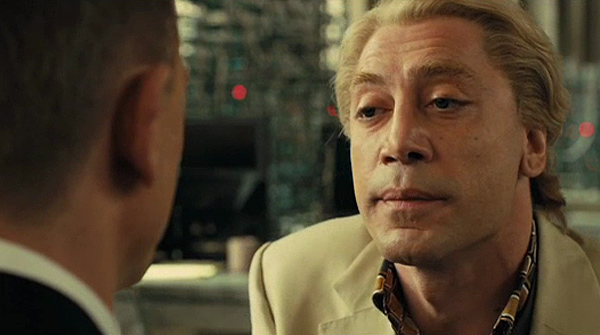
This film is essentially about inheritance and resurrection. It's about the legacy of one generation being handed onto the next. The inheritance is personal for both Bond (Daniel Craig) and M (Judy Dench) - doubly so for Bond. The way in which the contemporary espionage and terrorism landscape is redrawn by this film brings it bang up to date - and mercifully not a religious extremist in sight. Gone are the gimmicks of magnetic watches and exploding pens - these are times for cyber gadgets and nimble and fast typing fingers. We are introduced to a new Q (Ben Whishaw) who challenges both Bond and the old order. We are given a tour-de-force performance by Javier Bardem who plays the baddie Silva, with a steely campness.
There is plenty of action in this film - it moves along very rapidly and its 143 minute runtime is a pleasure. Mendes has put together a story with real weight which delivers characters that are three dimensional and who have more depth than we are used to seeing in a Bond movie. Once or twice the plot twists are a little predictable - but it's not a problem. Adele's belter of a theme is unmistakably Bond and the opening sequence is very creative and more about Bond rather than simply silhouettes of naked girls (well for the most part) - which is fitting for the way Bond is portrayed in this outing. Product placement is annoyingly very evident.
In this 50th year of celebration of Bond movies, there are clever nods to previous Bond films. I'm sure I missed some but look out for parallels with scenes from Goldfinger, Moonraker, Live and Let Die and The Man with the Golden Gun. There are fewer "Bond girls' and gratuitous sex and this film has less violence than the last two Daniel Craig outings. All of which is good.
I don't think I'll go for a third day running tomorrow - but save my pennies for the Blu-ray when it's released - maybe just in time for Christmas. This is a great film and I'm going to give it 9/10! Do go and see it.
Thursday, 25 October 2012
The Story of the Weeping Camel
This is another amazing film featuring the nomads of the Gobi Desert of Mongolia. For me, it evoked a similar reaction to watching The Cave of the Yellow Dog reviewed here. This is more a drama as opposed to a documentary although is does have a docu feel about it. There's more info on the film and camels in general on the National Geographic site here.
This film offers the gift of engaging with a culture that is radically different from anything familiar to most people. The extended family live in two Yurts and have a walled enclosure for their sheep and goats. Their livelihood flows from the products and by-products of these animals and also the camels. It is a hard life which is lived in a brutal climate. No-one complains and the children never seem bored although the odd encounter with a TV entrances the younger boy Ugna.
Each spring the camels give birth to a new season of colts. Things are going well until a new mother, the last to produce, is in labour for two days wandering around the camp with half a camel hanging out. This is, understandably, an excruciating time for the camel and the family look on helplessly in the hope that nature will take its course. In the end they intervene and help the colt to emerge - a rare white colt. The mother shuns the colt denying it her love and her milk.
As the family repeatedly try to bring colt and mother together over many days we are treated to a privileged and intimate view of family life in the Gobi Desert. A life that draws on an inherited spirituality that is earth-focussed and tied into the natural world. Milk is sprinkled on the ground as a thanksgiving sacrifice. Songs are sung and stories are told to keep alive the communal identity of the people.
Odgoo manages to milk the mother and get some of the milk into the colt - but it isn't easy. Clearly a solution is needed before the colt falls too far behind in its development. Drawing on their religion, the two young boys Dude and Ugna are despatched on camel back to the local town to seek the help of the violinist whose playing will help reunite mother and colt. The idea of sending two young boys off alone across the desert on such an errand would invoke cries of child-abuse in the politically correct West. The boys go about their task as a storm begins to gather. They reach the town and find their relatives who help them speak to the music teacher - the violinist.
The boys return to the family camp alone and a mood of disappointment settles on the family. The following day a motorbike appears on the horizon bouncing across the sand and riding pillion is the violinist. After an appropriate ritual the violinist plays, Odgoo sings (most beautifully) and with the encouragement of the family mother and colt and reunited and suckling gets underway. No explanation is offered or hinted at to explain how we achieve the happy ending - but a happy ending it is.
Or is it? As the camera pulls away from the Yurts we see Dude positioning the newly acquired satellite dish to pick up the signal for the new TV powered by solar panels lying on the Yurt. I sense the intervention of the film crew and the money they brought may change this family's life, irrevocably, for ever! Ugna will not be doing quite so much work around the Yurt now he has TV to watch and the outside world will invade the family's routines and patterns of being. Possibly delivering a more devastating invasion to the Gobi desert than that of Genghis Khan 800 years earlier! This is an uplifting film that gives us a view of another world. I can't help thinking that more than footprints were left in the sand when the film crew departed. I'll give it 7/10.
Monday, 22 October 2012
Simon Birch
This is the third movie I've seen in a week - all of them have a very similar theme. Again I used it in a learning context. This story will warm your heart. It will make you laugh and it will make you cry. Yes, at times is very slushily sentimental but at its core there is a message that speaks loud and clear - and one we would do well to heed.
Set in Maine and centring on a small community and its church, Simon Birch is the story of a boy who was different - who used his difference to great effect. In every sense of the word Simon is a misfit. Completely lacking in malevolence but with a mischievous tendency, Simon is a prophet. The Bible is filled with unlikely subjects to be messengers of God - and Simon Birch is right up there with the best of them.
Born abnormally small and played by an actor (Ian Michael Smith) who stands 3'1" tall, 12 year old Simon has insights and wisdom beyond his years. He is the talk of the town along with his best friend Joe (Joseph Mazzello) who is also an outcast on account of his illegitimacy. The two spend most of their free time together and Joe drives Simon around the community in a specially constructed side-car attached to his bike. Simon's parents more or less disown him.
The portrayal of the church and the conflicted and smooth Rector, Revd Russell (David Strathairn), places neither in a good light. The church does however deliver the most amusing nativity play I've ever seen and the film is worth it just for that.
Simon has a faith in God that is unshakeable. He is convinced that he is different because he is God's special instrument. Consequently he is always ready to speak out and challenge the accepted order in a prophetic sense - but most of his interventions are mis-tiimed and land him in trouble. Revd Russell does not share Simon's sense of being God's messenger. Meanwhile, his friend Joe is constantly driven to discover his father's identity which from time-to-time also lands them both in trouble.
The central thrust of the story is Simon's refusal to let his difference be an impediment to his role within the tight-knit community. When this thread of the story is woven together with his friendship with Joe, his prophetic calling and his fascination with girls, the narrative moves along with interest in a well-focussed arc.
This film challenges the viewer to think how they might make a difference within their community, how they might sustain and nurture their relationships, how they might speak out for God and challenge the collusive status quo and how we might all be a little less afraid to be ourselves - wherever that takes us. Get the tissues out, get the movie, and give it a viewing. I'll give it 7.5/10.
Wednesday, 17 October 2012
Dead Poets Society
Okay it's 23 years old and now I've watched it nearly 20 times - but it's still a classic and worth re-watching. I used it last night in a teaching session to help exemplify mentoring and helping people achieve their potential. It hit the spot.
The storyline sets a stark contrast between surface learning and deep learning, between conformity and self-expression, between the status quo and an alternative future. Set in the privileged old-world charm of East Coast USA at the end of the 1950's the generation that never had, thrusts out its frustrated lost opportunity through the lives of its children. But the boys, inspired by the free-thinking new Master Mr Keating (Robin Williams), begin to think for themselves and that sets them on a course that is riven with vocation and integrity but which has dire consequences.
This is a film that invites you to accompany a group of young men as they learn what it is to breathe to love, to feel and as Keating says, "to suck the marrow out of the bones of life". The famous tagline Carpe Diem - sieze the day - is a rallying call to an existential way of being. An invitation to make a difference in a world that demands you conform. The film echoes the call of John 10:10 and it remains inspirational.
The film won an Oscar for its screenplay and it is beautifully shot by Director Peter Weir, with the locations reinforcing and enhancing the story. The acting is strong with a very good cast and you can almost smell the layers of polish on the corridors and dormitories of Welton Academy.
I have no choice but to give this a 9/10. Get the disc out now!
Tuesday, 16 October 2012
Untouchable
This is another film which is simply a gift. The storyline is a familiar one which delivers few surprises.What makes this film exceptional is the acting and the alchemy of the lead characters. This film is stylish, clever, believable and funny.
Based on the true story of Philippe Pozzo Di Borgo who became a quadriplegic following a para glider accident, this film charts the relationship between Philippe (François Cluzet) and the man Driss (Omar Sy) whom he hires to be his 'life help' his arms and legs.
Philippe has been depressed after the death of his wife three years after his accident. He has wealth beyond measure and a host of attendants to run his affairs and household. Driss only attends the job interview to get a signature on his benefit form to qualify for welfare. Philippe ends up hiring him. The gulf between the two men is in every way immense. Driss is from 'the projects' - the anonymous low grade high-rise hosuing of Paris' suburbs. He has been in prison and struggles to connect with his extended family.
What does connect the two men is their humanity. Driss is able to help Philippe recapture a sense of living for the moment as he races through Parisien traffic with Phillipe in his Maserati. Philippe tries to help Driss get acquainted with art and high culture by taking him to art galleries and the opera where the film delivers one of its funniest scenes. Driss helps Philippe get acquainted with dope! After watching this, your interest in the tactile sensitivity of ears may never be the same again!
The lives of the other staff in the grande maison are also touched by Driss as he works his infectious magic. His attraction to Magalie (Audrey Fleurot ) runs throughout the film with a nice touch at the end. Driss introduces his own music (Earth Wind & Fire, George Benson et al) to Philippe and the household, and this proves to be the catalyst for Philippe's best ever birthday party.
This film will inspire, delight and amuse you. It's warmth and characters will touch you. Its music will get your feet tapping and make you smile. You will come to love Driss and Philippe. If you don't mind sub-titles go and see this film now! I'll give it 8.5/10.
Monday, 8 October 2012
Once Upon a Time in Anatolia
Anatolia accounts for the Western two-thirds of Asian Turkey and so in a sense is used in a generic way. However, we know from the film's dialogue that the story unfolds in the countryside surrounding the small town of Keskin - which really exists in central Anatolia. This film is pure Art House as you might expect from Director Nuri Bilge Ceylan and needs concentration for all of its 2:37 run time. In essence it is a road trip that offers a wonderful opportunity to observe a number of characters both in the minutiae of small-talk and within a culture preoccupied by status, rank and privilege.
This is first and foremost an observational film the strength of which lies in the characters and the rolling Anatolian scenery. The film takes place over 18 or so hours beginning late one afternoon and finishing mid-morning the following day. At times, it feels like you are watching in real-time - for all of it! The majority of the film observes a convoy of three vehicles trolling around the Antolian countryside looking for a body. Kenan - a local man and his mentally challenged brother have confessed to the murder but Kenan was in such a drunken stupor he can't clearly remember where he buried the body - "by a pond near a tree", is the best he can do.
One car carries the local Police Commissioner, his lieutenant and another officer along with the local Doctor and the Kenan. The second car carries the local Prosecutor, his staff, Kenan's brother. The third vehicle is a police jeep with uniformed Gendarmerie and two diggers along to exhume the body. This rigid demarcation of status plays out in the way orders are given and respect is demanded. The contrast in the outlook of the Prosecutor and Doctor compared with the others is marked. They are educated, have travelled and have a different perspective. The others are more concerned with what meat will be for supper, urination, divorce and suicide!
This is a film about men and their view of the world. The Police Commissioner at one point says that in all his 20 years of policing every crime has at it's root a woman! I'm not sure if this was personal or institutional misogyny, but no-one seemed to demur. Women do feature occasionally, as do children, but their roles are limited - brief glimpses of a class relegated to second place in this patriarchal society.
The convoy lumbers around the rolling hills as darkness falls. The dim lights of the vehicles trace across the landscape as panoramic still shots are held for ages. The only real energy being injected by the pathetic blue light pulsing on the roof of the jeep. The lighting and scene selection are breath-taking.
It would be expected that the Police Commissioner should be the most keenly observational and the Doctor the most objective. As it turns out the Commissioner is blinded by his prejudice and the Doctor falsifies the autopsy report because of his empathetic pastoral concern for the widow and her son.
If you have spare 3 hours and wish to allow the Antolian landscape and its people to wash over you, this will be a rewarding watch. If you prefer action block-busters, stay well clear. I'll give it 7/10.
Monday, 1 October 2012
Looper
This film is billed as 'This decade's The Matrix' - dream on baby! Whilst it may not be on a par with my favourite film, Looper is clever and raises some interesting questions that require mental gymnastics to get your head around it. It will be hard to say too much about the film without giving the story - and particularly the ending away - so I'll keep to generalisations and won't spoil things for you - but only read past the spoiler alert below if you're happy to.
In the trailer, the central character Joe (Joseph Gordon-Levitt) says "I work as a specialized assassin, in an outfit called the Loopers. When my organization from the future wants someone to die, they zap them back to me and I eliminate the target from the future. The only rule is: never let your target escape... even if your target is you." In a nutshell that's the story. Crime bosses in 2072 decide who they want to eliminate and send them back at an agreed time to a specific location for assassination and disposal of the body. That way they cannot be linked with the murder. Loopers are well paid and live the high life while everyone else stumbles around in an economic dystopia set in 2042. Fast cars, recreational drugs and sex are all freely available to the wealthy Loopers. They live the hedonists dream.
All is well (relatively) until a number of Loopers encounter the uneasy situation of discovering that they have just assassinated their future self - they have 'closed the loop'. Each victim has the Looper's bounty strapped to their back - a number of silver ingots. The closing of a loop is denoted by the Looper receiving payment in gold bars rather than the usual silver bars. They then realise they have 30 years left to live and are now on a trajectory that will inexorably lead to their assassination - at their own hand. They retire from the Loopers, take their stash and head for a distant land to continue their hedonism.
The film's intellectual capital is invested in exploring the effects of messing with the time-line and figuring out what the consequences might be. On the odd occasion two incarnations of the same Looper exist in the same time-space, any violence meted out on the younger version immediately appears as scar tissue on the older version. The world of the Loopers is policed by one of the future crime bosses (Abe) sent back in time to work with an army of armed thugs called Gat Men.
All is well until an extraordinarily large number of loops begin to be closed and the Loopers become suspicious as their number decrease. Joe the younger encounters Joe the senior (Bruce Willis) and the scene is set for major mayhem and a widespread blood-fest as they seek to eliminate each other whilst the Gat Men seek to eliminate them both.
An added dimension to the story is that through genetic experimentation, 10% of the population have developed limited Telekinetic powers - they are able to manipulate small objects simply by the power of thought. However, one of the film's central character's has inherited Telekinetic powers that are far beyond anyone else's which (for my timid soul) at times turns the film into more of a poltergeist/horror film than an action movie. Emily Blunt gives a tender and strong performance at Sarah who has her own set of demons to exorcise.
POSSIBLE PLOT SPOILER
What would otherwise have been a typical Bruce Willis blood-fest is saved by the twist in the end. The way the story ends holds out hope of redemption for Joe. For me, it provided the pay-off. Without it, this would have simply been another poor film copying the Die Hard genre.
Perhaps it's a product of ageing, but I am becoming increasingly uneasy with excesses of violence, blood-fests, sexual abuse and general violation of people. I am finding films that deliver these things by the bucketful harder to enjoy. In reflecting on the film with my significant other, her wisdom observed that perhaps it is only possible to reach people who are into violence and blood-fests etc with a message that redemption is possible, through films such as this. Who am I to deny someone that message? On the other hand, is it simply me becoming more sensitive, or as more and more films become more and more graphically violent, are we all becoming more desensitised?
I think the storyline is imaginative and creative but sadly the blood-fest detracted from my overall enjoyment. This film is not in the league of The Matrix or Inception but it does make you think - and grimace I'll give it 7.5/10.
Sunday, 16 September 2012
Hope Springs
Some films deal with deep issues in ways that don't help. Humour is often an effective device to deploy when dealing with things that are hard to be open about. This film is a gift. Not only does it treat a very common and serious subject with respect and reality, it delivers its treatment with great and subtle humour - wonderfully aided by top class acting. This film is excellent - go and see it now.
Arnold (Tommy Lee Jones) and Kay (Meryl Streep) have been married for 31 years. Their relationship used to be warm and, to a degree, fulfilling. In recent years, the fizz has gone and for the past five years there has been very little physical contact of any sort - and certainly not anything intimate! Kay decides she wants to try to rescue the relationship and recover the fizz. Going to the bookstore she buys a book by a therapist who helps couples restore some of the lost magic. So, inspired by the writings of Dr Feld, she signs herself and Arnold up for a week's intensive therapy.
Dr Feld is played by Steve Carell and I have to say he is brilliant - the first time he has delivered a role that doesn't make me cringe repeatedly. I won't say any more about the 'therapy' sessions or how the story develops or concludes, but it explores the problems of talking about sexual desire, fantasy and physical intimacy in a way that is not only convincing and sensitive, but which also draws you in and encourages you to develop a tangible sympathy for Arnold and Kay. This is helped by very strong performances from the three main characters - particularly Streep. Confusingly for me, having played the 'Iron Lady' she spends a lot of the movie looking just like Margaret Thatcher - which in some scenes is most inappropriate!
The film is split between Omaha Nebraska and a small coastal town in Maine. These two contrasting locations set up a helpful metaphor for the processes that are going on in each place. The folk in Maine are used to having couples visiting Dr Feld's clinic and the local businesses cater for the specific needs of this type of clientele.
This film will not excite younger viewers. However, those of us who inhabit middle-age - particularly those who are also 'empty nesters' - will warm to the themes that can resonate with some couples as they drift towards retirement. Kay refused to let ageing bring the end of intimacy - she took action to try and recover it. The road she set out on was not without its pain and discomfort - are any couples truly that reticent and ignorant when it comes to discussing the sexual side of their relationship? Perhaps so, as Streep and Jones deliver a masterclass in believable angst.
I think that this is a bold and courageous film that tackles a difficult subject with grace and style. It delivers strong acting performances and some laughs along the way. I'm going to stick my neck out here and award it 8.5/10 - almost a 9! Go and see it - or buy some tickets for your 'old folks' as a treat.
Monday, 10 September 2012
Total Recall (2012)
I have not seen the original film, so this was fresh to me. I say fresh, but the central idea of a journey to discover who I really am is not a new one for cinema and certainly not new at all within the annals of science fiction. To me, the film was a cross between V for Vendetta and The Matrix (both Wachowski Brothers films) which borrowed visual elements from Bladerunner, Minority Report, Star Wars and hosts of other near-future dystopian sci-fi films.
The story explores two central questions:
- How do I know what is real?
- "Man's [sic] destiny is to discover who he truly is."
Following a global war with biological weapons the only two areas of the world that are inhabitable are the UK and Australia. Workers live in Australia and commute through a giant tube train through the earth to the antipodes. The work is boring and unfulfilling and population densities are very high. The concept that gives rise to the title comes from an agency who offer to implant your mind with constructed memories that will seem real. These escapist memories of a perfect/alternative life offer people the opportunity to break out from the drudgery of daily life. There's also the threat of clone wars too!
So, a story about the oppressed and the oppressors offers a platform for the exploration of philosophical questions and for Kate Beckinsale (Lori) and Jessica Biel (Melina) to pursue the lead character Douglas Quaid/Hauser played by Colin Farrell. Oh - did I mention the girl with three breasts?
As a non-stop action film this delivers a lot. Not a lot of variety but a lot of ass-kicking. As a vehicle for philosophical exploration it falls short of what it might have been - disappointing. Not as good as it should have been - I'll give it 6.5/10.
Sunday, 9 September 2012
Vertigo (re 2012)
On the back of being voted the greatest film of all time in the 2012 Sight and Sound poll, Vertigo has been doing the rounds again and I saw it today at Harbour Lights. I'm not sure it's the greatest film of all time. You can only make that call on objective data that can be quantified and measured to allow a comparison. Whilst technical stuff is vital and appreciated, it must surely be our affective response that might cause us to designate a film as being the greatest. I don't know about you, but my mood and my experiences mean that the way I respond to a film can be quite different on different viewings making it impossible to be definitive. All of that aside, I did enjoy the film and found it to be compelling viewing.
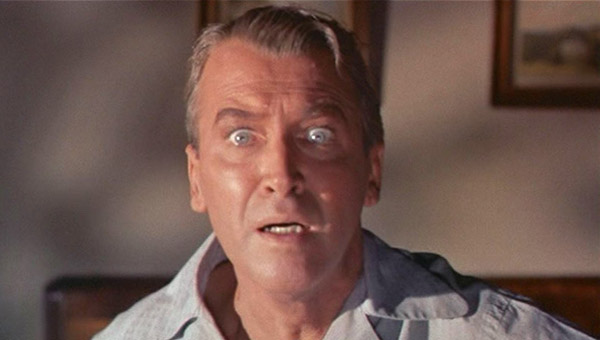
Hitchcock is an acknowledged master of suspense and the film noir genre. This is an excellent film that makes full use of the wonderful city of San Francisco as an expansive backdrop and it also delivers fine acting performances. James Stewart is captivating in the lead roll and Barbara Bel Geddes is simply wonderful.
The plot, to begin with, is straightforward but at the midway point it is almost as though the film experiences a second beginning where the hallmark Hitchcockian twist begins to unfold. Hitchcock's portrayal of someone descending into psychosis is masterful given what the 1950's technology made possible.
I can't say anything about the plot as any hint may blow it for those who haven't seen it. I imagine a couple of generations may not have experienced this film - go get it on disc or check out your local cinema - it's doing the rounds.
This is most certainly first class cinema. Whether or not it's the best film ever - I'll leave you to decide on that. I'm giving it 9/10.
Saturday, 8 September 2012
Anna Karenina
Tolstoy's Anna Karenina gets a fresh twist in this new release starring Keira Knightly and Jude Law. Tolstoy found theatre loathsome so it is a brave act by Director Joe Wright to use Tom Stoppard's screenplay to set the story in a disused theatre! I think you either have to treat an epic costume drama in the conventional way, or do something new. I think the new in this case works. But be warned: a novel that runs to nearly 900 pages is never going to produce a short movie!
The story follows the book quite closely but Joe Wright employs plenty of theatre-style scene changes to move the story on whilst it remains on the stage and within the disused theatre. Flats drop and ascend, lighting brings characters into view and then hides them, perspectives change to add to the drama and the full-on lighting delivers eye-popping colour. This is then seamlessly edited together with footage shot outdoors - always on an epic scale with distant horizons to emphasise the vastness of both Russia and this story. The constant use of trains and carriages underlines and emphasises the journeys the characters were on. At times I found the music so intrusive it constantly felt like they were going to break into song!
The story is about relationships, love, fidelity, guilt and the pressure of social expectation. It also highlights very clearly that men can get away things that women in the world of Tolstoy cannot get away with. The story sets Anna at the centre but as well as her own marriage to Alexei, the relationships within the Oblonsky family are also put under scrutiny. The tales of the Karenin's is a mirror opposite of the Oblonsky's. The way in which the two primary suitors go about their tasks - Count Vronsky and Levin are also mirror opposites. It is within the intriguing web of these tangled relationships that the tragedy of Anna Karenina is played out.
The performances are all strong. I particularly liked the restrained and controlled Jude Law as Alexei Karenin and the warm and authentic Kelly MacDonald as Dolly Oblonsky. I found Aaron Taylor-Johnson's Count Vronsky to be immensely annoying - must have been good acting - and the painfully honest and painfully honourable Levin played by Domhnall Gleeson to be frustrating in the extreme - again, good acting. I'm sorry to report that I found Keira Knightly's performance less convincing. Both in terms of time and in terms of character development, her Anna Karenina became more like the character Sabina Spielrein that she played in A Dangerous Method (reviewed here) - hysteria and all! Come on Keira - you need to find some different roles to exercise your undoubted talent!
At 2 hours 10 minutes long, I found this to be just a little too long for comfort. However, the story is on such an epic scale that to make it any shorter might have rendered it meaningless. I appreciate the boldness of the conceptualisation and much of the acting. Whilst worthy, I shall not be rushing to add it to my collection of discs. There are many compelling films on release at the moment - see them before you see this. I'll give it 6.5/10.
Subscribe to:
Posts (Atom)