Friday, 31 August 2012

The Dark Knight Rises


The difficulty with this film is that as soon as you try to rationalise its plot and its characters, it all falls apart. That is because this film is a fantasy. Too many reviews and discussions about this film fall because they fail to understand that Batman is fantasy. Having said that, it then requires us to make a leap from our reality to Batman's unreality if we are to make any sense of the film at all!

For the trilogy to complete its narrative arc it was necessary for Batman (Christian Bale) to be rehabilitated. How that is achieved is as complex as it is brutal. At nearly three hours long it is a credit to Nolan's direction that the film only drags two or three times. It is epic in many ways. The set design - the opening 'extraction', Manhattan below and above ground, 'The Pit' prison and the sfx are all visually stunning and fill the entirety of the screen. I had hoped to see it in IMAX but they finished screening it the day before! That would have been even more stunning visually.

The plot itself is straightforward but there are a number of sub-plots which are running which complicate the whole storyline and require a bit of mental jiggling to hold them separately as they weave in and out of the main story. This is archetypal goody versus baddy - straight out of the ethos of DC Comics. One thing that really struck me was Batman's repeated insistence on 'no guns and no killing' and how in the numerous fight scenes, some of which were overly brutal for my taste, you never saw any blood - just like the 1960's TV shows that were decorated with 'zap!' and 'pow!' etc.

The story begins eight years after the end of the previous film - The Dark Knight. Batman had taken the blame for the death of Harvey Dent at a time when the people of Gotham City needed a hero in which to believe and someone around whom they could rally in their quest to eradicate organised crime from the city. Commissioner Gordon (Gary Oldman) had used the momentum to pass the tough Dent Act and now the most dangerous 1000 prisoners were locked up in the city's toughest prison. Commissioner Gordon is wracked with guilt about letting Batman wrongly carry the can for Dent's death but is, as yet, unable to reconcile himself to coming clean. Batman - aka Bruce Wayne - has become even more of a recluse as he mourns what was and the loss of his love Rachel. It will obviously take something on a huge scale to turn this misery around.

In steps Bane (Tom Hardy) - a long term DC Comics bad guy - who is a man of a mountain and who places Gotham City and its inhabitants in jeopardy. The threat of Bane lures Batman back into the skies (after a remarkable physical rehabilitation) and he attempts to save Gotham City from extinction. The love interest is provided by Catwoman/Selina Kyle (Anne Hathaway) and Marion (Marion Cotillard) but for me it was the performance of Alfred the Butler (Michael Caine) which steals the show for its warmth, depth of engagement and sheer humanity. I am not going to elaborate further on the plot, but if you want a fuller exposition check out IMDb. The way the film ends offers a lesson in how to deliver a perfect ending. It was good to see cameos from Liam Neeson and Tom Conti too and with Morgan Freeman reprising his role, it really is a very strong cast - but then a nearly 3 hour film needs that!

This film is intense in many ways - the drama and suspense are maintained in a way that invites tension to build, the characters are not as straightforward as they first appear, the weaving together of the sub-plots requires concentration. For me, it was where the the film picked up the unresolved themes of The Dark Knight where it truly excelled. Christopher Nolan's direction (and joint screenplay writing with his brother Jonathan) explore in depth the angst and moral machinations of the main characters. Themes of regret, loss, guilt and revenge are worked with and developed as the story unfolds. The script delights to balance on the knife-edge of grey areas in relation to a number of moral dilemmas facing the characters. Those on the side of 'right' hesitate and reflect before acting - even when two wrongs might appear to make a right. Those on the side of 'wrong' are driven by a lustful quest for power, control and revenge. For me this was Bale's best performance as Wayne/Batman.

This is a first class film which is fully deserving of its accolades (it wasn't over-hyped to begin with!). The story, acting and visuals are all very strong. It rounds off the trilogy in a satisfactory way being fully faithful to the characters and ethos of Batman but updating it to the 21st century. Nolan's stock will continue to rise and I look forward to his next offering. If this film had been 30 minutes shorter it would have scored a 9, so I'm going to give it 8.5/10. If you've not seen it - catch while you still can.

Thursday, 30 August 2012

Balzac and the Little Chinese Seamstress


Where this film scores big is in the 'less is more' approach it adopts and in its use of stunning natural scenery which 'performs' so strongly that it should be listed as a member of the cast. It offers an insight into life under the Red Brigades of Mao's Cultural Revolution in China in the 1970's. However, this film is neither original in its plot or filled with memorable acting performances.

The story is essentially about three things: the power of ideas, the desire for humans to transcend through creativity and it's about love. The story begins in 1971 as we follow two young lads from families who have been labelled as liberal intellectuals making them counter-revolutionary. The lads have been sent from their city homes to Phoenix Mountain to be 're-educated'. The film is filled with clunky Maoist rhetoric, such as the village chief proclaiming "revolutionary peasants will never be corrupted by filthy bourgeois chicken"!

We are never told what the precise crimes the bourgeois families have committed and the two lads, Luo and Ma seem more than a little naive as they are confronted with the stark poverty of life in a remote village cut off from the rest of the world. Time and time again, the lads lie and befuddle the locals to save themselves from being hauled up in front of the local thought police.

As I said, this is a film first and foremost about the power of ideas. Under the Cultural Revolution all foreign literature was banned. One of the lads is a gifted violinist and plays a piece of Mozart which the village leader immediately interprets as being reactionary and bourgeois. The lad avoids confiscation of his violin by explaining that it is 'Mozart thinking of Mao' and so is allowed to keep his instrument.

The two boys are unable to cope with the harsh physical regime that life on Phoenix Mountain demands. Recognising this, the village leader sends them off to the local town to watch a North Korean film and to return to the village and retell the story. This they do with great embellishment and demonstrate the power of story to lift and transform from the here and now to somewhere different. This provides the metaphorical mechanism by which Maoist China can be escaped. 

Meanwhile the lads develop an interest in the granddaughter of the local tailor whose trade gives him an elevated status in the eyes of the peasants. The girl is the tailor's seamstress. As the lads develop a closeness to her, she responds to their quest for an experience to transcend the mundanity of peasant life. She listens endlessly to the lads retelling of Western classics that they have read and she is enthralled. The seamstress confesses to gazing up to the sky each time she hears a plane and wondering where the people are going and what kind of lives they lead.

Another reactionary bourgeois lad is rumoured to be hoarding a stash of foreign literature and with the seamstress' help they steal it. As the lads read the novels and poems to the illiterate seamstress, she becomes more and more drawn into their world of ideas and stories that offer the hope of escape.

The pacing of the plot is at times jerky and the film lurches towards its conclusion rather unsatisfactorily. However, whilst the outcome is in part predictable - given the semi-autobiographical nature of the story, I won't spoil it for you.

This film's delight lies in the way the story is told and the setting in which it is told. Both outweigh any other short-comings the film may have. It is gentle but has a strong message. It is well worth the investment of your time - it was a Golden Globe nominee and also an official Cannes selection. I'll give it 7.5/10.


Sunday, 5 August 2012

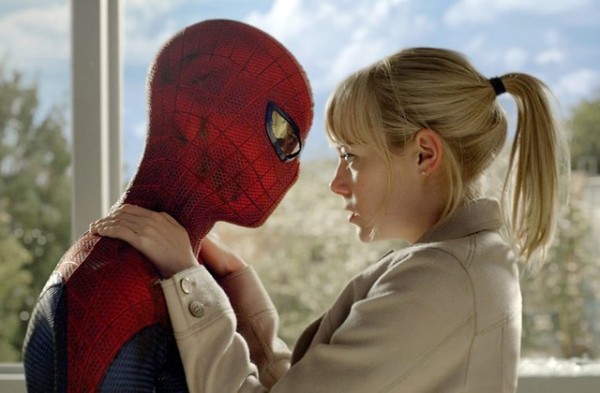
The Amazing Spider-Man


This film takes us back to the beginning and tells us (again) how Peter Parker becomes Spider-Man. There is little that is new in this film. That will appeal to arachnid die-hards - especially as the two lead characters offer a more 'punchy' performance than Maguire and Dunst. The graphics and design are state-of-the-art which sets this film visually above the Maguire trilogy - the lighting in this one is particularly well done.

At the end of the day, the film is a simple super-hero movie. The story is straightforward and serves as a vehicle for the fledgeling Spider-Man to flex this legs and also as a warning against cross-species genetic engineering. Whilst the plot is straightforward it is delivered with an uneven pace and at times limps along whilst at others it almost moves too quickly. The script is similarly lumpy. As a hoodlum shouts after Parker - ''I've seen your face, I know who you are', Parker happens to glance up and see a poster promoting a wrestler in a mask which inspires him to go home, copy the design and hand sew himself his own mask. At the end of the film the last lines of dialogue are equally cumbersome and uncomfortably hold out the batten to taken up in the sequel!

As I said Andrew Garfield and Emma Stone play their characters well, ably supported by Rhys Ifans who plays the baddy and Martin Sheen (now with Sean Connery-style whistling teeth) and lovely Sally Field as his uncle and auntie who take him in when his parents mysteriously disappear. The scenes where the love interest develops between Parker and Gwen Stacy (Stone) are well handled and in less sympathetic hands might have led to her stringing him along for far longer than the poor boy could endure. It is handled with a believable and heart-warming sensitivity.

For me, where this film scores is the subject matter and attempted method of the baddy's efforts to wreak havoc on an unsuspecting New York. When the zeitgeist forces us to live in the shadow of fear of dirty bombs and bio-bombs being detonated in our metropolitan areas, this film makes real that threat as New Yorkers face being mutated into lizards! But we are saved by our heroine Gwen Stacy and her repentant father - and of course Spider-Man. There are a couple of nice touches such as when the construction industry comes to the injured Spier-Man's aid.

This was a nice film to watch with my son and daughter - a long time since that happened! I won't be rushing to add the disc to my library when it's released - but I am looking forward to seeing the new Batman film! I'll give this one 6/10.


Thursday, 2 August 2012

Me and You and Everyone We Know


This film is as quirky as the picture above and as a consequence I imagine viewers will either love it or be left wondering why did I waste 90 minutes watching that! For those who like their Indie cinema to be two blocks ahead of everything else, then this debut feature written by and starring Miranda July will excite. For those who simply want to sit and allow a story to wash over them, this will disappoint.

The universal scope of the title is not really matched by the breadth of the film. In essence it is an honest and different attempt to explore the age-old chestnut of relationships, intimacy and sexual expression. This film manages to explore all three with a six year-old boy, some pubescent teens, thirty-somethings and also an older couple. The stories of the four generations are interwoven in both overt and hidden ways but the film is an ensemble piece that at times feels a bit claustrophobic as a result.

Richard is at the point of separating from his wife ahead of divorce. He has primary care of their two sons aged 6 and 14. He at one and the same time is both mesmerised and yet terrorised by the possibilities that life offers. At one stage he sets fire to his own hand - bizarre. He works as a salesperson in a shoe shop in an anonymous mall where he meets Christine. Neither are natural chat-up artists but both long for intimacy - not necessarily sexual. Christine's chasing after Richard forms the spine of the story.

Around that spine a number of characters of varying ages explore relationship, intimacy and sexual expression. Most alarmingly the 6 year-old gets into an on line chat room and cuts and pastes his way to some highly inappropriate conversation. He then ends up meeting his co-fantasist in a park on a bench! Two young teenage girls curious about sex and eager to outperform one another offer a 'Johnny ha ha' to the 14 year old. He subsequently befriends a 10 year-old girl next door who is busy buying appliances and linen for Hope Chest to form her dowry. Yes - it's all more than a bit weird. The fact that Christine is an avant-garde artist who makes movies out of other peoples holiday snaps and films her feet as she warbles monotonously into a microphone goes some way to setting the context.

I'm surprised that this film scores so highly on both IMDb (73%) and Rotten Tomatoes (83%) - but I guess it gets referred by word-of-mouth and so plugs into its niche effectively. I would honestly struggle to recommend this whole-heartedly. I hope I have given sufficient flavour so that folk can make up their own mind. This film has much that would prompt group discussion around relationships, attitudes to sex and the longing for intimacy that we all crave. It would allow plenty of discussion on ethical and moral issues that flow from these areas. I'm going to give it 6/10.


Sunday, 29 July 2012

Nowhere Boy


I bought this as ex-rental stock from my local Blockbuster just to make up a multi deal. I'm so glad I did - this film is smart, moving and engaging on a number of levels. Based on the book Imagine This: Growing Up with My Older Brother John Lennon, it will of course be of interest to anyone smitten by the Fab Four. If you want a portrait of England emerging from post-war austerity with the dawn of the swinging sixties glowing over the horizon, it's excellent. As a depiction of mental illness giving rise to family tensions, its power to engender sympathy for all the main characters by the end of the film is unrivalled. This story combines all three strands and weaves a tapestry whose worth exceeds the value of its components.

John (Aaron Johnson) is a troubled teenager who clearly doesn't fit in with his guardian aunt Mimi (Kristin Scott Thomas) or with the masters at the local Quarry Bank High School. Feeling constrained and hemmed in, John tries to forge a sense of self-identity through a number of avenues. Throughout the film he uncovers more and more of the truth about why he is living with his aunt and uncle instead of his mother. That journey scales many peaks of emotional tension and it sustains an affective engagement with his story. The acting throughout is top drawer but Kristin Scott Thomas as the aunt and Anne-Marie Duff as his mother Julia, excel.

If we are to believe that the story has an authenticity about its biographical detail - and there's no reason to suppose otherwise - I for one found my views of John Lennon being challenged. Far from being the drop-out rude boy, the narrative depicts him with warmth and repeatedly shows him acting with compassion - even when his actions will have painful consequences. The family situation in which he grew up goes some way to explaining the nihilism and anarchy that pepper his lyrics.

As a 15 year-old, John experienced life with recently widowed aunt Mimi as drab and authoritarian - a portrayal of Victorian values and British stiff upper lip. She lives in a dark house with brown wallpaper and furnishings. Julia's home is bright, lively and full of music and noise. When given the chance to meet his biological mother, he seizes it and is immediately entranced by the offer of the vibrant and colourful life she embodies - unboundaried, indsciplined, loving and completely spontaneous. The polar opposite of her sister Mimi who is cold, controlling and loathes displays of emotion. John is caught up in a titanic struggle between the lifestyles the two women embody. As the struggle unfolds, so he discovers more and more of his family's dark secrets and the unravelling has far-reaching consequences for everyone.

Through all the trauma that accompanies the revelations John experiences, he discovers a natural musical ability which he marries to his ability to write poetry. Forming a skiffle group (The Quarrymen) with school mates they begin performing and develop a growing and enthusiastic following. John is introduced to Paul McCartney (Thomas Brodie-Sangster) and they develop a friendship as McCartney's more advanced musical ability becomes something he readily shares with the rapidly developing Lennon. In time they are introduced to George Harrison and the nucleus of The Beatles comes into being.

The film stops before the Beatles break into the big time - which for me makes it primarily a film about a family dealing with the difficulties of Julia's mental illness. It just happens that her son becomes world famous and so many want to hear the story. How many families battling similar things, do so with their story remaining untold? The characterisations and script are first class as is the direction by Sam Taylor-Wood.

If you are looking for lots of Quarrymen footage and early Beatles trivia this is not for you - although there are many nods to what is coming. If you want the privilege of sharing with a family struggling with several taboo realities and journeying through the emotional ups and downs that accompany the struggles, then this is for you. Get the tissues and a stiff drink - and enjoy. I'll give it 8/10.


Sunday, 22 July 2012

I Know You Know


This is a thoroughly gripping film. It is not all uplifting, but it is gripping. Set in a bleak and dreary industrial South Wales landscape in the late 1980's, Robert Carlyle and Arron Fuller give compelling character performances as father and son Charlie and Jaimie. It is a film that is full of warmth.

This is the kind of film that if I were to make any meaningful comment, I would immediately give the plot away and that would be a pity as the plot is also something that is compelling and highly original. So this will be short review. I will say that the film is directed by Justin Kerrigan and is autobiographical - it embodies a lived reality and grittiness.

I said the film is not uplifting - there is no happy ending. However, I would imagine that after the opening 10 minutes or so, few would be able to guess where this story ends up. The acting is tight and the script is very well written and creatively delivered by Carlyle and Fuller.

I'm not surprised that this film only rates 5.8 on IMDB and 64% on rotten tomatoes. So much of the film is rooted in the culture of South Wales and 1980's Thatcherite Britain with the contrasting iconic cars of a gleaming Jenson Interceptor and beat up Ford Capri. I imagine that its cultural reference points may not translate too readily across the pond - it would have been a very different film had it been set in The Bronx or Chicago.

If you enjoy working with a movie you are watching and not always seeking a happy ending, then this could be one for you. Put it on your Love Film list and be prepared for a surprise.

I'll give it 7/10.


Thursday, 19 July 2012

Bibliography and Resource List

I've just added a Bibliography and resource list in the pages tab below on the right.


It's not meant to be exhaustive - simply a list of books I have, most of which I've read, and places I visit on the web and in the real world.


Hope it's helpful.

Sunday, 24 June 2012

Men In Black 3


After two months of chasing this film on two continents - I finally made it! Okay, I'll admit upfront that I'm a fan of the franchise and really like the pairing of Will Smith as 'Agent J' and Tommy Lee Jones as 'Agent K' - a kind of alternative Shrek and Donkey if you like!

By the third film of a franchise things normally get pretty stale and I went to see this out of a sense of duty rather than with any high expectations of it being a piece of great cinema. It isn't a piece of great cinema - but it certainly isn't stale either. I was delightfully surprised that not only did the story deliver a series of excellent CGI Alien encounters, but it went deeper and explored the tensions behind the J and K relationship.

The central thrust relies on time travel. It is not handled in a very sophisticated way - but then that fits with the story. What is sophisticated is the introduction of Emma Thompson as the new Boss 'Agent O' in the wake of Agent Z's demise and the appearance of Josh Brolin as the young 'Agent K'.

The story is quick to exploit the racial tensions that existed in the 1960s as 'Agent K' encounters prejudice from law enforcement officers and the general public. I'm not quite sure if it is genuinely trying to say we've come a long way in 50 years or nothing's really changed. Where the story plumbs new depths is in exploring the dynamics of the J and K relationship and why K is as he is and how J got to be recruited by K in the first place. The way in which this is done engenders sympathy for both the characters J and K. The homage to Groundhog Day is subtle and works very well.

The CGI is top drawer and the Aliens embody the right degree of being repulsive whilst also encouraging a degree of curiosity so you want to learn more. The way the story weaves in icons of 1960s America, bowling, cars, baseball Andy Warhol etc is cleverly done. Again the film shows the Manhattan skyline off to good effect with lots of action centring on the iconic Chrysler Building.

I will definitely be adding the disc to my collection when it comes out. If you're after good old-fashioned entertainment go and see it while you still can. I'll give it 7.5/10.


Sunday, 17 June 2012

Your Sister's Sister


Caught this at a members' free preview screening at Harbour Lights - well done Picture House!

I didn't quite know what to expect. What I encountered was an intelligent and engaging emotional drama that explores themes of loss, grief, love, betrayal and the fear of losing what you don't already have! Essentially it's a film about relationships. The story is told with irony and occasional humour. At the heart of the story are two sisters, Iris (Emily Blunt) and Hannah (Rosemarie DeWitt) and Iris' best friend Jack (Mark Duplass) who is the brother of Iris' ex - Tom. The film opens with a group of Tom's friends - including Iris and Jack meeting to commemorate the first anniversary of Tom's death.

This is a beautifully shot film that presents Seattle and one of Puget Sound's island communities in mist-laden muted technicolour. The film moves between indoor and outdoor scenes as the characters journey through their own inner hidden and then revealed vulnerabilities. It is good to see a low-tech, no special effects character film that is driven by the narrative and the performances of the actors. There are very few scenes with more than the three of them and the way the triangular relationships develop keeps the plot moving - although I felt it did get a little bogged down for five minutes in the middle. The ending is simply superb - I will say no more.

The characters are believable and the situation they confront displays human weakness and vulnerability in cringing detail. It is also a film about hope, forgiveness and reconciliation. The physical isolation of the location reinforces their shared sense of being alone. The ties of family and of siblings in particular forms a strong thread that runs through the story. Dealing with such deep and profound themes it would have been easy for the film to drown in slushy sentimentality or melodrama. Full credit goes to the Director Lynn Shelton and cast for avoiding the traps of cliche that the subject matter could have so easily delivered.

This film sets out a landscape of relationships that feels very contemporary - perhaps the kind of story Douglas Coupland might have written (in a Generation X sense). At times you can almost hear the pain and anguish being processed internally by the characters' emotional machinery as they try to come to terms with developments and attempt to find a way of moving on. This film engenders empathy from viewers as you accompany three people facing their own and each other's demons. It moved me to tears on a couple of occasions!

It is gentle and engaging, a treat. Do go and see it. I'll give it 8/10


Saturday, 16 June 2012

Prometheus


I've been reflecting on this for several days as I'm still not sure how to write it up. I know that ambiguity is a vital component if viewers are to be invited to use their imagination in making meaning of a narrative they engage with. However, for me, this film has too much ambiguity, leaves too much unexplained and contains too many lucky coincidences. Half the time I was thinking 'this is a really intelligent and realistic "prequel" to Alien' and the other half of the time I felt 'I was being suckered in to something that simply wants to keep the franchise running'.

From all the pre-release hype through to the way the title of the film appears on the screen in direct homage to Alien this is a a film that stands within the Alien family of movies. The extensive (and excellent) use of Giger's artwork for the Space Jockey's spacecraft and world tie the film visually into Alien. The fact that the film does not end with John Hurt walking into a field of Alien eggs means that its conclusion takes the narrative into another direction. If by prequel you expect a storyline that tells you how we got to the start of Alien, then this will probably leave you a little disappointed. If you are open to an exploration of the world of the Alien and its possible creator, then you will find this a hit!

WARNING: THE FROM HERE ON THERE ARE A FEW SPOILERS - WHICH MIGHT HELP YOU UNDERSTAND THE FILM AS YOU WATCH IT.

In its own right, as much as any story contains flaws and ambiguity, Prometheus is a worthwhile film. The cast is strong and the performances are good - although Michael Fassbender's David is more like a synthesis of every android you've ever seen, wrapped up with the intonation and all the charm of HAL from 2001! Yes, there is a chest-bursting Alien emergence. Yes, it does have molecular acid for blood. However, the film also introduces us to Calamari on steroids and a life-cycle for the Alien that defies rational explanation.

Where the film does score big is in the way it sets out a series of metaphysical questions and then leaves them gently unresolved. I understand that Scott was toying with the idea of calling this film Paradise but that the name has been held-over for the sequel to Prometheus (if there is one). The film explores the origins of humanity and the journey the USS Prometheus makes is understood to be in response to an invitation to a distant planet. When they arrive, they happen to enter the atmosphere right on top of a massive domed structure which they enter and inside which they discover holographic ghost-like images, Space Jockeys in stasis and, unbeknown to them, thousands of Alien eggs which they somehow manage to activate into the next stage of their black gunk-oozing life-cycle.

The biology is certainly beyond my understanding - but that is where Sci-Fi comes into its own - it wouldn't be fiction otherwise! But quite how Dr Shaw (Noomi Rapace) manages to self-perform a Caesarian and then run off down the corridor, only doubling up in agony every 100 yards, eludes me - even with large self-administered doses of anaesthetic. A scene towards the end where she and Meredith Vickers (Charlize Theron) are trying to out-run catastrophe is more Keystone Cops slapstick that 21st Century Sci-Fi at its best! Yet, Dr Shaw's character has more than an echo of a certain Ellen Ripley about her.

The questions still remain:

  • How did David learn the Space Jockey language? 
  • How did he know they were planning to destroy earth? 
  • Why was the Space Jockey so violent and aggressive - wasn't he meant to be a higher life-form (even though his DNA matches human DNA 100%), or is aggression and violence where evolution is taking us?
  • What's with the Calamari on steroids?
  • Why did Vicker's allow Janek to push her buttons so thoroughly?
It's good to come away with questions - and I'm sure the ones I've raised simply demonstrate my own slow mind. However, this is a film worth seeing - I'll give it 7.5/10.


Saturday, 9 June 2012

Adjustment Bureau


I watched this again last night and enjoyed it just as much as the first time. You can catch my initial review here.

It struck me more than ever that this clever adaptation of Philip K Dick's Adjustment Team first published in 1954 plays out the classic Christian theological dispute between freewill and predestination - a kind of up-to-date Arminius versus Calvin debate. (Or to be more accurate the followers of Arminianism versus the followers of Calvinism.) Wikipedia has some useful articles if you feel the need to check out the details - the best way in is perhaps here.

Originally I said that Agent Harry Mitchell (Anthony Mackie), whose interventions (or lack of,) bring about the situation that confronts David Norris (Matt Damon) was motivated by guilt. While that is still, I believe true in part, I have been persuaded that the feelings compel him to act out of compassion.  For me this is a much more satisfying way of reading the narrative.

It also sets up a dichotomy between believing that prayer might change the Chairman's plan - or that in pursuing freewill we can shape the future the Chairman invites us into. But that would be setting Calvinists against Arminianists again - and I don't want to do that (but it's good fun).

If you've not seen it - please do. It's a feel-good film with very little violence or swearing and only one brief and discreet sex scene - you don't get many films like this these days! Something for the men and the ladies too.

Sunday, 3 June 2012

Four Lions


I caught up with this on disc last night. It is a film that for me provokes two clashing reactions which are never entirely able to reconcile themselves. It is a brave and inventive piece of cinema which is well conceived and well executed. I am left with questions about the wisdom of the subject matter.

First and foremost it is a comedy. Set in the Pakistani community of South Yorkshire, the story follows a group of British-born men who live by and use the vocabulary of radicalised jihadis. Apart from their rhetoric, they do not appear to engage with Islam or moslem culture in any serious way. They see their fight as one against oppression in general - it is unfocussed and lacks any specific target.

On a comedic level this film satirises the would-be terrorists more than it satirises their cause. On a social-commentary level it highlights the alienation felt by so many in Britain's immigrant communities. This is done in what feels like a very even-handed way, similar in lots of ways to aspects of the film Yasmin which I reviewed here. The dialogue in the film is razor-sharp and is at times very funny. It works as satire and makes part of British-Pakistani culture accessible to general viewers. (Viewers from outside Britain may struggle with some of the references.)

One of the most alarming aspects for me of the way the story is told, is the openness with which the central character Omar discusses his intentions with his wife and presents them in parable form to his son. The family offer a picture of a home filled with love, harmony and happiness and there is never any consideration of the consequences for his family if Omar 'succeeds'. They are living the dream that so many in their community (and others) seemingly aspire to. Perhaps this is an intended part of the parody of satire and my reading of it is simply too unsophisticated. If that's the case, forgive me.

I am left wondering how appropriate the subject of suicide bombing is for a comedy, in a world that experiences the painful consequences of such activities on a daily basis and in a country which is still raw from its own recent tragic experience. Tragic for the families of perpetrators and victims alike and for the links between our respective communities. As with any extremist, they are by definition never representative of the main-stream and we must remind ourselves of that continually.

Riz Ahmed stars as Omar and leads the disparate group turning in s strong performance. I'm sure we will see more of him. Kayvan Novak also turns in a very good performance as the confused Waj. As the film moves towards its climax the thought of suicide bombers detonating themselves in the midst of the London Marathon produces images that are too awful to dwell on.

For me the actual ending turned the whole film into something other than a comedy - perhaps that was the intention and perhaps that's why I feel deeply uncomfortable about the film as whole. Maybe something has pricked my conscience and if I work with it, a clearer understanding will come. Or maybe it simply remains unsuitable subject-matter for a comedy.

I'll give it 6/10.

Saturday, 2 June 2012

Magnolia


This is a film that viewers either warm to or are happy not to see a second time. This was about the sixth time I've seen it - so you know which camp I'm in! Whether or not you like this film, it is a bold project that paints a picture that contains a huge amount of detail - but on a huge canvas. At just over three hours long it might invite criticism of being too long. I think that is not the case. The story moves at a constant and quick pace and the editing is superb. There is simply no chance for boredom to set in.

The premise of the film is straightforward. Set in the anonymous suburbia of Los Angeles over a single day, the film weaves together the lives and experiences of 10 people. All of the people either have something to hide or something to fear. Some are good people, some mixed up and some not so good, some just starting out in life, others nearing life's end. It presents a series of character studies and whilst this particular set of somewhat extreme circumstances probably wouldn't all coincide in one neighbourhood on one day, the film retains sufficient realsim and the characters have sufficient depth and strength to carry it off.

This film explores a wide range of emotions and the top-drawer ensemble cast deliver a host of strong performances. Julianne Moore's character Linda leaves you breathless as she hurtles towards guilt-ridden breakdown. Tom Cruise's Frank T J Mackey delivers a character to loathe whilst John C Reilly's Jim Kurring and Melora Walters' Claudia deliver characters to love. Phillip Seymour Hoffman's nurse Phil Parma is filled with wise empathy and anchors the chaos that unfolds around him. The four dogs are a master-stroke.

Rather than trying to present a day-in-the-life of an LA suburb, this film presents a series of events that are possible and that includes the regularly updated weather reports. Towards the end the film presents precipitation of Biblical plague proportions when the sky rains massive toads - an amphibian deluge that wreaks havoc. As child prodigy Stanley observes - unlikely but possible.

If you've not seen this please invest 3:08 hours and see it. If you've seen it and liked it, it's time to see it again. This is a masterful film that shows more and more depth with each viewing. The soundtrack by Aimee Mann is also something to cherish (Oscar nominated) as well as the other songs dropped into the film - they all add extra depth to already deep film.

As you might have gathered - I like this film. I'm giving it 8.5/10

J. Edgar


As an ageing Director of the FBI nears the end of his tenure, he dictates his memoires to a young agent. This is a straightforward biopic depicting the life of the creator an long-time Director of the FBI - J Edgar Hoover. In the title role is Leonardo DiCaprio who delivers a convincing and consistent performance of a man who was enslaved to his drivenness. He is ably supported by Naomi Watts who plays his life-long PA Helen Gandy and less ably supported by Arnie Hammer who appears as one of the Winklevi from Social Network - rather than Clyde Tolson, Hoover's assistant (it doesn't help that as Tolson ages his make-up becomes less convincing!).

In the retelling of history - particularly recent history, there will always be a divergence of opinion. That Hoover remained in post and worked under so many Presidents is testimony to his own political skills and also the confidential files he kept on all who held public office. From the threat of Communist revolutionaries in the 1920s through to the Nixon era, the film shows a bewildering passage of history as the infant nation seeks to establish a sense of identity.

Another strong performance comes from Dame Judy Dench who plays Hoover's mother, Annie. Fearing for her son's well-being and wary of his latent homosexuality, she even teaches him to dance so that he can appropriately court young ladies. When Helen Gandy turns up in the secretarial pool of the agency something is kindled in Hoover's heart but she rebuffs him citing dedication to the agency and the need to remain focussed. It is Clyde Tolson who becomes his permanent companion and Deputy and the film gently allows for the possibility of a life-long gay encounter to simmer throughout. There have been many disputes about Hoover's sexual orientation and activities that cover almost the entire possible spectrum. (For a precis look him up in wikipedia.)

Much of the story has to do with the battle between federal and provincial jurisdiction as The USA works out what it is to be nation. The film also highlights the origins of modern forensic science and its development as a tool to fight crime. It is, for me, these aspects rather than the characters we are presented with which are the more interesting!

This is a plodding retelling of someone's life with the emphasis on putting the 'right' interpretation and gloss on events that history will record in a variety of (conflicting) ways. The methods and achievements highlight the best and worst aspects of America's story. At 137 minutes it is too long. Clint Eastwood's direction is as strong as ever, but there is simply too much stuff in the story line which at the end of the day makes it feel like and apology for a national hero the nation loves but has never really understood.

The performances from DiCaprio, Watts and Dench are top drawer - but they cannot redeem what is an over-long, plodding and at times uninteresting film. I'll give 6/10.

Tuesday, 29 May 2012

Shame


Shame offers an unpretentious invitation to be a voyeur. It offers a view of a brother and sister hopelessly locked into their separate and occasionally colliding cycles of addiction, neither able to understand, analyse, seek help or break free. We know nothing of the context that brings them to this point. We are shown very little of the detail of their daily routines or work except those that feed their addictions. At the end of the film we are none-the-wiser but I for one know my emotions have been given a severe work-out. What a ride.

Set in Manhattan, New York, the film follows Brandon (Michael Fassbender) who seemingly has a fairly senior position in an anonymous company in skyscraper. Brandon's boss is David (James Badge Dale) and together they indulge in flirtatious drunken encounters after work and at weekends. The difference between the two is that David otherwise presents as being happily married with a family, Brandon lives in almost reclusive isolation in a high-rise apartment and he is addicted to sex.

Sissy (Carey Mulligan), is Brandon's sister who is in desperate need of love and acceptance and bums her way through LA and New York seeking gigs as a nightclub singer. Sissy has no place to call home and no permanent friends - simply a list of transient contacts. She turns to Brandon for support and affection - the very things he is unable to offer. We are not told what kind of childhood they experienced but the fact that they appear naked before one another once or twice with little sense of regret might suggest some kind of sexual abuse. This might account for their screwed up emotions, or their screwed up emotions may simply be a symptom of the malaise of the pointlessness of their daily existence. The film doesn't invite an exploration of these questions.

We are relentless observers of Brandon's need to experience orgasm. After waking in the shower, inciting a girl on the Subway to experience one herself, in the toilet cubicle at work, in a hotel with hooker, in his apartment with a hooker, through online porno sites, through an extensive library of magazines. Sex, sex and sex is the only thing that matters to Brandon. Adding to the feel of voyeurism, the viewer is serially invited to watch him though windows - either in his office, his apartment or on the 30th floor of a hotel where he screws a hooker as she is spreadeagled against the floor to ceiling window. The sexual acts are relentless but Director Steve MacQueen gives them a detached but choreographed grace so they become a recurring refrain like the repeating theme of an overture - a macabre dance of addiction as it were.

Sissy simple needs someone to hold her - anyone, even Brandon will do, but he is incapable of doing so for more than two seconds. On a night out Brandon and David go to hear Sissy sing and inevitably Sissy and Dave have an encounter which, blinded by his addiction, disgusts Brandon. Brandon's inability to hear his sister's cry for help pushes her to extremes.

His addiction pushes him deeper and deeper - until he teams up for dinner with colleague Marianne (Nicole Beharie). Recently separated, she begins talking about relationships, love and commitment and is astonished by Brandon's view that relationships are a waste of time. She challenges Brandon's nihilistic view of attachment - again perhaps giving a clue to his past. The evening goes well. Later at work, Brandon approaches Marianne, grabs her and kisses her passionately. They leave the office and check into a hotel. Brandon is on course for another score when his mind becomes troubled, he pulls away and in a state of disarray he apologises and asks Marianne to leave. He descends into a fog of inner despair. Although he later appears to engage in some acts of penitence, it is not altogether clear how he moves on from this crisis in the longer term.

Fassbender's performance is first-class - even though his character is thoroughly unlikeable. He displays the power of addiction with graphic ease and portrays a closed person - closed to emotion, intimacy, the need to be loved and the need to love. Closed even to the pleading needs of his sister. There are long periods with little or no dialogue where the anguish on Brandon's face provides sufficient affective energy to drive the film forward.

Shot with a grey and grainy colour palette, this is a bleak film. If continual and prolonged sex scenes are not your thing, then this film is not for you. The way in which MacQueen explores and depicts sex addiction through the character of Brandon is to be applauded. This is however a story with no real beginning and an unresolved ending and therefore for me is an incomplete story. It, like Brandon, is completely self-contained and self-referencing. I am glad that someone has had the courage to make a film about sex addiction but the narrative needs some back story and it also needs to hold out the hope of change and the possibility of redemption - no matter how distant or potentially unrealistic an option that might seem at present. For the first point I'd give it a 7, for the second a 5, therefore an average would 6/10!

Wednesday, 2 May 2012

Sound of my Voice


As it was raining at the beach, I made another visit to the Landmark Cinema in west LA and watched this. If group hugs over pools of vomit and then live earthworms are your thing, then this is for you! No, that gives a very unfair picture of the film. Usually I try not to give too much away, but be warned, this time I have to.

I reviewed Another Earth here, which was Brit Marling's first feature and said then that I felt sure we'd be seeing a lot more of her - here is the next instalment, which she again co-wrote. I like the way this girl thinks - and acts.

Set in Los Angeles (of course) Pete (Christopher Denham) and Lorna (Nicole Vicius) are twenty-something would-be investigative film-makers. They are seeking to expose what they deem to be a cult lead by the mysterious Maggie (Brit Marling). The way into the cult is by a selection process and many fail to make the grade. When sufficient 'preparation on the outside' has been achieved, couples are given instructions to drive to a house and use the supplied remote to open the garage, drive in, close the door and wait in the car for further instructions. They are then forced to give over all their belongings, strip and shower with the instruction "be thorough with the soap". They then put on white surgical gowns have their wrists cable-tied, are blindfolded and driven to a different location. On arrival, in another garage, the cable ties are cut and they are led downstairs into a basement where they encounter Klaus (Richard Wharton) who subjects them to the most bizarre handshake routine to feature in cinema. They then join with eight other people - all wearing the same and are invited to bow in worship as Maggie enters the room pulling an oxygen cylinder on wheels behind her. She then goes into a spiel about how disorienting this will be and that the first night is always the hardest but those who have been through it will testify that what lies ahead is well worth the discomfort.

It is obvious that this film is extremely well researched. The rituals, visualisation of the basement, rites of passage and psychobabble that Maggie delivers all feel highly authentic. Maggie claims to be from the year 2054 - from their future. Things have turned a bit apocalyptic and she has come back to select a special band of chosen people to prepare for what lies ahead. It all sounds feasible - even Maggie's apparent weakness is explained by saying that someone from the future is allergic to almost everything of our time - even though it's only 40 years in the future.

The film cuts away to lady checking into a hotel room. Initially she acts most strangely, but it becomes apparent that she is a pro sweeping her room for bugs. Soon afterwards and without explanation, she ends up in the very same sauna that Lorna uses after a swim and initiates a conversation. It is clear the lady knows a lot about Lorna - and Pete and Maggie. It turns out that she is from the Justice Department and that Maggie is a wanted felon. The woman persuades Lorna to set Maggie up - and this she agrees to, without Pete's knowledge.

Away from group sessions worshipping Maggie, Pete remains highly sceptical - although much of the time he makes it appear like a mind-job. Lorna appears more open. Maggie is enchanting - on whichever level you want to operate at. There is more than a hint of some chemistry between Maggie and Pete - or is it just to soften him up? To earn a buck, Pete is a supply teacher at an elementary school. Things get turned upside down when he is invited to a one-to-one with Maggie who ditches the ethereal angelic look, lights up and swigs whisky from a bottle - offering it to Pete. She says she may be from the future but she isn't a saint. Pete smiles and begins to see his scepticism find sound foundation. As the conversation develops, Maggie produces some photographs that feature an eight year-old girl in Pete's class. Pete is astounded as Maggie asks him to bring the girl to him. He refuses as he contemplates the professional consequences. Maggie piles on the pressure eventually revealing that this girl is in fact her mother.

Buoyed by the need to set up Maggie, Lorna encourages Pete to use an upcoming school trip to set up the meeting between the girl and Maggie. Reluctantly he agrees and sets it up through Klaus with strict controls. Things appear to go awry as another 'cult' member appears at the rendezvous and changes things, but the girl and Maggie do meet. Maggie kneels and offers the girl her hand. Eventually she takes it and they begin the elaborate handshake that Klaus has previously used. As they finish, the girl asks "how did you know my secret handsake?" and Maggie tells her "You taught it to me when I was a little girl" at which point the law bust in and Maggie is taken away with Klaus. Pete looks on with incredulity at Lorna whom he assumes set him up. The film ends.

Apparently this is the first instalment of a trilogy and the story is set to continue - which is good. As the film tells its story, it raises many questions of faith, belief and doubt which it quietly parks with the viewer (at least with this viewer). The major one is of course 'is Maggie really a time-traveller?'. Whereas Another World was a film that explored emotions, this film is a psycho-thriller with an emotional twist. As I said, I found it compelling viewing. If you want to see the first 12 minutes in a trailer including diagrams on how to do the handshake, click here. If Maggie is a fellon wanted for armed robbery and arson, how was she able to do the little girl's secret handshake? Perhaps she is from the future......

The film debuted at this year's Sundance Film Festival and in interview Marling said

“Playing a cult leader is so far outside of my life,” Marling says. “From an acting perspective, I believed I was from the future, and my doubts were like anyone’s doubts: can I really be an actor or writer? It’s grounded in the mundane and in emotions, but being locked in a time period that’s not your own. As a writer, it’s interesting the way sci-fi can create original juxtapositions in normal human dramas.”

Sci-fi also lets Marling investigate the nature of belief. She notes that both of the films she’s involved with at this year’s Festival are “obsessed with faith.” “In Another Earth, how do you rebuild your life when everything has been burned to ashes?” she asks. “How do you have faith in moving forward as a human being? And in Sound of my Voice, it’s a meditation on belief and the possibility of being more than what the eye can see.”


You can read the whole interview here. I hope we will see a lot more of Brit Malling - she's good. I'll give this 8.5/10.

Monday, 30 April 2012

Salmon Fishing in the Yemen


..... The answer is, it's on at the Landmark Art House cinema complex in West Los Angeles - a mere 16 miles from south-central (where I am staying) to west LA. A swanky new and up-market complex offering 11 screens showing a really good range of films - including Monsieur Lazhar. I saw this at a 9:30 screening on a Sunday night in the 24 seat Screening Lounge Auditorium kitted out with leather sofas and armchairs - nice:


The film stars Ewan McGregor as Dr Fred Jones - a government expert on Salmon, Emily Blunt as the investment consultant Harriet Chetwode-Talbot and Kristin Scott-Thomas as the PMs Press Officer Patricia Maxwell - Alastair Campbell in a skirt if you will. The premise of the story is straightforward. A wealthy Yemeni sheik (Amr Waked) who owns estates in Scotland and has a passion for Salmon fishing, wishes to introduce the sport to Yemen as part of a scheme to irrigate the desert and bring prosperity to his people. Dr Jones feels it is laughably unfeasible and the government are desperate for a good news story from the Arab world to deflect the pain of the losses in Afghanistan. Dr Jones is coerced into taking the project on and in the end it becomes his all consuming passion.

Along the way, the plot is deftly played out by the cast with great sensitivity and at times humour. This is a different kind of romcom - one that knows what it's about and isn't afraid to laugh at itself with the characters from time-to-time actually saying "yes - that was an attempt at a joke". There are a number of romantic and power relationships that play out in the film. The only sex scene in the film is portrayed with more comedy than intimacy and underlines just how much of a rut the staid academic Dr Jones has allowed himself to fall into. The project saves him from the insular world of the academy and awakens his spirit, senses and love in ways that they have never before experienced. It is more than the Yemeni desert that sees transformation!

The flies in the ointment are the local tribes-people who see the sheik's project as a sell-out to Western ideals and values and something which is anti-Islamic. They plot to sabotage the scheme. Added to this, Harriet's love interest gives a small insight into the tensions that are playing out in too many military families these days.

The story takes many twists and turns but is expertly navigated by the cast and Director Lasse Hallström. It deftly moves between comedy and weightier moments with characters that are believable and beguiling with McGregor, Blunt and Waked all giving performances that display a tenderness in their characterisation. It builds towards a climax that is a painful choice for Harriet - but you never quite know which way it will go - although I for one had my hopes and they were met. There is a high degree of decency portrayed by this film's characters - a kind of chivalry of a by-gone age. There is also a lot indecency portrayed by the politicians - nothing that In The Loop hasn't already given us. I imagine this will appeal more to British audiences - although the Americans I watched it with last night seemed to laugh along and enjoy it.

If this is still playing anywhere near you and you haven't seen it - please try and make the effort. If you have seen it - go and see it again! I await the opportunity to buy it on disc and commend it to you unreservedly giving it a 8.5/10.

Safe


If Jason Statham is starring in a film you know there will be guns - lots of guns. In that respect Safe doesn't disappoint. Where it does disappoint is in the lack of emotional development of the two main characters - Statham playing Luke Wright and Mei (Catherine Chan making her full-feature debut).

The story begins in the world of New Jersey cage fighting - but this is soon forgotten never to return. Throughout the film the character Wright is shown to be the only one with any moral fortitude. Having said that, his personal body count must enter three figures - so even that is relative!

The first half-an-hour or so of the film seems to offer three stories in parallel which suddenly click into interwoven synchronicity - all linked by Wright and Mei who are thrown together intermittently, in an unlikely pairing. There is a scene near the beginning which should evoke an affective response from viewers but Statham's coldness for me missed an opportunity. At the end of the film there is an endearing scene - the 80 minutes in between are devoid of emotional currency. It's a simple bloodfest.

The story is complex and is well handled by Director Boaz Yakin. It doesn't matter if the story focuses on the Chinese, the Russians or the Cops - they're all crooks. This film does little to bolster any sense of confidence in those elected to office and those who serve the public through that office. I won't say more for fear of spoiling the plot.

If you like gangster thrillers with lots of guns and blood, then this is a fine example of the genre. If organised crime, racketeering and fighting are not your thing, my advice is to avoid it. It is the only film on locally that I wanted to see (where is Salmon Fishing in the Yemen when you have the time?) and given that there are some theatres here with 20 screens, that's all a little disappointing. A solid film of its type - but it could have been a lot more. I'll give it 6.5/10.

Thursday, 26 April 2012

The Way Back


A road movie with a difference - they cover 4000 miles - on foot!

Set in 1941 this film tells the story of a group of prisoners in one of Stalin's Gulags in Siberia. The motley crew - a Pole who is there because his wife was tortured into making a false confession about him, an American Engineer there because he tried to escape the depression back home, a baker, and a Russian gangster-type thug. An unlikely group supplemented by a man blinded by the vitamin deficient diet of the Gulag and as they journey by a runaway girl. Indeed, a motley crew if ever there was one.  The premise is simple - walk to freedom in Mongolia.

Everyone is in the Gulag for different reasons - most of them concocted by the State. When three of the inmates decide to escape, their numbers rapidly swell and seven end up making the break under the cover of blizzard which covers their tracks. Led by the Pole Janusz (Jim Sturgess) who is at home in the forests and mountains, the group make their way continually south. Russian soldiers, wolves and mosquitoes all prove worthy foes but the group continues to make progress. they eventually cross into Mongolia only to find that the Mongolians are in cahoots with Russians and so they continue to press on south.

The group adopt a runaway teenage girl Irena (Saoirse Ronan) whose amiability lubricates the social cohesion of the group. Colin Farrell does a very passable Ruski accent as the gangster thug but it is Ed Harris' Mr Smith who adds the gravitas to the band of unlikely travelling companions. With food ranging from snake, to bugs, to deer and fish and at one point even the idea of cannibalism is discussed, so they travel ever southward.

Many adventures befall them on the epic journey. It is a long film but Peter Wier's Direction keeps it moving and the characterisations are always engrossing. I won't spoil the content or the outcome any further for you. This is a fine film and worthy of your attention. It's a pity that all the main characters are played by British/American/Irish actors when there are many fine eastern European actors around (see In Darkness to evidence that point!) Please do get hold of the disc and watch it. National Geographic is one of the sponsoring bodies and much of the cinematography would be at home in that illustrious magazine. I'll give it 7.5/10.

I've seen a total of 8 films in Winnipeg in a week - not bad. Many thanks Vic.

Tuesday, 24 April 2012

In Darkness


The title of this film works on different levels. It graphically and painfully portrays the human capacity to act in ways which are inhuman. It depicts the darkness that hope sometimes requires us to stumble through if we are to come out the other end. For the most part the film is set within the darkness of the sewers under the Polish city of Lvov.

Set in World War II as the Nazi's purge the ghetto in Lvov, the film follows a group of Jews who in desperation break into the cities sewers in the hope of escape and survival. They are unaware of the harshness of the environment they are about to enter - raw sewage, darkness, lack of food and water, loss of privacy, plagues of rats and the constant threat of being discovered.

The Nazi's offer 500 Zloty for each Jew betrayed - for some this was to become a lucrative business. For the city's sewer Inspector, Leopold Socha (Robert Wieckiewicz) the prospect of earning multiples of that sum for the Jews that have invaded 'his sewers' is an appealing prospect - once he has taken all the money the Jews have in the first place. What begins with the coldness of a business transaction prior to betrayal, gently transforms into an heroic act of defiance that affirms the good that resides in human nature. Socha is no easy pushover. The film graphically depicts the open racism and hatred of the Poles towards the Jews - and others. A hatred and distrust that is all too often reciprocated.

With his unique intimate knowledge of the sewers, he moves a small group of them to a more secure location leaving the others to fend for themselves. Not knowing how long the ordeal will last they live from day to day. Socha places himself and his family in extreme jeopardy and time-and-time-again they come close to being discovered. News of the war on the Eastern Front is the only comfort they receive.

This is a kind of 'Schindler in the Sewer' type film. There is despair and the need for the most basic human drives to find expression, but there remains hope. An older member of the group continues to pray, chanting in rocking motion to the sewer walls - they are even able to celebrate Passover with some Matzos Socha rescues from the ghetto. What reinforces the utter bleakness of the group's condition is that they have with them two young children who in different ways become traumatised by their experience. One of them - the last remaining survivor of the group has published her memoires in  The Girl in the Green Sweater.

I won't spoil the story by disclosing any more detail. Whilst this is not easy viewing, it repays the investment of time and emotional energy. There is no romanticised Hollywood cinema here. The Polish Director Agnieszka Holland was born a decade to the day before me. The daughter of a Catholic mother and Jewish father. Her mother was active in the Polish resistance and the film carries an authentic shadow of personal family experience. I was born in West Germany in the continuing aftermath of the war - its shadow still looms large over several generations. I hope we can all remember the pain and choose not to reinvent it again - anywhere. We need to hear stories like this one - we need to be shocked into our right senses. The heroism of Socha and others like him needs to be celebrated as collectively and vicariously they offer a way from darkness to light. Let us remain in light.

A brave, intelligent and compelling film. I'll give it 8.5/10. If you have the stomach for it - watch it.

The Trilogy of Marcus Belvaux: On the Run, An Amazing Couple and After Life

I have now managed to watch all three films over the course of three days. Perhaps it's just me, but have you ever wondered while you are watching a film, what is happening in the lives of the characters not currently on screen? This trilogy answers that question for you.

The concept and execution are very clever - and it works. Film One: On the Run is a thriller, Film Two: An Amazing Couple is a comedy and Film Three: After Life is an intense drama. Each film contains the same set of characters but each focuses on a different couple. Each film contains scenes that feature in one or both the other films. The thing that makes it work are the camera angles and the editing which allow the one scene to have a very different feel in the different movies. The idea has been masterfully conceived and executed. I would like to watch all three again simultaneously on three different screens and plot the points of convergence. One thing that anchors the three films are three teachers - all female and each one the focus of the one the three films - Jeanne, Cécile and Agnès who are friends and who all work together in the same school.


On the Run focuses on Bruno LeRoux (Lucas Balvaux) and his one-time lover Jeanne (Catherine Frot). It begins with LeRoux escaping from gaol where he has been incarcerated for 20 years for a series of terrorist acts - he is a left-wing revolutionary. He makes for Grenoble and seeks to reactivate the old network and cause more mayhem. His band of revolutionaries have all moved on, settled down and live respectable lives. The thriller aspect comes from LeRoux continually trying to evade the Police whilst also trying to take retribution against those he feels grassed on him 20 years earlier. He is a ruthless character who is unafraid to kill - but he also has a tender caring side. The ending is unexpected.


An Amazing Couple focuses on Alain (François Morel) and Cécile (Ornella Muti). It is a comedy and unsurprisingly as such struggles to translate from it's French culture. Alain needs some minor surgery and wishing not to worry his wife he doesn't tell her but sets up a trip to Paris as cover. As is usually the case, one deceit leads to another and a whole web of intrigue and suspicion builds and sucks in most of the characters from the first film.


The third and strongest of the three films is After Life which has an ambiguous title - and ending. This film features a married couple - school teacher and heroin addict Agnès Manise (Dominique Blanc) and her cop husband Pascal. This is an intense film and weaves seamlessly in and out of the first two with many shared scenes. In the first two films Pascal is shown a weak and seedy character, unsympathetic and collusive. This film uses many of the character defining scenes from the first two films but because of the editing and the context in which they are set within the narrative, they portray Pascal as a warm, loving and long-suffering husband.

As each film unfolds so more of the pieces of the jigsaw fall into place to reveal the finished scene. Each film can be enjoyed separately and the viewer would not necessarily feel cheated by only seeing one of them. However, the three together exceed the sum of their parts and offer a piece of art that is far superior to your run-of-the mill thriller, comedy or melodrama doing the rounds today. This trilogy offers gripping cinema. Kieslowski's Three Colours does something similar but nothing like on the same scale or with the same impact as Belvaux's work here.

If I were rating the films separately they would get middling scores. As they are presented as a Trilogy and I have had the privilege of watching them as such and got so much from them as a Trilogy, I will award the Trilogy 8/10 for its conceptualisation and clever inter-weaving of narrative. The Trilogy is available quite cheaply on Amazon - go on, indulge.

Sunday, 22 April 2012

Monsieur Lazhar


Another Canadian film, one which was nominated for best foreign language film Oscar. Monsieur Lazhar is set in Montreal in an Elementary School with a class of 13/4 year-olds. It begins in the depths of snowy winter and throughout the story the cycle of the seasons mirrors the emotional and psychological health of the class.

One morning, Simon the milk monitor, discovers that their class teacher Martine, has hanged herself in the classroom. Trauma. An Algerian immigrant pitches up at the school claiming to be a teacher and offers to take on the class. The under-pressure Principal accepts the offer and so Bashir Lazhar sets to work. His methods seem clumsy and out of kilter with the ultra politically correct Québécois education system - yet his style and gentle empathy endear him to the children and colleagues alike.

The School brings in a Psychologist who excludes Lahzar from her sessions with the class much to his incredulity. As the story goes on, the effects of the event on the children emerge in different ways. The adults - teachers and parents alike - all 'hush up' what has happened and cut off the children's opportunities to achieve healing for their emotional wounds. Lahzar takes a much more holistic approach - informed by his differing cultural reference points and his own bitter personal experience - to use creativity and metaphor as tools of healing self-expression for his charges.

Lazhar's methods begin to work but the path is bumpy as the children's behaviour often puts them on a collision course with their parents who are less able and willing to process and deal with the consequences of Martine's suicide.

Needless to say there are many sub-plots going on within the story and I will not spoil it for you by discussing them or the outcome. This film is a strong as it is sensitive, as insightful as it condemning of system that has been hijacked by empty principles that serve nothing more than a detached an inhuman philosophy. The warmth of Lazhar (played by the Paris-based comedian Fellag) is captivating and the acting of the children has a natural energy and spontaneity that is both compelling and completely believable.

This film is so new it not yet available outside Region 1, but when it is, I for one will certainly be getting a copy. It is a gem - a story about loss, exile and how adults control what children may be allowed to feel and think. As soon as you get the chance - go and see it. I'll give 8.5/10.

Saturday, 21 April 2012

Trilogy One: On the Run


Last night we watched the first in a trilogy from French Director Lucas Belvaux. This is an unusual trilogy in that all of the three films are happening contemporaneously and each feature stories and characters that cross over. The first film is a thriller, the second a comedy and third a drama.

I am going to wait until I have seen all three before commenting, even though each can be viewed as a stand alone film.

Watch out for more....

Barney's Version


My Canadian host decided to show me a good Canadian film! The story is told as Barney (Paul Giamatti) recalls his life - his version of his life. Others would see it differently perhaps. The fact that the film is set in his memory is important as the story ends with the onset of alzheimer's and Barney losing his memory.

Barney is as endearing as he is impossible. I loved him and loathed him in equal measure. He is a politically incorrect hedonist who is unable to take responsibility for the way he treats people and who is unable to exercise any self-control before acting. He does not know what self-restraint means and he is his own worst enemy.

Living a bohemian and indulgent lifestyle with a group of close friends in Rome he does the honourable thing when his girlfriend becomes pregnant and marries her - only to discover at the child's (still) birth that it is not his. He immediately separates from her and in a fit of lover's pique she kills herself.

His uncle gets him into TV production back in his native Montreal and he eventually becomes the producer of a very successful TV show that is truly awful made by his 'Totally Unnecessary Productions' company. This makes him wealthy and he is able to fund his high-class apartment, a mercedes and an endless supply of cigars and whisky.

His father Izzy (Dustin Hoffman), is a retired cop and very Jewish. He fixes Barney up with a Jewry socialite with a wealthy father and they marry. At the reception, Barney encounters Miriam (Rosamund Pike) and confesses to his closest friend Boogie (Scott Speedman) that for the first time in his life he is in love - with Miriam.

Trapped in a stifling marriage with his second wife (Minnie Driver) Barney bombards Miriam with presents, cards and flowers. He plots his escape to allow him to pursue Miriam. Barney's lucky break comes when he catches Boogie and his wife at it in the bedroom of their lake house. The adultery gives Barney the let-out clause he has been looking for and as the ink dries on the divorce papers he is on the phone to Miriam.

To cut a long story short, they marry and have two children and happily enjoy family life for 20+ years. Miriam is portrayed as a wise saint who is good for Barney and who challenges him just enough about the excesses of his lifestyle. Miriam dispenses the kind of wisdom that only a loving wife can. When Miriam want's to return to work as the children flee the nest, Barney objects. Miriam relaunches a successful career as a radio presenter and Barney becomes jealous of this and the Producer Blair.

Increasingly trapped by Barney's drinking, his rudeness to all her friends and his general selfishness, Miriam decides to visit their son in New York for a week. Barney is beside himself being separated from her and seeks solace in a bottle - lot's of bottles. He runs into an actress who once featured in his TV show and a drunken one-night stand ensues. When Miriam returns from New York Barney's guilt causes him to act strangely and he is forced to confess. On his third marriage when he had it all, he still wanted more and couldn't rein in his appetite. Miriam leaves and divorce follows - she marries Blair. Barney keeps on smoking and drinking and gradually begins to forget things as alzheimer's sets in. Barney dies before his time and the clear implication is that it's because of the booze and smoking.

I have not dwelt on the many sub-plots that spin within the story so as not to spoil it for you. There are many strong acting performances in this film - Giamatti won a Golden Globe for his performance, Hoffman is great but for me Pike steals the show as the classy, wise and glamourous Miriam. The make-up was nominated for an Oscar, but I was enchanted by Giamatti's evolving characterisation of the ageing Barney - with hair lines, a paunch and perambulatory style to match.

The film is painful to watch as Barney constantly excels in self-destruction. He clearly does have a soft and tender side but I was left wondering if his blind pursuit of pleasure meant that he could not see or appreciate intimacy and self-giving love in anyway. This is a big part of what makes him such an infuriating character. There are plenty of moral scenarios to ponder as well as the dynamics of the various relationships within the overall story. I really liked this film and commend it to you. I'll give 7.5/10.