Saturday, 6 November 2021

Once Upon a Time in Hollywood


I am a huge fan of the way Tarantino tells stories. I don't think there is anyone quite like him making films. This is a masterpiece. Growing up in the 1960s was the era when Westerns and American TV programmes were the staple on both TV channels. The visual texture of this film feels so spot on and the way the cinematography is lit and captured make it a feast for the eyes. Anyone who has been along Sunset Strip, driven past the iconic Capitol Records Tower or toured the Hollywood Hills will have recognised many of the famous sites. 

The fact that this film is a realist fairy-tale referencing and featuring many of the characters of the period only adds to, the at times, almost documentary feel of the film. Tarantino takes facts and real Hollywood characters, puts them in a bag and shakes them up, and then empties the bag, representing them in a jumbled retelling of the final years of Hollywood's golden era. It is literally as though Tarantino makes a memory dump onto the screen and arranges the images with a connecting narrative. Simply amazing.

Whilst the film captures the excesses of the times in its portrayal of drugs, sex and the rock and roll lifestyle, even featuring a scene at the Playboy Mansion, it also contains characters and acts which demonstrate great virtue. Whilst most of the characters in the film seem to be out to get whatever they can, Brad Pitt's Oscar winning character Cliff Booth oozes a cool strength and courage whilst being loyal to his friend and employer Rick Dalton played by Leonardo DiCaprio. Booth is however also capable of great violence - a not so virtuous trait. In the film Cliff Booth is rumoured to have killed his wife although he was never charged with her murder - surely more than a passing reference to Natalie Wood and Robert Wagner?

The innocent beauty of Margot Robbie's Sharon Tate wafts through the film punctuating it with a feeling akin to walking into a air-conditioned building when it's hot outside. The menace of the Manson gang holed up at the Spahn Ranch foreshadows the soon to pass Tate murders. After a six month spell in Italy shooting Spaghetti Westerns, Dalton returns to Hollywood with an Italian wife who is a conflation of Sophia Loren, Gina Lollobrigida and other Italian sirens of the period. The way in which this film interweaves fiction and reality, and then presents each as the other is extremely clever.

The fickle nature of celebrity which is an integral part of Hollywood is explored from many different angles. The whole premise of the film is that Dalton's career is waning and Booth's work as a stuntman has all but dried up. They feel disconnected from a Hollywood they no longer recognise. We see an emerging Bruce Lee (Mike Moh), Steve McQueen (Damian Lewis) at the height of his game and even Mama Cass (Rachel Redleaf) and Michelle Phillips (Rebecca Rittenhouse) from the Mamas and the Papas. 

This film offers a unique portrait of Hollywood in 1969. It is very cleverly conceived and Tarantino's screenplay and Direction are phenomenal. The casting is spot on even if many of the first choices either didn't pass audition or were unavailable through other projects. There is a huge and interesting exploration of the film on Wikipedia - well worth a look. As you may have gathered, I enjoyed this trip back to my childhood. Thank you Quenten. I'll give it 8/10.


Friday, 5 November 2021

Nomadland


I watched this film with a group of friends at church as part of our discipleship programme exploring themes of 'home' this term. I found the film to be very depressing but I'm glad I saw it as its multiple messages are important and need to be heard and seen. Others found the film uplifting. It's just as well not everybody is like me! I guess it's a 'Marmite" film - as it appears was the score of plinky piano and a cello being sawed in half - yep, I didn't like that much either!

For me this was a film whose story was primarily about two things: remembering and relationships. To remember literally means to put back together. For me, the film pivoted around a scene where a helpful friend had accidentally dropped a box containing some crockery that Fern (Frances McDormand) had very strong sentimental attachment to - and for good reason. A plate was broken that was part of a dinner service given to her by her now dead father - the design was Fall Leaves. As Fern painstakingly glued the pieces back together, she remembered her strong bond with her father and felt again the pain of loss.

The pain of loss lies at the heart of this film - yet there is hope for Fern and those she shares her nomadic lifestyle with. The town in which Fern and her husband lived and worked was a one employer town and everybody worked at the factory or in one of the businesses supporting the community. When the factory closed the town became a ghost town and everybody became jobless and houseless as the company also provided housing. Not long afterwards, her husband died. Fern had lost her job, her husband and now her home. All she had left was a van. The van became more than just a home for Fern. It contained many of her memories and she had customised the interior with things from her previous home and life and possessions of her husband. Although houseless, Fern never considers herself to be homeless, as home is somewhere deep within.

Other characters in the film - many of them real life nomads, have also experienced loss. With a social security system unable to provide a living pension, many of these people could not afford to live in a house or flat despite a lifetime of paying tax. A rent free van or RV and the empty desert was all they had. With monochromatic landscapes and shot almost exclusively with hand-held cameras (not even steadycams) and often in extreme facial close-up, the characters offer an openness and honesty which allies with the integrity of their way of life. Not once in the 103 minute run time did we see a law enforcement officer - there was no need of them. Often it is clear that the dialogue is improvised but it works so well.

What we did see plenty of was community. Relationships were the second key theme for me. Fern was widowed and childless. Later in the film we discover she has a sister. She forms attachments to a number of characters such as Linda (Linda May) and Swankie (Charlene Swankie) and is torn about her feelings for Dave (David Strathairn) with whom the prospect of a romance develops throughout the film. The group of nomads rally around Bob (Bob Wells) who delivers quasi-philosophical witterings that find an a welcoming home amongst the semi hippy nomads. His rhetoric helps them to find an identity as a group.

The starkness of the nomadic lifestyle forces each nomad to face up to the reality of death at some point. There is a lot tree-hugging New Age type communing with nature with a strong 'everything in the universe is connected' feel. We could learn much from this. The way the narrative plays out, sets up a dichotomy between a settled life with a job and a mortgage, family responsibilities and social engagements against the freedoms of being a nomad. Twice in the film, Fern is offered permanent accommodation, first with her sister and later with Dave's son's family. She rejects both offers and returns to the open road.

Whilst some of the nomads appeared to be fairly static or stayed within one locale, others were clearly on a never-ending road trip and others like Fern, followed seasonal work around the country. We see Fern joining the Christmas recruits at an anonymous Amazon Fulfillment Centre picking and packing goods for Christmas. She then moves on to working in a restaurant and then being an attendant at a  camping and RV ground and in the autumn works the sugar beet harvest. Throughout she demonstrates that she is no shirker, Fern is a hard worker with a strong moral code and a predisposition to always be looking out for others in her community. She is generous and loving - at least as far as her own limitations allow.

If ever a script had Frances McDormand's name on it, this is it - she also co-Produced the film. She not so much acts but feels like one of the real life nomads in the film (therefore is an excellent actor!). Her character Fern commands attention. With Chloë Zhao's sensitive and detailed Direction and the hand-held camera work, this film offers an intimate portrait of an important and growing slice of American society. Has the American Dream simply been illusory for them or are they living it? As I said above, this film has much that is important to say and its three Oscars testify to that. If you've not seen the film, do see it. I'll give it 7/10.


Saturday, 9 October 2021

No Time to Die


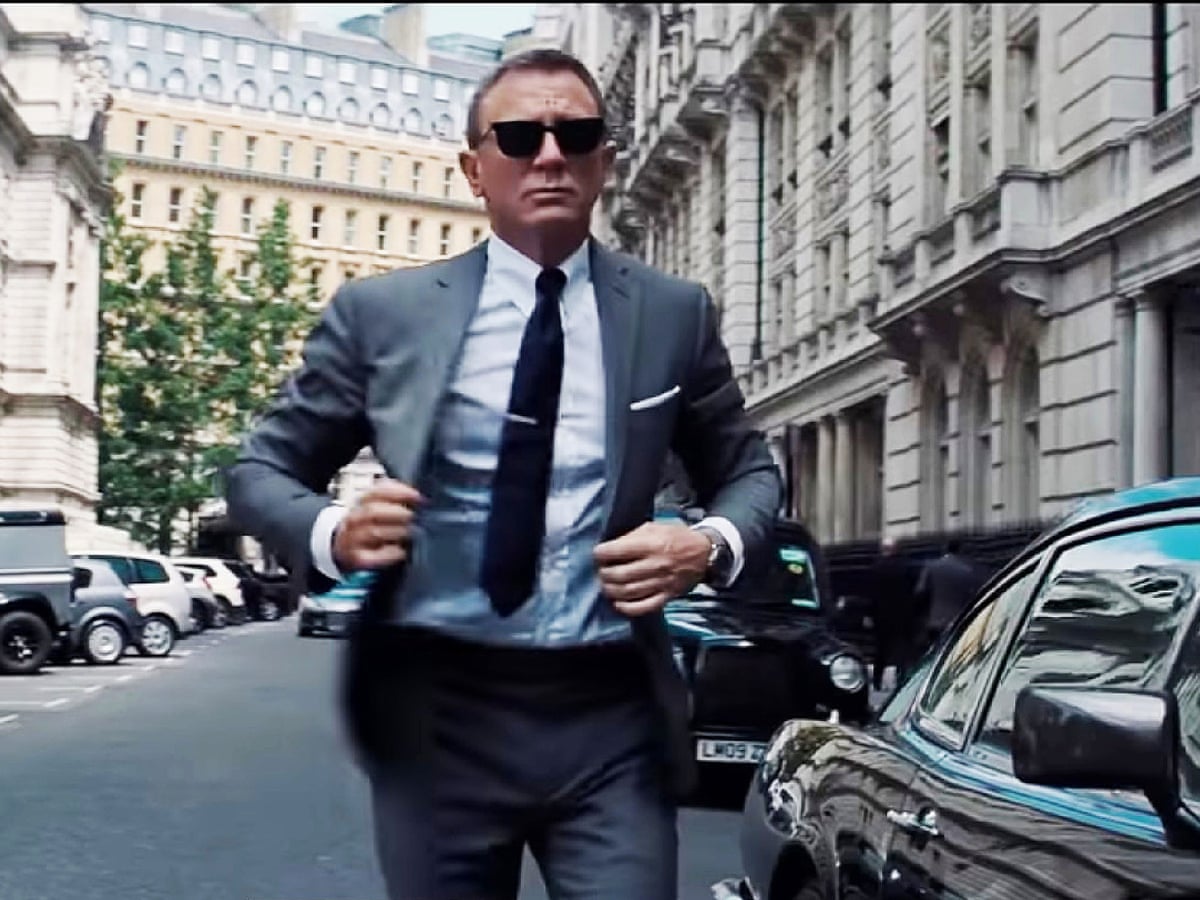
At 25 has James Bond finally come of age? In Daniel Craig's last outing as 007 in the 25th film in the franchise, we find a more mature Bond and for that matter a more mature Bond movie. In many ways it's the same as its predecessors but at the same time there are welcome differences.

I was wondering if the 2:43 runtime would drag. It doesn't. The narrative maintains a steady march towards its conclusion. There are many strands to the narrative arc of this film's story. They intertwine and play with each other trading emotions as they do so. On more than one occasion we see Bond paralysed by confliction where the old and new Bonds battle for a decision. 

The exotic locations are there - stunning light in Puglia, lush vegetation in the Caribbean, frozen Norway with spectacular bridges and coastline, The Faroe Islands and of course Scotland. In the London scene above, I used to work in the building on the left in 1979! 

What is not there is the serial abuser of women. His harsh and brutal career has seemingly taught  Commander Bond what really matters in life. This is a film about love, truth, integrity, sacrifice and loss. Of course greed, revenge and megalomania all feature too, but these are left for others to inhabit.

There are plenty of wild and exciting chases using a wide variety of vehicles, death defying jumps and the ever present product placement - mainly of brands identified as British even if their owners these days reside in other territories. There are very strong acting performances from a great ensemble cast. Christoph Waltz emanates a power that transcends the confinement of his character, Léa Seydoux displays a vulnerability alongside steeliness,  Rami Malek is flesh-creepingly sinister and Ana de Armas will, I am sure, reappear to beautifully support the British Secret Service once again.

This film is sensitive to many of the things that increasingly matter in our evolving world. Dealing with a potential world-wide pandemic, showing greater respect to women, calling out a lack of integrity, two black women in lead roles and changing world order.

This is my first visit to the cinema in 21 months. It felt good. The sound and visual treats of this film demand the largest screen you can find to watch it on. Pay the extra if you can. This film does deserve the hype and I am sure it will go down in the canon of Bond films as one of the best.  I'm going to give it 8/10.


Saturday, 7 August 2021

How are you?

 Dear Friends,

I hope that this finds you well and that wherever you are in the world, you are feeling more hopeful than you were in recent months. The painful reality of a global pandemic has brought the large screen jarringly into our lives and homes. We have been invaded by a fiction made all too real by the cleverness of globalisation.

We have all lost so much during these past 18 months. So many freedoms, so many ways to spend leisure time and find recreation and sadly too many loved ones.  We have had to find new ways of keeping ourselves entertained or distracted through enforced 'house arrest'.

I have continued to find it impossible to commit to sitting down to watch a movie all the way through - I hate watching in installments! I have kept up my subscription of Sight and Sound and have avidly read it each month (do you like the refreshed format? I do.) I have continued to buy DVDs but only to add to the pile of 'bought and not yet watched'. Just as well retirement is on the horizon. I have not been into a cinema in these Covid infested months either, neither have I been engaging in binging on boxed-sets of this that or the other. I continue to find myself watching as many food programmes as possible and endless recordings of medical emergency programmes of one type or another. 

I do however feel the stirrings of a desire to begin watching films afresh. In the autumn I am actually looking forward to restarting a monthly movie in the parish to watch with friends and reflect on together. I have amassed a growing collection to unleash on them!

The pandemic appears to have accelerated  a trend that was already underway which has led to many column inches of debate in the online and printed movie media. That is the developing of small screen streaming services for film and that some projects which previously would have been cinematic are now produced and shot for the small screen - although the average size of new flat screen TVs being sold in the UK is 65" - not such a small screen. This has led to much fretting about the long-term viability of cinemas and reflections on the funding that now comes from the streaming giants of Netflix, Amazon and Disney et. al.


In this month's Sight and Sound there is an in depth exploration of the future of cinema and film with many top film-makers contributing their spin on things. I was particularly taken by this from Director  Guillermo Del Toro in response to the question 'How do you see the relationship between cinema and the small screen developing' (p47)?

"Access is trumping 'eventising', of course - that's evident. You may like it or not, but we don't live in a monoculture any more and we are fused - in a transhuman istic way - to our portable screens. Those screens are a bio-extension of our 'self' (almost our id) so they serve a very different function than the big screen, which is collective. The small screen is with us almost 24/7. Therefore it 'wins' by virtue of that alone. But the big screen and its collective, almost humbling proportion soothes the soul."

Discuss!

Thank you for reading this and not giving up on my blog. I hope that before too long some new movie reflections will appear.

Please take care and stay safe.

Sunday, 21 June 2020

Deepwater Horizon


This is the first film I've watched in nearly four months. How has lockdown been for you? I've not felt able to commit the attention span to watch a whole movie up until now. This might be an odd choice - to watch a film that centres on loss whilst in a prolonged period when we have lost so much and too many, might seem odd. As far as cinema is able to offer an escape, a suspension of reality, I choose to watch a 'based on true events' film. I wonder why?

This film is not a documentary, neither is it high art - except perhaps in the special effects department. The acting is solid and the way in which the movie is filmed gives a palpable sense of the claustrophobic, frenetic, noisy and physical nature of work on a rig. You can almost smell the grease and sweat. As it is indeed based on true events, you know where it is heading. The only question is, how will it get there?

Whilst the film makes no direct judgment, the way in which it sets out the story and the interaction of the characters makes the apportionment of heroism and blame easy. You never have to think too hard. Early on in the film characters' credentials are established, Mark Wahlberg's Mike Williams is the affable family man, level-headed, sensible, competent. Kurt Russel's Mr Jimmy is the boss every worker longs for - a team player, dedicated to employee well-being, friendly and approachable but a man you would not wish to cross. John Malkovich's character is the embodiment of corporate greed - profit is all that matters, who needs safety?

Sadly that is what the film is about - heroism contrasted with corporate greed. Cutting corners to save time on a project that was already over schedule, resulted not in the hoped for profits, but in the loss of too many lives, the livelihoods of too many Gulf fishermen and the biggest loss of reputational kudos on the part of BP. A decade on, American lawyers are still making claims on behalf of victims of America's worst ever environmental disaster, making 'Spillionaires' out of fishermen and leisure industry workers whose livelihoods disappeared in a massive gloopy lake of crude oil. Families still mourn those who died.

As the instinct of the rig management want yet more safety tests on this deepest of drilling experiments, the profit driven BP management want to see oil to begin to flow - they want to see a return on their substantial investment. Two divergent courses. As Mr Jimmy is with most of the crew in the rig mess hall receiving an award from BP for safety, a series of events begins, that will cascade and gather pace leading to the eventual blowout and spectacular fire is visible from an orbiting satellite. The irony of the situation is wonderfully portrayed on screen.

In what is almost exclusively a man's world, two female actors feature. One, the wife of Williams, in the 'traditional' role of stay at home mom, the other is Gina Rodriguez's Andrea Fleytas who as Bridge Officer was responsible for monitoring systems on the rig and ensuring that it maintained station. Fleytas is depicted as an adrenalin loving mechanic who likes maintaining her own Mustang and motorcycle. Pretty, vivacious and competent, she is shown to be able to hold her own as the only woman on the rig during the series of three week rotations she has been on for the last 18 months. She survived the disaster and hasn't worked in the oil industry since.

On the Bridge, in the chaos of an exploding rig there is confusion as to whether or not the well head should be closed. A weak Engineer needs orders and protocols whereas Fleytas feels the decision has already been made and that the safety override button should be pressed. The debate and ensuing delay proves to be a critical factor, although subsequently it is shown that the safety equipment is unable to withstand the immense pressure from the well. This short scene together with the mass evacuation of the rig captured the chaos, shouting and panic that characterised much of what was going on. In contrast others systematically attempted to bring emergency generators online to stabilise the rig and engaged a search for missing crew mates - both of which placed them in significant increased danger.

For a film based on true events, Deepwater Horizon does offer an escape as it portrays a world that is so beyond the experience of most people. It takes us to an unfamiliar world where we encounter familiar human traits such as greed, heroism, sacrifice and love. The closing segment of the film creatively portrays the dissociation caused by trauma through use of slow-motion and an altered soundtrack as Williams reunites with his wife and daughter. The drama is powerful without being over the top. I would recommend seeing this and award it a healthy 7/10.


Thursday, 20 February 2020

Denial


Having marked the 75th anniversary of the liberation of Auschwitz last week, I chose this film to watch with a group of friends form church. Like flat earthers, it's difficult to accept that there are some who deny that the Holocaust actually took place. Why? What is their motivation? What do they hope to achieve by setting themselves against nearly everyone else and an entire people?

Based on true events, this film explores a libel court case at the High Court in London when 'historian' David Irving (Timothy Spall) challenges what he claims is defamation of professional and personal character in a book written by American College Professor Deborah Lipstadt (Rachel Weisz). The quirkiness of British law means that in a libel case the burden of proof lies with the  accused who has to prove the accuser is indeed a liar and selective rewriter of history to suit his own ideology.

Whilst the film is most certainly set within the context of the horrors of the Holocaust and especially the things that went on at Auschwitz, it is fundamentally a courtroom drama which centres on the ingenuity of Lipstadt's legal team of lawyer Anthony Julius (Andrew Scott) and barrister Richard Rampton (Tom Wilkinson) backed by a team of researchers. They plan to entrap Irving, who mounts his own prosecution, by appealing to his overdeveloped ego to try the case before a Judge without a jury as the technicalities of the case would be too intricate for laymen to grasp. Technicalities that Irving has spent his life mastering. Irving agrees. Lipstadt's team feel Irving would play to a jury and win them over.

Whilst the Jewish community in America is quick to offer financial support to enable the trial to proceed, British Jews try to persuade Lipstadt to drop the case and settle out of court as it will give publicity to Irving. Lipstadt is incensed that neither she nor any Holocaust survivors will be called to testify by her team. Her team have seen Irving tear such people apart and do not wish to give his cause oxygen. Instead, they concentrate on the forensic details of establishing that Irving changed his views and rewrote history to support what is presented as his own right ring, racist and anti-semitic ideology.

The story behind this film presents two opposing histories - one from a revisionist perspective of Hitler and one from the perspective of the Holocaust. They are incompatible and it falls to a Judge to rule which is truthful. Holocaust survivors are in court each day and pressurise Lipstadt to have their voice heard. She deflects the pressure by saying that she will ensure the voice of suffering is heard. Lipstadt makes repeated demands to be heard as a witness along with survivors - so much so that in the film her character becomes too whining and more than a little tedious.

Lipstadt undergoes an epiphany when she realises that the real denial here is the denial of the survivors to be heard and her own greater self-denial of not having a public voice while the trial is underway. She eventually places her trust in her legal team and the roller coaster proceeds much like a Heavyweight bout as two pugilists slog it out with the judges seemingly scoring each successive rounds first to Irving and then to Rampton. The outcome is unclear from the Judges 300 page written basis for his Judgment, the tension builds as the Judgment is given and he finds in favour of Lipstadt and in doing so, voice is given to the suffering that was endured and which continues.

We know the outcome as it is based on a real life story. What makes this film of interest is the characters and the methods they employ to achieve their intended aim. The acting is strong (even if Lipstadt is whiny) and the scenes filmed when the defence team visit Auschwitz on a foggy and frosty day add to the bleakness of the memorial and ramp up the pressure for Irving to be defeated. This is an interesting film, well made. To watch this alongside The Boy in Striped Pyjamas and God on Trial would make for a heavy but engaging triple bill. I'll give this film 7/10.


Saturday, 15 February 2020

Parasite


If you've not seen this film and intend to, stop reading now and get down to the cinema - one with a great sound system as the sound in this film is wonderfully 360 degrees. (Thank you Everyman Birmingham.)

You cannot have escaped the hype surrounding this fim as it won many BAFTAS and the next week cleared out the Oscars. Is the hype justified? It's certainly an engaging film with a very clever narrative which delivers a massive unexpected and unforeseen twist at a critical point. The cinematography is top class and the ways in which the visualisations of the sets and their relative positions reinforce the core of the story, are masterful.

Whilst it has clearly charmed international audiences and juries around the world, I wonder if Koreans don't get a whole lot more out of it than Westerners? I had the feeling that many clever subtleties passed me by. The whole premise of always seemingly needing to have a plan even when the plan might be not to have a plan possibly means something more in Korea. When is opportunism simply deception? When is it wrong for people who are capable of performing a job but are unable to gain employment simply because they don't hold the right certificates or qualification to actually seize an opportunity for work when it presents itself?

The film is very clever in the way that it invites many questions without really delivering any  answers. The premise of the film is straightforward enough but the way in which it is enacted delivers a real life fantasy where we are made to believe things simply because they happened in the film - but isn't that a hallmark of great storytelling? The ensemble cast have no weaknesses and deliver performances where the comedic elements are always implicit leaving you to draw them out and appreciate them.

Ostensibly this is a film about different socioeconomic classes, about the haves and the have nots. The key line in the dialogue is "They're rich, but they are still nice" as though wealth makes good people bad and poverty makes bad people good. From the sub-basement squalor of cockroach and urine infested urban dwelling to the breezy and airy luxury of the hilltop mansion, this film is littered with visual and plot contrasts that never resolve themselves. That is left to the viewer. I am still unsure who is the parasite in this film! There are several candidates and the film holds up a mirror to the viewer. What was the rock about? Was it significant or did it only have significance because the son says it's significant? Its place in the story certainly changes as the narrative unfolds.

This film is multi-layered and the meaning of the layers, the narrative and the symbols are never really defined by the film itself. It's the highest form of audience participation - you decide! The film could so easily have become too clever or kitsch but avoids these potential problems and stays true to what it has to say - whatever you decide that is. There are goodies and baddies, victims and perpetrators, lucky and unlucky, hard workers and consumers of luxury. You work out which is which. It keeps flipping as the different layers come to the fore in their own turn.

It's certainly a great film but is it worthy of the hype when films like The Irishman, Lighthouse, Joker  and 1917 were very strong award contenders? Did it do so well simply because it is an international (we're not allowed to say foreign language any more) film, or is its artistic merit worthy of clearing out the Oscars? Well - that's something else for you to decide! I'll give it 8/10.


Saturday, 18 January 2020

1917


This is as close to war as I ever wish to get - and this film takes you very close. For its entire 2 hours run time this film propels the viewer through the trenches and no-man's land of Northern France in the Spring of 1917. The acting is very good, the screenplay believable, but the thing that catches the attention is the cinematography. The film appears as two continuous shots punctuated only by a brief blackness as one of the lead characters becomes unconscious. The use of very long takes, seamlessly edited together give the impression of non-stop action. At one moment you are up close and personal with trench rats and the next you are flying high over the battlefield looking down on the unfolding combat, all seemingly without an edit. Visually stunning.

The film gives the viewer an impression of war similar to Saving Private Ryan and in that sense the story has parallels. However, I was glad I could not smell the film, experience the cloying clay or sense the actual dampness that characterised so much of the unimaginable reality of trench warfare. The gore and rotting flesh of no-man's land where soldiers lie alongside horse carcasses both being nibbled on by rats and ravens is other-worldly. It's a world I don't want to visit or even pretend exists. In a world where leaders execute warfare through the clinical detachment of drones and cruise missiles, perhaps they should watch this to be reminded of the human cost that is an inevitable consequence of war.

Whilst the explosions and sniper fire push home the deathly nature of conflict, the real conflict goes on in the minds and hearts of the two lead characters as time and time again they have to overcome fear and panic in order to simply survive and carry out their mission. Courage and heroism are inadequate words.

The cast includes such heavyweights as Colin Firth, Benedict Cumberbatch and Mark Strong who all play minor supporting roles leaving the screen to be inhabited by the two leads Dean-Charles Chapman as Lance Corporal Blake and George MacKay as Lance Corporal Schofield.  Both give excellent performances but miss out on Oscar nominations although the film does receive nine!

There are unexpected moments of extreme tenderness - friends sharing conversation and sparse rations as they rest for a moment, an encounter with a baby, a song in the woods. The story flows from war-time recollections from Director Sam Mendes' Grandfather to whom the film is dedicated. The 24 hour period covered in the film is cleverly paced as the tension builds. Gripping cinema.

This is a film for the big screen - prepare to be engaged visually and aurally through an excellent soundtrack, but most of all prepare to be engaged emotionally. This film offers an excellent study on human nature - the good and the bad that has you rooting for the lead characters. The narrative arc is straightforward and is established very early on. The course the narrative takes is anything but as predictable. If you have the stomach for this film go and see it now while it is in the cinemas. Not for the queasy. I'll give it 8/10.


Sunday, 5 January 2020

Star Wars: The Rise of Skywalker


After 42 years, the narrative arc finally lands with the release of episode IX. What are we to expect? New plot developments? New characters? Surprises? Or, more of the same in a way that wraps up a story that has been going on for decades in a nice kind of way, in a galaxy far, far away? In J J Abrams as Director, the franchise is in safe hands and Disney/Lucasfilm surely wouldn't do anything than deliver just enough to keep the legions of fans happy as they buy into yet another merchandise opportunity at Christmas-time? This film satisfies without exciting.

There are a lot of action sequences in the 142 minute run-time. One or two new locations and several familiar ones. The battle between darkness and light remains the spine of the film and for the first time there is acknowledgement that it is not a binary choice but that each of us is inhabited by darkness and light and how we manage our internal balance is the thing that ultimately defines us. So this is basically Harry Potter in Space!

Major themes of love, family ties, betrayal, sacrifice and redemption continue to feature strongly as the story relentlessly ploughs on to its conclusion. The way in which the film visually and idealistically portrays the embodiment of evil is effective and made me feel uncomfortable. There were some pre-schoolers in the row behind - what they made of the visual images I cannot begin to guess. I imagine the moral and philosophical parts of the screenplay passed them by. What will be their abiding memory of having been exposed to such graphic violence, destruction and malevolence? I am certain that these parts of the film had greater impact than the scenes and actions that embodied more virtuous things. Perhaps that is why the dark side is so seductive?

There is a sense in which the screenplay tries, perhaps too hard, to resolve all the outstanding plot questions remaining from the previous eight films. They are all neatly brought together and tied off in a pretty bow. Perhaps the door is left ajar for episode X? There is however plenty of room for more spin-offs and parallels. May the force be be with you. I'll give it 7/10.


Saturday, 4 January 2020

Two Popes


This is a generous and gentle film. It is nevertheless intriguing and stands on the performances of the two lead actors - Anthony Hopkins (Pope Benedict) and Jonathan Pryce (Pope Francis). This is 100% a character driven film as the plot is fairly thin and is really only of interest to ecclesiastical geeks! When a film says in its opening credits 'Based on true events' it's a pretty meaningless thing as it could mean that this is anything between an accurate biopic and complete fantasy. There are doubtless plot devices inserted along the way to make the film more digestible, but these are not overshadowed by the personalities of Benedict and Francis who steal the show. Oscar nominations highly likely.

Although the film is wholly about the Papacy, it is not a churchy film as such. It is more a film about how two men, seemingly with diametrically opposed views on many issues, come to an understanding that allows them to coexist peaceably.

As the conclave of Cardinals meets to elect a new Pope, Cardinal Bergoglio, Archbishop of Buenos Aires shuns any suggestion that he should become the next Bishop of Rome. Cardinal Ratzinger, Archbishop of Munich and Freising and Dean of the College of Cardinals openly campaigns for support amongst the Cardinals and is duly elected. Despite his protestations, Bergoglio is a clear second place choice.

As Benedict XVI, Ratzinger uses his experience as an academic theologian to steer the Catholic Church back to a more conservative position where the traditional teaching of the church on a range of issues is reinforced. As someone with a strong preference for introversion and having a passion for high art, culture and the finer things in life, Ratzinger certainly enjoys the luxuries that life in the relative seclusion of the Vatican can offer.

Over time, Benedict's health begins to fail and he considers stepping down before he becomes incapacitated. At the same time, Bergoglio becomes tired of the trappings that go with being a Cardinal Archbishop and seeks the Pope's permission to resign and return to parish ministry as a priest. Benedict refuses to agree and a series of conversations between the two produces a number of exchanges where respect is shown but agreement eludes. Like water dripping into a hot frying pan, the two spar using heir immense intellect and drastically varying church experience to debate points of doctrine. Historic sexual abuse by priests repeatedly bubbles to the surface in their exchanges  and each, unsurprisingly, has a different way of viewing the matter.

Generally, Bergoglio is more extraverted and has a passion for living a life more connected with the everyday person on the streets of Buenos Aires. He loves to Tango and is passionate about football. He knows what it is to love another and the cost of walking away from all that to follow the call of God. Bergoglio also carries a sense of guilt and shame from past episodes in his life. He struggles to cope with the lifestyle of Benedict as Pope - the summer palace, commuting by helicopter, Papal red slippers - seeing all of these things as imposing a distance between himself and 'the people'.

Through the conversations, the two men's respect and friendship grows - although they still struggle to find agreement on most issues. Eventually Benedict confides in Bergoglio that he will resign - the first Pope to do so in nearly 700 years. Benedict wants Bergoglio to succeed him. The Conclave of Cardinals duly meets and rather than retiring to parish ministry, the Jesuit Bergoglio is duly elected as Pope Francis.

Layering guilt and forgiveness throughout the conversations, this film delivers two stunning performances that embody grace and respect whilst maintaining opposing positions. The time simply flew by as I found myself totally drawn into and engrossed in this film. Few know about how life in the Vatican proceeds and whilst there is no widespread exposé, the film gives clues about how the character of successive Popes shapes the way in which the Papal household runs. This film is a generous gift - please do watch it. I'll start the year with a 9/10!


Thursday, 21 November 2019

My House in Umbria


With a strong ensemble cast this gentle tale set in the rolling Umbrian hills is a pleasant way to spend an hour and a half. What saves it from mediocrity are the performances of Maggie Smith as Emily Delahunty and Timothy Spall as hew 'manager' Quinty. Ronnie Barker plays a retired General whom I expected to break out into a stammer for comic effect at any moment.

I think you can watch this film on two levels. The easier, surface viewing, is to see a troubled older lady with an upbringing and early life filled with abuse finally attain her 'family' in the idyll of rural  Umbria. Perhaps another way of viewing the film is to see the plot and dialogue as that of a unremarkable writer of romantic fiction which ultimately leaves a number of plot threads unresolved, thus inviting the viewer to construct their own conclusions and interpretation of how the narrative arc is resolved.

Either way, the plot is too fanciful, the premise of how Mrs Delahunty came to be in Umbria too bizarre to be believable and the utopian existence she enjoys too perfect for someone with such deep-seated psychological needs. The fact that all of these dissonant points find reconciliation on the pages of her trashy novels does not, for this viewer, redeem them. The realism comes from her heavy consumption of gin!

Having said all of this there are many things within this film to commend it. It is a film about guilt, loss, regret, hope and love. These emotions are played out and explored with empathy and the performances contain tangible pathos. I would imagine few people who watch this film who would be unable to develop a strong attachment to, or repulsion from, all of the main characters. Perhaps one of Delahunty's more memorable lines is "I was the only one who had not lost a loved one, having none to lose."

This feels like the made-for-TV movie it is. Nevertheless, it is a worthwhile and entertaining watch that will leave you considering the possibilities and trying to disentangle reality from fiction. I'll give it 6/10.


Saturday, 16 November 2019

The Irishman


Although Robert De Niro is in the lead role, this film belongs to Al Pacino. His energy thrusts his character Jimmy Hoffa, into the centre of the screen for more than half this film's three and a half hour runtime! Joe Pesci's Russell is also a strong performance and Harvey Keitel reprises his Winston Wolf role from UK TV! This is an intense film that does not drag at all. Director, Martin Scorsese knows how to wring all of the creative juice out of an ensemble cast of veteran actors that are unlikely to appear together again on screen.

The characters are compellingly believable. Okay, so many of the actors are reprising roles they've played multiple times before but this film has an earnest freshness about it which makes the characters endearing. You can't say that about too many mob and gangster movies!

The way the story is told uses multiple narrative devices which blend seamlessly together to tell a story spanning several decades. It is very clever story-telling and a masterful piece of cinematic art - at the pinnacle of the art form. It will do very well in the awards ceremonies over forthcoming months.

The two main  ways in which the story is told are in flashback and also through a road trip. These intertwine like the double helix to give the film its DNA. It begins in the here and now and the purpose of the flashbacks is to show how Frank Sheeran (De Niro) - the titular Irishman came to be in a nursing home in his final years. As the flash backs and Sheeran's narration build to the climax, so the road trip emerges from its routine pattern to deliver a twist at the end.

The story centres around mafia mobsters running their rackets and the powerful International Brotherhood of Teamsters - the truckers Trades Union in the USA and their charismatic leader Hoffa. In essence it is a morality tale told within an amoral world.

The leading characters, being 'good Catholics', are often seen in church, usually for baptisms in their ever expanding families. That contrasts sharply with a lifestyle centred on extortion, theft, assassination, bribery and fraud. Within the 'family' of each gang, there is a strict morality code of honour which if betrayed means death. So many of the conversations in the film were nuanced and by necessity obscured their real meaning by using euphemisms to avoid incrimination as orders were given for arson attacks, bombings and assassinations. Had I been a part of this world, I'm sure I would have missed half the cues and euphemisms and ended up with several holes in my head as a consequence!

Towards the end of the film some characters are seen with their priest as they seek to put their house in order but without feeling remorse or the need to confess their misdoings. They long for mercy from God in the life to come after living a life in the here and now in which no mercy was shown to those on the receiving end of their 'work'.

If asked "do you paint houses?" you are really being  asked "can you kill someone for me?" and the positive response is "yes and I do my own carpentry". The 'paint' is the blood that splatters the walls and covers the floors! Do You Paint Houses? is the title of a 2004 work of narrative nonfiction written by former homicide prosecutor, investigator and defence attorney Charles Brandt on which the screenplay is based. There are many wonderful one-liners such as, "A secret between three people is only safe if two of them are dead"!

This is a very masculine and patriarchal film. Women feature often but are portrayed as being quiet and subservient passive accomplices to the crimes of their men folk. As you would expect in an Italian-American subculture, families are extremely important. Saying thank you and showing proper respect are sacrosanct. There is a strict morality and high expectations surrounding how children are expected to behave and relate within the extended mob family - but killing people is okay.

Of course there is a lot of violence in this film - there has to be given the subject matter. The violence is always swift and clinical. Scorsese's Direction never lets the violent acts themselves become the focus of the story, they are simply nodes in a matrix of interwoven relationships that are unravelling.

There is much to lament and to be sad about as the film, like its ageing stars, it stumbles on its zimmer frame towards its conclusion. We know that Sheeran survives as the film opens with him in a wheelchair, white hair flowing, sitting in a corner of a nursing home telling his story. How many of the other characters survive with him at the end? The use of CGI technology to make the main characters appear more youthful to play themselves in the 1950's and subsequent decades and then to appear older at the end is subtle and unobtrusive. The sets are wonderful period pieces and the lighting, especially of characters faces, is sublime.

Despite the grim context of this film's story and the many splatters of paint, as you may have gathered, I really liked it. It is worth the investment of 3.5 hours of your life. You will enjoy great acting and an epic and engaging story. Do go and see it. I'll give it a 9/10.


Friday, 15 November 2019

Toy story 4


The power of story can be both amazing and enigmatic. How can a computer generated animation drive you to tears? We know the characters and even the actors voicing them. We know it's a children's story yet the Toy Story films (and much of Pixar Disney's production) communicate so much at both a deep and yet easily accessible level at the same time. Masterful filmmaking and storytelling.

We know by now that the premise of the narrative will be about abandonment, adoption, sacrifice, redemption and salvation - recurring themes from this stable but also appearing in a Bible near you. These themes resonate with the human psyche because we all want to be loved, valued and have hope of an eternal future that is positive. That is why these films connect at such a deep level.

The loyalty of the toys to their child is admirable. The lengths to which they go - especially Woody of course - are extreme. There is no guarantee of success or even that they will be wanted at the end of the escapade - but duty and hope spur them on. The subplot of this film is of course whether Woody and Bo will finally get it together - if you've not seen it, I'll leave you to find out for yourself.

There is the inevitable road trip that serves as a metaphor for the larger story. Acts of daring against impossible odds are common. New characters - some of them dark and disturbingly menacing (I have always had a fear of ventriloquists dummies!). There's also a new superhero in the form of Duke Kaboom appropriately played by Keanu Reeves.

This is a very enjoyable film but it's more of a Woody spin-off than a film giving fair exposure to the ensemble cast of toys. The plot of the main narrative is thin and any depth comes in the exchanges between some of the characters when they are one-to-one with each other.

It is however, still a very enjoyable film with familiar characters, a plot you know you will understand and because it's Disney, a happy ending. It is the poorest of the four offerings, but nevertheless worth seeing. I'll give it 7/10.


Red Joan


I was grateful for the opportunity to catch this as I had missed it's theatrical release. This is a different kind of spy film but is based on a true story. In a world where people prefer things to be in black or white, this film drags the viewer into a world of murky greys. Morality seems more provisional and actions based on securing the 'greater good' can been seen as undermining one's home and nation.

Told in flashback, this film explores the development work done by British scientists at Cambridge as the race to develop the Atomic Bomb during World War II gathers pace. The central character - Joan Stanley is  played in the here and now by Judi Dench. The major question is why? Yes, she presents a bewildered older lady with consummate ease, but the role does not allow her to develop the character in any way or to shine in an otherwise dull and predictable film with a plodding script.

Directed by Trevor Nunn, a distinguish theatre director, the film almost feels like it is a stage play with the stage in two halves, then and now, with the lighting moving between each side as the story plods on. What the story does do, is highlight the impossible struggle between personal and professional ethics in a situation where millions could die - or be kept alive, because of the project you are working on - but only if all protagonists in the conflict have the same weapon! Where does corporate and national loyalty end and personal responsibility begin?

What I found most interesting was that in the end Joan Stanley admitted passing secrets to the Russians but vehemently denied betraying her country. Stanley was not a Communist sympathiser but someone who wanted to level the playing field in an attempt to minimise deaths and casualties. In these days of grooming by extremists and sexual perverts, the means to which people will go to recruit newcomers is disturbing. I know it's nothing new, but for the naive and gullible like me it is worrying.

There is a subplot that evolves around fidelity in relationships, marriage, affairs and divorce. Seduction is of course the oldest weapon in the spies arsenal, but this film treats the relationships of the people and the morality of Joan Stanley in a sensitive way.

It is important that this story is told. I just wish it had been told in a more engaging way with a less predictable flash back routine. I'll give it 6/10.


Men in Black International


There are times when a franchise is milked dry and we have sadly reached that stage with this film. I am an MiB fan - the first two anyway, number four pushes things too far. Even the gravitas of Emma Thompson and Liam Neeson cannot save this film from mediocrity.

Having said that, cruising at 36,000' it harmlessly passed a couple of hours and it felt nostalgic to re-engage with the universe of MiB. There are big set piece blaster battles, new aliens to marvel at, great CGI and a limp script that hamstrings the main actors into delivering well below what they are capable of. At times Chris Hemsworth's Agent H was wooden.

The moral of the story is don't cheat. The locations look good - New York, Marrakech, London and a CGI Paris. Two new alien characters - assassins - looked and behaved very much like The Twins from Matrix Reloaded - I kept expecting Neo to appear!

In reality, I found little to commend this film and will not be adding the disc to my collection. If you are stuck on a plane it will pass a couple of hours otherwise invest the time in something more life-giviing! I'll give it 4/10.


Friday, 18 October 2019

War School


We screened this film in our parish church. It was introduced by Ellis Brooks from Quaker Peace and Social Witness and the Director of this film, Mic Dixon, joined him for a Q&A session afterwards. A year ago we screened Shadow World, a film about the global arms trade and this was intended to be a follow up.

The film explores the relentless targeting of school children in the UK by military recruiters as a means of sowing a seed that they hope will bear the fruit of someone joining the armed forces. Careers visits into schools, displays at county fairs, reenactment activities and military displays all seek to excite youngsters about the possibility of flying a jet, driving a tank, piloting a submarine or simply firing a gun.

The film does not present a straightforward documentary. It begins at the Cenotaph on remembrance Day with all it's ceremony and marching. This gets twisted in a brave challenging of the received status quo. The film's viewpoint is elevated as the story unfolds from veterans who have been there and done that - and found it to be ultimately empty and painful in their experience. Former service personnel suffering from PTSD, coming to terms with injuries and suffering flashbacks of horrific events sometimes decades in the past, narrate this exposé of Britain's military recruiters. the film does include some graphic scenes of warfare from WWI through to present day day.

Peace campaigners and pacifists will of course latch on to this film as an important way to spread the message. In the Q&A session afterwards it was stated that the term 'just war' is an oxymoron. It was also stated that we should have a military only for defending our own soil and not for overseas intervention. Nothing was said about how this military was to be recruited and trained.

The film's message was thrown into razor sharpness for me the following day. Long ago I had agreed to lead a service to commemorate a local man who had died in the Gallipoli Campaign on the day of the service 104 years ago. Six other local men had fought at Gallipoli and died and these were also remembered. There were members of the Royal British Legion, the RNLI, the Warwickshire Regiment and the Gallipoli Association. More people attended the service than had been at the film the previous evening. Those at the service included the great grandchildren of one of the war dead.

In addition to choosing the liturgy and hymns, I had to deliver a sermon and the intercessions. I found this particularly challenging, especially in the light of having seen War School in the same place only hours before. I had written the sermon before I saw the film and was happy that I did not need to revise it as a consequence. I had forgotten to bring the prayers with me so I had to extemporise the intercessions which was an extremely difficult task. Incorporating theological reflection on the hoof without compromising the integrity of either group, or myself, was a struggle. These things are not straightforward.

Attending the service were two serving members of the Mercian Regiment. Their job? Going into schools and careers fairs to line up potential recruits!

Info on Quaker Peace and Social Witness can be found here. The War School website is here.

I'm glad we showed the film but I need to do some more reflection and work to reconcile the two experiences.

Thursday, 19 September 2019

Hadewijch


What is the difference between a person of faith who is devout and a person of faith who is a fanatic? They could be two sides of the same coin - and that is exactly what this film spends 105 minutes doing, exploring paradoxes.

The way the film is made and the way the story is told are almost of equal stature. The way the script explores and develops the thoughts within a 13th century poem by the Flemish mystic Hadewijch, is masterful. The techniques used when the film was shot to enhance the narrative in a way that strengthens the impact of the story - and this story has many points of impact.

I also found the film frustrating. Sometimes what we were being told seemed so obvious as to be pedestrian. A jump-cut would then take me to another seemingly unrelated scene where I would be struggling to make any sense of what I was watching. There are long passages without dialogue which further enhances the visual storytelling. The added benefit is that the film is in French with good clear subtitles, so when there is little dialogue, it's easier to keep up!

The central character Céline, at the same time feels overwhelmed by the immanent love of God and distressed by the absence of God's presence. For much of the film I asked myself "is she behaving like that because she is naive or because she is so sure of her place before God?". The casting of Julie Sokolowski as the central character is a masterstroke. The way she presents herself and acts makes her character sexually attractive and in the very next frame androgynously asexual and not at all attractive.

The film plays out exploring the paradox of the opulent and privileged central Parisian home life of Céline with the spartan and hopeless existence of Yassine (Yassine Salime) who lives with his brother in a project on the outskirts of the city. It explores the seeming paradox of Christian devotion and Islamic devotion but sadly the film gets sucked in to portraying Christianity with much more sympathetic stereotypes than it does Islam. It explores the paradox of those with faith having no experience of parental love with a convict whose mother believes in him unquestioningly. The film explores the paradox of who is condemned and who acts as saviour. It explores a myriad of other paradoxes as well.

If you are prepared to watch a film that will get under your skin and messes with some of your more comfortable preconceptions, this might be for you. If you want to see people transfigured by an aura when they are having a deep and meaningful experience, this is definitely for you. If you like clever cinematic storytelling you'll love it. In the first scene when we see Céline praying, see what's outside her window. Also, when the convict is with his mother, see what's on the TV in the background - there are others - ikons into other worlds.

Above all, if you enjoy exploring and reflecting on paradoxes, especially in a faith context and are open to discovering new things about yourself - this is definitely for you. Reading the poem written nearly 800 years will help with some of the interpretation. Whether you read it before you watch or afterwards, I will leave to you to decide. The rest is up to you. I'll give it 8/10.

The poem can be found here.


Monday, 24 June 2019

Green Book


I have been trying to catch this for a while - it was well worth the wait. This is an engaging film that draws the viewer in an and in my experience invites them to develop a heart-felt liking for both the lead characters. It's period setting in 1962 New York and the Deep South on the cusp of the civil rights movement is both vibrant and resonant as it shows the best and worst that post-war USA had to offer. It is however a film with some issues.

The credits make it clear that the film is "inspired by a true friendship". The script was part written by the son of central character Tony Vallelonga (Viggo Mortensen) based on interviews with his father and Dr Don Shirley who in the film is played by Mahershala Ali. There was no consultation with the Shirley family and they disagree with some of the ways their relative is represented. However, this is a drama based on true events and not a forensically researched documentary.

The film also lays itself open to accusations of presenting viewers with a white saviour figure but I feel this is misplaced as it could easily be argued that both of the lead characters in fact save each other to some extent. At worst, this is a white reading of a black history and that will have to suffice as at the end of the day the people writing the script and making the film were largely white. That may be the larger problem.

For me the story of the film centres on the developing relationship between Vallelonga and Shirley. It happens to play itself out within a context of racism - this is not primarily a film about racism. This goes deeper than skin colour, this is a film about humanity connecting at a deep level.

The two of them would never have ordinarily met as their worlds are so opposite. Shirley, the refined international pianist with several degrees and many languages. Vallelonga from immigrant stock living in the Bronx, trying to sustain his family amidst the boorish macho culture of testosterone fuelled Italian petty criminality. The film is more about a clash of cultures. Embedded in Vallelonga's  is innate racism (I didn't know Italians referred to black people as Aubergines!). Shirley on the other hand attempts to rise above the overt racism by maintaining his dignity but is relentlessly undermined - especially the deeper into the South they travel.

One thing that unites the two characters is that both have addictions. Vallelonga is engaged in a race to see if chain smoking or constantly stuffing himself on junk food will be the first to trigger a coronary. Shirley on the other hand gets through a bottle of whisky a night as he tries to kill off his liver. What is it that these behaviours are trying to mask?

Once completed, the narrative arc can be seen to be wholly predictable having travelled its journey with a gentle and constant pace - although at times it does seem to become endangered! At just over 2 hours long, this film did not drag at all. The acting from the two leads is extremely strong and will give you much fertile soil for reflection on relationships, life goals, family, friendship, honour, integrity and love. I commend this film to you and am happy to give it 8/10. Enjoy!


Sunday, 19 May 2019

The Escape


I found this a hard, almost disturbing film to watch. It is intelligently written and exquisitely acted. To be honest I'm still not sure what to make of all of it.

The film is about an all too common suburban malaise that afflicts too many couples. The challenge to be seen to be successful - a good job, stay at home mum, detached house in the Kentish suburbs, two cars, two kids. They have it all but life is all about work and providing for his family for husband Mark (Dominic Cooper) and for wife Tara (Gemma Arterton) life has lost its purpose and she has lost her sense of self and is depressed. The problem is that Mark is unable to see this and offer any empathy or compassion. His sex drive results at least a once-a-day uncontested rape of his wife. Her inability to articulate clearly how she feels - or more properly is unable to feel any more, simply feeds into the cycle of mismatched expectations about what life is about and how it should be lived. There is minimal dialogue, the story is driven by facial expressions, tears and body language. The film slowly and painfully trundles towards a breakdown in the marriage until Tara finally makes her escape.

With extensive use of hand held cameras, it felt that perhaps 50% of the film featured a close up of Arterton's beautiful face. She spends a lot of time looking at her emotionless reflection. Her mother is unsympathetic and unable to offer any support other than to say that it was just a 'phase' and that everyone faces it at some point or another. Tara clearly feels that she has no opportunity for creative output or self-expression and tries to find solace in an art class but Mark is dismissive. Tara struggles to find a way out of the trap of the daily, meaningless grind - she has even lost her love for her children.

In an attempt to find herself, she escapes. Her new found freedom even produces the odd smile on Arterton's otherwise emotionless face. She hooks up with a Mark look-a-like which ends up in bed. She then chastises her new partner for lying about being married and a father - the very thing she has done to him. A bewildering double standard. The ending of the film is suggestive but ultimately leaves the story open. For me this was an unsatisfying conclusion.

The film cries out for blame to be apportioned but both Mark and Tara are so unable to analyse what is actually going on, it is difficult to blame one more than the other. I wonder if, in general, men who watch this film would see a different film to women who watch it? I don't know if this film has a feminist agenda driving it to present Tara as a victim. We never get to see Mark's daily context - perhaps he is numbingly bored at work and simply goes through the motions each day to provide for his family or possibly he works so extremely hard he has little capacity to engage in a fuller home life.

Overall, I found the narrative a painful thing to experience - I didn't want to engage with it. That in itself shows what good story-telling this film offers. Arterton's acting is mesmerising and shows the versatility that she possesses. I'm really not sure what score to give this film. It is an excellent film with Arterton giving an extremely strong performance - but I didn't enjoy it all and I certainly don't want to see it again. Perhaps the film's intent is to vaccinate suburbia in the hope of preventing an epidemic. It offers plenty of scope for fruitful reflection and perhaps offers couples a jolt back to reality should their relationship be heading in the direction of Mark and Tara's. I'll give it a 7/10.


Saturday, 18 May 2019

The Visitor


Context is everything! This film was made in 2007 in New York in the wake of 9/11. It could have been set anywhere in the USA as far as the story of the central character Walter (Richard Jenkins) is concerned but it has a wider story to tell about cross-cultural communication and understanding, the ability to find shared interests, love, the brutality of an indiscriminating immigration regime and that is why it really did have to be set in New York.

The film gently reveals a number of epiphanies - mostly experienced by Walter. In late middle age, the university professor is still in the funk caused by the death of his wife five years previously. He looks like a man on auto-pilot with no real purpose in life. Walter is coasting and deceives himself and others through half truths. He is unnecessarily harsh on one of his students, his lectures are lifeless and lack-lustre, there is no spark, no creativity, no fun in the man or his life.

Walter is jolted out of his numbing complacency by being forced to visit New York - a city where he just happens to keep an apartment. A series of events present him with people he begins to care about, activities that he can get passionate about and the faint hope that he can find love again is rekindled. This is a film about transformation, xenophobia, the workings of a faceless and authoritative institution, the global village, love and families.

The film is littered with rich metaphors that help to signpost what is going on. Not in a 'show and tell' kind of way but with gentle subtlety. The subway, the community in Central Park, the windowless detention centre, the uncaring and over-officious staff and the non-sexual intimacy which can bring consolation are all offered to help the film tell its tale.

The acting in this film, especially from the four main characters, is impeccable. The way in which Walter's world, at least for part of the film, is darkened and shadowy reinforces his dour and morose lethargy. His search for a creative outlet to enable him to somehow reconnect with his wife leads initially to sadness and frustration that seemingly further distances Walter from his wife and his memories of her. The fact that Walter is now almost always accompanied by a glass of red wine shows us the new partner in whom he finds solace.

Great script, Directing and acting - little wonder that Jenkins was Oscar nominated in this role. The playful way in which Tarek (Haaz Sleiman) describes himself as a bad muslim because he drinks wine and his partner Zainab (Danai Gurira) as a good muslim because she doesn't debunks and normalises any basis for fear of muslims - they are, per se, simply ordinary people like you and me. This is a gently bold film and its message is even more relevant today than it was in 2007 in the aftermath of 9/11. Do try and get hold of the disc or stream it. You won't be disappointed. I'll give it 8/10.


Saturday, 27 April 2019

Jesus of Montreal


This is a Passion Play that attempts to bring the passion up to date. Set in the grounds of a catholic shrine in the city of Montreal, the shrine's guardian enlists a group of actors to modernise the jaded 40 year-old script that is used in the annual production of their Passion Play. The film is in French with subtitles. We watched this in Holy Week as part of our Lenten programme this year and it worked well.

This film was made in 1989 and it attempts to engage the latest developments in Biblical archaeology to give new spins on parts of the story. Lothaire Bluteau is invited to direct and star in the new production and delivers a compelling performance. The result is the portrayal of a very human Jesus Christ whose quiet but charismatic style draws people into the plot and project.

The way in which Jesus recruits the rest of the cast is strongly modelled on Jesus recruiting his disciples in Galilee and of course they come from a range of questionable backgrounds and filled with scepticism and reluctance. As the story of the production and staging of the play develops, the characters begin to embody narrative elements of their characters in their own lives in modern-day Montreal.

The narcissistic and empty existence of the 'crowd' is made clear. Jesus even suffers the 'temptations in the desert'. Parallels with leading gospel characters become clearer as the the film progresses. The Temple Council, Mary Magdalene, John and Peter are all are present. The film challenges us to think of what constitutes love as Constance (Johanne-Marie Tremblay), in the role of Mary, mother of Jesus, offers the comfort of sex as mistress to the priest who is the guardian of the shrine.

The film certainly challenges and provokes reflection on what the Passion might look like on the streets of our town today. Who would be the main players and what would be the result. For me the narrative falls down because it denies the divine aspects of Christ from the character altogether - but that doesn't mean it's not a good film or that people shouldn't watch it.

The acting is very good and under Denys Arcand's writing and Direction delivers an important and challenging alternative to more recent offerings of the Passion Play. I would encourage you to get hold of a copy and see for yourself and make those parallel leaps from the gospels to your own neighbourhood and town. I'll give it 7/10.